

2012 was a big year for the science of snipping DNA to introduce genetic changes into a cell, also known as genome editing. Though Science magazine hailed two new techniques for selectively cutting and pasting DNA in the field of genome engineering as together constituting one of the Top 10 scientific breakthroughs of the year, those methods may already have been surpassed by researchers at the University of California Berkeley using RNA and a single protein. Faster, simpler, and cheaper, the UCB team led by Dr. Jennifer Doudna published initial results of their work genetically modifying bacteria using the RNA-based DNA cleavage technique last summer. The response from the the life science community was extremely positive, with reviews calling it a "tour de force" and a "a real hit," according to the latest press release. Now three more papers are coming out based on the work of the Doudna Lab showing that the RNA programming technique using a bacterial enzyme known as Cas9 is equally effective in making alterations to human genes.
Tags: 2014, CA, 2013, University of California Berkeley, AIDS Research, Molecular Engineering, gene therapy, Southwest, California, University of California, genetic engineering, Berkeley, BioResearch Product Faire Event, Harvard, genomics research, UC Berkeley, UCBerk
While today’s advancements in biotechnology suggest that there’s nothing we can’t artificially produce, sometimes there’s just no substitute for nature’s own recipes. At least, that’s the philosophy behind the University of Minnesota’s Schmidt-Dannert Lab, whose aim is to harness compounds created in natural organisms like plants and fungi that cannot be produced by chemical means. Many of these compounds have beneficial properties that can be used in further research and drug production.
For example, take chloroplasts, the organelles that perform photosynthesis inside plant cells. They provide energy to plant cells when exposed to light. Animal cells don’t have chloroplasts, which means they’re missing out on a valuable energy source. The Schmidt-Dannert Lab, led by University of Minnesota professor Claudia Schmidt-Dannert, is working toward is creating solar-powered animal cells that are more productive and produce different sorts of organic materials.
Tags: 2014, Midwest, 2013, University of Minnesota, University of Minnesota St. Paul, Fungi, Minnesota, University of Minnesota Twin Cities, BioResearch Product Faire Event, Funding, Biotechnology, Research, researchers, Minneapolis, lab, MN, Front Line, St. Paul, UMinn, UMinnSP, U-M, fight cancer
The southernmost tip of the great state of Texas is known as the Rio Grande Valley (see map below), and University of Texas Chancellor Francisco G. Cigarroa is campaigning hard for the establishment of a South Texas School of Medicine, to be part of a new regional University of Texas research campus. UT already has two smaller campuses in the Rio Grande Valley, in Edinburg and Brownsville; mid-way between those two border cities is Harlingen, which is currently home to a Regional Academic Health Center that, under the Cigarroa plan, would become a full-fledged medical school. The new UT university campus would incorporate both the Brownsville and Edinburg college campuses, but with greater resources available to strengthen its research capacity. UT System Board of Regents voted to approve both plans last month. The next step is to convince the state legislature to give its support.
Tags: 2014, 2013, University of Texas, Texas Medical Center, Texas, Southwest, UTAust, UT Health Science Center San Antonio, UTxSA, University of Texas Health Science Center, Austin, College Station, TAMU, tmc, BioResearch Product Faire Event, San Antonio, Houston, Front Line event, TX, Texas A&M, new facilities, Southwest Region
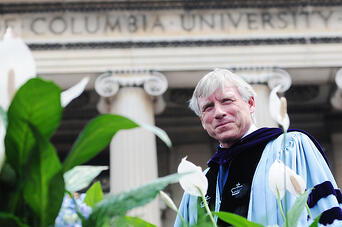 Neurobiology research has a long and storied history at Columbia University and its Medical School in New York, dating back to the groundbreaking work of American neurologist Harry Grundfest 60 years ago. 30 years ago Columbia became one of the first universities to bring together diverse, cross-disciplinary researchers in neighboring labs to study behavior at the cellular, molecular, and systems level. By 2004, when Columbia celebrated its 250th anniversary, university president Lee Bollinger (right) announced the formation of a Mind Brain Behavior Initiative to more productively bring scientists into an even more integrated research effort across not only the two existing New York City campuses, but with an anchor (and crossroads) at the new CU Manhattanville campus then in the active planning stages.
Tags: 2014, 2013, Northeast, New York, Columbia University, brain research, Neuroscience, Columbia, BioResearch Product Faire Event, Funding, Neurology, NY, New York City, Northeast Region, charitable giving
Each year millions of Americans risk undergoing surgery for a variety of problems such as organ transplants, mending broken bones and cosmetic surgeries. Often surgery is necessary to fix ongoing health problems with the benefits of the surgery usually outweighing the risks. Despite the potential risks to surgery patients, in the United States more than 48 million surgeries are performed each year. In most cases, undergoing surgery is relatively risk free, but not always.
Tags: 2014, Bioscience research, 2013, biomedical research, University of Colorado, Medical Research, Drug Discovery, DNA Research, Southwest, National Jewish Health, Anschutz Medical Campus, BioResearch Product Faire Front Line Event, BioResearch Product Faire Event, Denver, CO, public health, NJH, Fitz, Aurora
 An historic collaboration between the University of California Davis and China's BGI, the world’s largest genomics organization, has dramatically increased the University's genome sequencing capabilities and promises to open up altogether new research opportunities in the life sciences community with genomic studies of plants, animals, humans and microbes. The new joint endeavor is called BGI@UC Davis and will benefit both UCD and China's first citizen-managed, non-profit research institution.
Tags: 2014, University of California Davis Medical Center, 2013, University of California Davis, New research facilities, Southwest, California, University of California, UCDMC, BioResearch Product Faire Event, Genomics, genomics research, Sacramento, Davis, Sacramento Campus, UCD
If you were a bacterium attempting an invasion on a hostile immune system, would you be so bold as to consume the very cells that are trying to destroy you? At Ohio State University, researchers have just uncovered the methods of a strain of bacteria that does just that. This master spy, known as Anaplasma phagocytophilum, is only recently being understood and combatted against due to its insidious techniques.
Tags: 2014, Midwest, 2013, Ohio State University, BioResearch Product Faire Event, Columbus, OH, OhStu
This holiday season, 38-year-old mother Stephanie Lindstrom spent time with her family with a renewed optimism and a deep sense of gratitude. Lindstrom is thankful to see Christmas this year after undergoing a triple organ transplant at Emory University Hospital five months ago, the first triple organ transplant ever to take place in the state of Georgia.
Tags: Emory University, 2012, Georgia, BioResearch Product Faire Event, Atlanta, GA, Emory doctors, transplant surgery
 In 2002, entertainment mogul David Geffen gave an unrestricted gift of $200M to the University of Calfornia Los Angeles' School of Medicine, which was subsequently named the David Geffen School of Medicine (DGSOM) in recognition of his generosity. Now, Mr. Geffen has made a further gift of $100M to establish a medical scholarship fund that will offer full funding to the most qualified and promising medical students, whether they are pursuing the MD degree or the MD/PhD in UCLA's renowned Medical Scientist Training Program. As the aim of the scholarship program is to recruit the best students in the world to DGSOM, both American and international students are eligible. All costs including living expenses and supplies are covered by the award and are offered for all 4 years (or 8 in the combined MD/PhD scientist program).
Tags: CA, University of California Los Angeles, California, 2012, Los Angeles, Funding, UCLA, Biotechnology Vendor Showcase, medical school, charitable giving
A technique that is becoming more and more widespread and useful in both modern medicine and biological research is that of cell manipulation. Instead of working purely on visible structures like organs and tissues, doctors and scientists have begun to focus in on how to sort, move, and alter the smallest building blocks of life: cells. While many techniques have been developed and accepted for these purposes, research at the University of Cincinnati has yielded a new method that may be both more efficient and inexpensive than anything seen thus far.
Tags: Midwest, University of Cincinnati, 2012, BioResearch Product Faire Event, Cincinnati, OH, UCinci