

2 Comments Click here to read/write comments
Tags: Bioresearch, Utah, university of utah, Medical Research, migraine research, 2012, scientific research, Front Line event, Salt Lake City
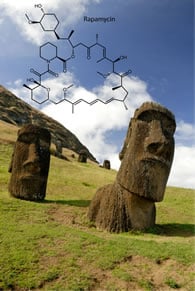 Rapamycin has been used as an effective immunosuppresant in organ transplantation for over a decade, but researchers continue to find other potential uses for the drug base, from treating cancer to prolonging aging, including staving off Alzheimer's. The success and promise of this anti-aging research carried out by University of Texas Health Science Center pharmacologist Randy Strong and colleagues has recently led to the announcement of a major biotech spin-off company, Rapamycin Holdings Inc., also based in San Antonio. The new company will pursue development and testing of rapamycin-related drugs based on UTHSC intellectual property, as well as produce enhanced rapamycin for the global research market--something UTHSC currently does. Rapamycin Holdings was formed with aid (and ongoing support) from the Texas Technology Development Center (T3DC), the Texas Research & Technology Foundation (TRTF), as well as other stakeholders, in order to commercialize the research technology and bring new drug treatments to patients.
0 Comments Click here to read/write comments
Tags: Aging, University of Texas, Texas, 2012, UT Health Science Center San Antonio, UTxSA, San Antonio, Drug Development
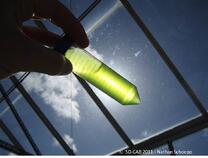 If Dr. Seuss were still writing his wonderous books and turned his attention to biotechnology today, we might see a title like Ah, the Things You Can Do With Algae! At the University of California San Diego a number of research institutions have joined together to form the San Diego Center for Algae Biotechnology (SD-CAB) where scientists are pursuing all sorts of innovative projects using the ubiquitous green matter that also happens to be a genetic model organism. Which means it is not only easy to grow, but it can do things that bacteria and even mammalian cells can't, like host a genetically engineered protein that targets cancer.
0 Comments Click here to read/write comments
Tags: CA, University of California San Diego, cancer research, cell biology, Southwest, California, 2012, biology research, UCSD, Biotechnology Vendor Showcase, San Diego Biotechnology
A little-known fact about the University of Wisconsin, Madison is their emphasis on fish research. In fact, according to an Isthmus article, the university uses and keeps over 400,000 fish: more than the rest of their three dozen species combined. The University of Wisconsin’s research on fish is extensive, and scales from regulating the waterways they travel through to the invasive dangers they face.
0 Comments Click here to read/write comments
Tags: 2012, WI, Wisconsin, University of Wisconsin Madison, BioResearch Product Faire Event, Madison
 Mount Sinai School of Medicine in New York City has just celebrated the opening of its Leon and Norma Hess Center for Science and Medicine in Harlem, with no fewer than 6 full floors (180,000sf) dedicated to laboratory research. The 2 buildings that make up the research facilities and the residential/clinical tower have been under construction for four years, and when we last reported on their progress, the opening had been projected into Spring of 2013. Clearly they've made up some time and are eager to be fully operational as soon as possible. In fact, in a news release, officials said that they had originally expected it to take 4-5 years from the opening to a point where they were fully staffed (with new recruits), but now they've shortened that time to 18-24 months.
0 Comments Click here to read/write comments
Tags: Mount Sinai School of Medicine, Northeast, New research facilities, New York, 2012, MSSM, BioResearch Product Faire Event, NY, New York City, New YorkISMMS, City
Dependence on fossil fuels has been a hot topic for decades now. Several United States presidents have urged that we step away from oil and utilize other natural resources. Now, a partnership between Michigan State University at East Lansing and Luleå University of Technology in Sweden is working on just that. Their plan for alternative energy comes from a biomaterial produced from agricultural residue called butyric acid.
4 Comments Click here to read/write comments
Tags: Michigan State University, Midwest, 2012, MI, East Lansing, MSU, BioResearch Product Faire Frontline Event
2 Comments Click here to read/write comments
Tags: biomedical research, 2012 Research Funding, University of Nevada Reno, UNR, Nevada, 2012, Neuroscience, Front Line event, NV, Reno, Biomedical Research Funding
 In an attempt to shore up both the reputation and functionality of the nations's largest state-funded cancer agency, officials at the Cancer Prevention and Research Institute of Texas (CPRIT) just announced the appointment of Dr. Margaret Kripke as the agency's new chief scientific officer. The embattled agency has faced accusations from many of its key scientists that irregularities and favoritism in the funding process have undermined their scientific credibility and put commercialization above research.
0 Comments Click here to read/write comments
Tags: cancer research, women in science, Texas A&M University, Texas Medical Center, Texas, Southwest, 2012, College Station, BioResearch Product Faire Event, Funding, Houston
 Yesterday we looked at two biologically inspired engineering experiments out of the Wyss Institute in Boston. Today we're on the West Coast at the University of California Santa Barbara's Institute for Collaborative Biotechnologies (ICB) marvelling over another technology that takes its cue from the biological world. It's a microfluidics device designed to function much like the super-sensitive nose of a dog, and it's already being commercialized for use in bomb detection, though other applications could include bio/chemical detection in industrial and healthcare settings as well. Results of the research gauging bomb detection accuracy specifically were published recently in an article in the journal Analytical Chemistry.
0 Comments Click here to read/write comments
Tags: CA, Lab-on-a-chip Technology, Southwest, California, 2012, University of California Santa Barbara, Biotechnology, Front Line event, UCSB, Santa Barbara
 By now we all know that DNA is an informational molecule encoding the genetic instructions used in the development and functioning of all known living organisms and many viruses (Wikipedia). But very recently, Harvard University bio engineers at the Wyss Institute have shown that deoxyribonucleic acid can also be used as a tool. Specifically, two teams have published eye-opening studies on using DNA creatively to:
1 Comment Click here to read/write comments
Tags: Wyse Institute, synthetic biology, 2012, Massachusetts, bio research, Boston, BioResearch Product Faire Event, MA, Harvard, Harvard Medical School