


0 Comments Click here to read/write comments
Tags: Michigan State University, Ohio State University, University of Minnesota, UMN, TAMU, MI, TX, MN, OH, Texas A&M, MSU, OhStu, 2016, BioResearch Product Faire™
If you got behind the wheel of your vehicle to find that the fuel gauge had mysteriously disappeared, would you still drive it? University of Cincinnati researchers are studying a creative approach to fighting tumors that involves disabling cancer cells' energy resource sensors to stop them from proliferating.
Read More
0 Comments Click here to read/write comments
Tags: University of Cincinnati, BioResearch Product Faire Event, Cincinnati, OH, UCinci, 2016
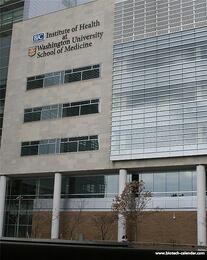
Multiple myeloma is a rare form of cancer that affects the immune system in about 0.7% of Americans. According to the American Cancer Society, approximately 26,850 new cases were expected to be diagnosed in 2015, and 11,240 deaths were expected to occur. Although there are treatments available to fight this cancer, patients frequently relapse, demonstrating the need for new treatments.
Read More
0 Comments Click here to read/write comments
Tags: Washington University St. Louis, Midwest, WashU, St. Louis Bioresearch Product Faire Event, cancer research, Cancer Treatment, MO, St Louis, new funding, 2016, BioResearch Product Faire, Multiple Myeloma
 Since HIV/AIDS emerged as a global health problem in the 1980's, researchers have been diligently working to create new treatments and vaccines for the disease. Currently, there is no cure for the disease, and treatments can only suppress it. Because of its severity and broad reach, scientists around the world receive substantial funding each year to study this virus in order to gain a more thorough understanding and better combat it. Now, thanks to an award from the Foundation for AIDS Research (amfAR), researchers at the University of California, San Francisco will be able to study the virus in a new $20 million institute, located on the Mission Bay campus, for the next five years.
0 Comments Click here to read/write comments
Tags: CA, University of California San Francisco, HIV, AIDS Research, Southwest, San Francisco, SFVS, Biotechnology Vendor Showcase, UCSF, UCSF Mission Bay, New research center, 2016
When we talk about newly discovered drugs that fight diseases, it can appear that life science researchers pull solutions out of thin air. Indeed, very often the drug production process begins with a lengthy, tedious period of trial and error. However, a chemistry research group at the University of Illinois, Urbana-Champaign is attempting a more resourceful approach - discovering new uses for existing drugs.
Read More
0 Comments Click here to read/write comments
Tags: University of Illinois Urbana-Champaign, Urbana-Champaign, UIUrbana, BioResearch Product Faire Event, IL, 2016
 Parkinson's Disease is a devastating neurodegenerative disease that affects people's motor functions. As of today, there are no cures for Parkinson's Disease, and treatments are only able to alleviate symptoms. Researchers across the nation are heavily studying the disease, with the goal of learning more about the onset and progress of the disease to help scientists develop treatment methods.
0 Comments Click here to read/write comments
Tags: Northeast, Thomas Jefferson University, Parkinson's Disease Research, Philadelphia, PA, ThomJeff, 2016, Parkinson's Disease, BioResearch Product Faire, GM1 ganglioside
We’ve seen bacteria eat chlorine and even consume toxic byproducts of biodiesel plants, but researchers at The Ohio State University have found a new strain that takes the cake. These extremophiles literally eat biocide designed to kill them.
Read More
0 Comments Click here to read/write comments
Tags: Ohio State University, 2015, BioResearch Product Faire Event, Columbus, OH, OhStu
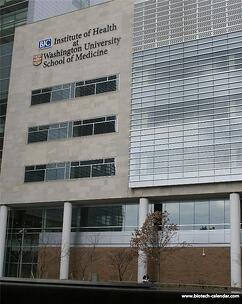 Life science research institutions around the country are constantly expanding and providing more space and opportunity for researchers to conduct their work. Recently, Baylor St. Luke's at the Texas Medical Center announced the construction of a new medical campus that was underway and UGA opened a new Veterinary Research Center earlier this year. Washington University in St. Louis is also expanding research space, with a newly opened Center for Regenerative Medicine.
0 Comments Click here to read/write comments
Tags: Midwest, Washington University, WashU, Regenerative Medicine, MO, St Louis, New research center, 2016, BioResearch Product Faire
 The vitamin B-12, which is vital to human nutrition, is a very complex coenzyme that is produced by many microorganisms. Along with having an impact on the development of the human nervous system and preventing certain diseases, B-12 is also needed by human pathogens, like salmonella, for intestinal infections.
0 Comments Click here to read/write comments
Tags: University of Georgia, Southern, UGA, Athens, GA, NIH funding, BioResearch Product Faire, B-12, Vitamin Research
Personalized medicine is taking on a new meaning. Bioresearchers began creating human body parts from stem cells, but now are moving on to creating human diseases. The University of Illinois, Urbana-Champaign is already growing tumors, as we saw in October. The University of Wisconsin, Madison is now following suit by growing personalized leukemia cells.
Read More
0 Comments Click here to read/write comments
Tags: WI, University of Wisconsin Madison, UWisc, 2015, BioResearch Product Faire Event, Madison