

We’ve seen life science researchers, like Professor Wyman of UC Riverside and Professor Reguera of Michigan State University, master the production of biofuels from biomass sources, such as corn and sugarcane. However, a controversy is brewing around such practices. Critics worry that utilizing these organic materials will substantially detract from the global food supply. Here to answer those concerns is a new study from the University of Minnesota that instead uses agricultural waste as its biomass.
Read More
0 Comments Click here to read/write comments
Tags: University of Minnesota, Minnesota, BioResearch Product Faire Event, UMinn, Twin Cities, 2016
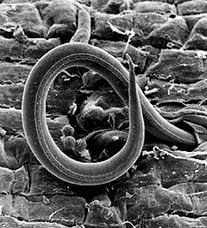 One in eight couples in the United States has fertility problems. In the majority of infertility cases, the cause can be pinpointed to either the man or the woman, but sometimes there seems to be no explanation for the cause of infertility. Researchers at Rutgers University in New Brunswick, New Jersey studying infertility in roundworms have recently found a link between humans and roundworms that provides insight into human infertility.
0 Comments Click here to read/write comments
Tags: Northeast, NJ, New Jersey, Rutgers University, BioResearch Product Faire Event, BRPF, Rutgers, Male infertility, 2016, SPE-45, Roundworms, Izumo protein

Over thirty-six million Americans suffer from migraines. According to the Migraine Research Foundation, more people in the U.S. suffer from migraines than diabetes and asthma combined. The disorder ranks in the top twenty of the world’s most disabling medical conditions. Yet, migraine research has traditionally been one of the lowest-funded fields of study in medicine… Until now.
Read More
0 Comments Click here to read/write comments
Tags: University of California Los Angeles, migraine research, UCLA School of Public Health, UCLA, BioResearch Product Faire, Leonard Goldberg, Dr. Andrew Charles, UCLA research funding
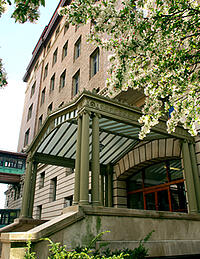
Bioscientists are constantly discovering new methods to accelerate bone healing. First, we saw them use stem cells to regenerate ribs, and then we saw them add a protein that boosts bone regeneration. Both of these techniques involve introducing new and foreign substances into the body, which run the risk of rejection. A new study from the University of Michigan, Ann Arbor shows that, in fact, cells already at the injury site know how to repair bone if you know how to remind them.
Read More
0 Comments Click here to read/write comments
Tags: University of Michigan Ann Arbor, Ann Arbor, BioResearch Product Faire Event, MI, UMich, 2016
Updated 12/8/2016, originally posted by Laura Braden 2/2/16
Understanding what stem cells do and why they are important has been a popular research topic for many years. Scientists have learned quite a bit about their functions, such as repairing damaged tissues and renewing some normal ones. However, there is no knowledge of where these stem cells originate and how they develop in the embryo.
Read More
0 Comments Click here to read/write comments
Tags: Rockefeller University, Northeast, Stem Cells, New York, RockU, NY, 2016, BioResearch Product Faire

Tuberculosis is the number one cause of death by infectious disease around the world. In 2014, this contagious bacterial infection was responsible for 1.5 million deaths worldwide. Although the disease is treatable and curable, it still persists as a global health problem that scientists continue to study, to develop new and improved treatments.
The Bill & Melinda Gates Foundation recently granted scientists from the Oregon Health and Science University $3 million to research potential vaccines for tuberculosis.
Read More
0 Comments Click here to read/write comments
Tags: The Bill and Melinda Gates Foundation, tuberculosis, Oregon Health and Science University, Northwest, OR, OHSU, Portland, new funding, 2016, BioResearch Product Faire, MAIT cells
For years, we’ve been discussing reasons not to use antibiotics and have seen the development of new alternatives, such as spray-on antibodies and internal bacterial combustion. Despite this, antibiotics continue to be widely used today. Scientists at Washington University in St. Louis theorize that antibiotics are here to stay, but perhaps it is the definition of antibiotics that needs to be changed.
Read More
0 Comments Click here to read/write comments
Tags: Washington University St. Louis, WashU, BioResearch Product Faire Event, MO, St Louis, 2016
 As people get older, their bodies become more susceptible to certain diseases. Cancer, among others, is a disease that becomes more common as people age. David S. Yu, M.D., Ph.D from Emory University was recently awarded $1.6 million from the National Institutes of Health (NIH) to study the gene SIRT2 and how it can be manipulated to control the effects of aging and prevent cancer.
0 Comments Click here to read/write comments
Tags: Emory University, Aging, cancer research, Southern, Emory, Atlanta, GA, 2016, BioResearch Product Faire
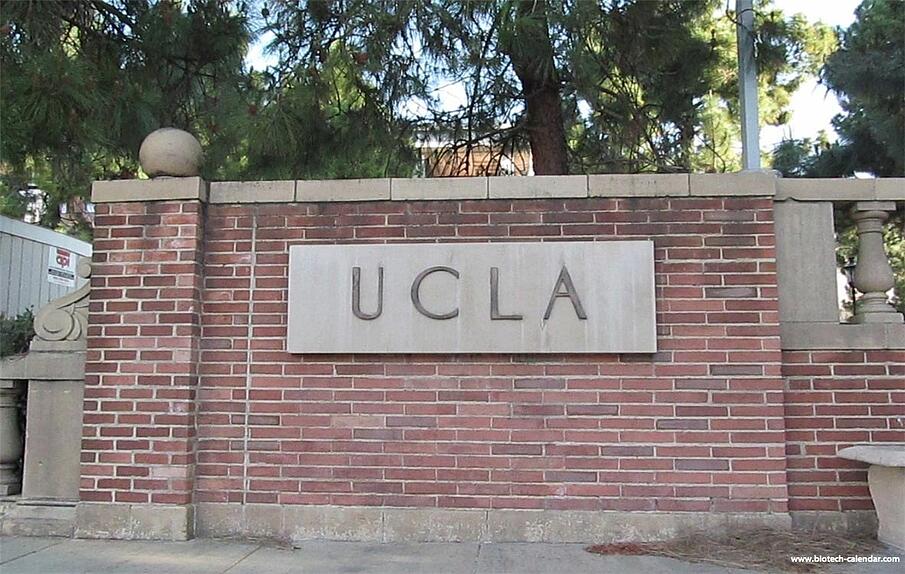 When vital organs in the body, such as the lungs, begin to fail, an organ transplant can be a solution to the problem. However, receiving a transplant may have its own complications, such as the body rejecting its new organ.
Now, thanks to a generous donation of $1 million dollars from Michael and Linda Keston, researchers from the Division of Pulmonary and Critical Care Medicine at the UCLA David Geffen School of Medicine will be able to continue studying lung disease and the organ rejection commonly following a transplant.
Read More
0 Comments Click here to read/write comments
Tags: CA, University of California Los Angeles, Los Angeles, LAVS, UCLA, Biotechnology Vendor Showcase, new funding, 2016, Lung Disease, organ transplant, organ rejection
A few years ago, we witnessed the biotechnology industry’s first steps into bone regeneration; for instance, the University of Southern California was experimenting with stem cells to rebuild broken ribs. Now Michigan State University is learning the nuances of repairing more general bone fractures.
Read More
0 Comments Click here to read/write comments
Tags: Michigan State University, BioResearch Product Faire Event, MI, East Lansing, MSU, 2016