

It seems we can get oil from any number of unlikely substances these days, and a joint biofuel research team from Texas A&M and Cornell is trying to do just that. With a $2M grant from the NSF, researchers are studying how to extract the naturally-produced oil from algae. So next time you look at a green swimming pool, consider that a similar muck just might be able to fuel your car. Algae is an eukaryotic organism that is photosynthetic and generally aquatic, and it comes in a wide variety of forms. It can be a very small single cell organism like B. braunii or a very large multi-cellular organism like kelp. It fact algae is one of the newest and most promising subjects of research in the quest for biofuels.
Read More
0 Comments Click here to read/write comments
Tags: Cornell University, biofuels, Texas A&M University, Texas, Southwest, 2012, Biochemistry, College Station, TAMU, BioResearch Product Faire Event, Energy, TX, BRPF
 |
| (Courtesy of http://www.abc.net.au/) |
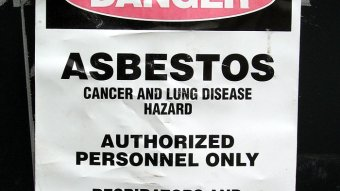
Every week we see commericals on television asking if we have Mesothelioma. By the number of commercials alone you would be right in thinking Mesothelioma is a serious problem. That's why it's particularly important that a major cancer research institution, the University of Hawaii Cancer Center, recently received a $600,000 grant from the Jimmy Valvano Foundation for Cancer Research. The grant was awarded to the research lab of pathologist Michele Carbone to study HGMB1: A Biomarker for Mineral Exposure and Detection of Malignant Mesothelioma. According to Dr. Carbone:
0 Comments Click here to read/write comments
Tags: biomedical research, University of Hawaii, cancer research, 2012, Hawaii, Front Line event, Honolulu, HI, Biomedical Research Funding
In the search for early life we are going where we have never gone before...with newly-funded astrobiology research at the University of Illinois.
2 Comments Click here to read/write comments
Tags: Midwest, Bioresearch, Bioresearch funding, University of Illinois Urbana-Champaign, 2012, Illinois, biology research, BioResearch Product Faire Event, Funding, Research Funding, IL, genomics research, research grant, new research grants, UIUC
We've heard about the Golden Fleece Awards (vilifying seemingly-obscure science research) and the Golden Goose Awards (lauding seemingly-obscure science research) more than a little often in this year of threatened federal science budget cuts, but that's more politics than anything else. It certainly isn't half as much fun as the infamous and much-laughed-with Ig Nobel Prizes, given out yearly in honor of improbable research so absurd-sounding we can't help but love it. At this year's awards ceremony, held last Thursday night at Harvard University, 10 unlikely science research projects received their due respect (and a few guffaws) at the hands of genuinely bemused genuine Nobel laureates.
0 Comments Click here to read/write comments
Tags: CA, 2013, Northeast, Southwest, 2012, BioResearch Product Faire Front Line Event, Boston, BioResearch Product Faire Event, Event, MA, Harvard, science researchers, Harvard Medical School, UCSB, Santa Barbara, Happy scientist, UC Santa Barbara
Construction of an exciting new research facility was recently announced for the University of Illinois at Chicago. According to a UIC news article, Illinois Governor Quinn declared the commencement of the Advanced Chemical Technology Building (ACTB), which will house researchers from chemistry, biology, and physics. The driving idea behind the building is to foster connections between the three broad fields to focus on specific fields like immunology, orthopedics, tumor growth, and nanoscience.
0 Comments Click here to read/write comments
Tags: Midwest, University of Illinois Chicago, New research facilities, 2012, Illinois, BioResearch Product Faire Event, Chicago, IL, new construction, BRPF, UIC
 The Washington Animal Disease Diagnostic Laboratory (WADDL) within the College of Veterinary Medicine at Washington State University in Pullman is one of an elite group of veterinary facilities that use sophisticated molecular tools to diagnose disease, with labs for bacteriology, parasitology, pathology, serology, and virology. One threat they've been keeping a particularly keen eye out for this summer is West Nile Virus, which they have in fact found in horses, and which led the State to issue warnings for both animals (to have them vaccinated) and humans (to take extra precautions). West Nile is transmitted from infected birds, through biting mosquitos, and on to larger warm-blooded creatures. Because this has been such a hot, dry summer across most of the U.S., birds and mosquitos are finding themselves more often sharing the same rare watering hole, which may be causing the rise in West Nile cases. West Nile is an example of a zoonotic disease, meaning that it can be transfered between species. The role of veterinary labs like WADDL in tracking and identifying cases of these diseases is doubly important, then, as they work to prevent epidemics in our animals as well as ourselves.
0 Comments Click here to read/write comments
Tags: Washington, WSU Pullman, WA, Northwest, New research facilities, Washington State University, veterinary medicine, 2012, animal science, Front Line event, new construction
In a recent round of new funding from the California Institute for Regenerative Medicine (CIRM), two UC Irvine stem cell research labs and their collaborators at other California universities and private labs have been awarded some $37M, of which approximately $12M will go directly to UCI. The two funded projects involve translational research to develop eventual clinical trials for Alzheimer's disease, in the one study, and retinitis pigmentosa in the other. The new awards bring Irvine's total CIRM funding over the years to $96.25 million, most carried out at the Sue & Bill Gross Stem Cell Research Center (right) which opened its cutting-edge facility on campus 2 years ago.
0 Comments Click here to read/write comments
Tags: CA, Stem cell research, University of California Irvine, Southwest, California, 2012, Neuroscience, BioResearch Product Faire Event, Funding, Irvine, CIRM, UC Irvine
"High-risk, high-reward" life science research funding isn't something we hear about very often in these days of fiscal belt-tightening, especially coming from the private sector. Fortunately the NIH is still committed to supporting exceptional life science labs that take the road less travelled, with the Director's Transformative Research Awards and the Director's New Innovator Awards, because the potential payoff justifies the gamble taken. The NIH has standard criteria by which they evaluate grant proposals. Realizing that those criteria would enevitably leave out some of the most daring and ground-breaking research, they came up with the High Risk awards. 2012 Director's Awards from the NIH Common Fund (totalling some $155M) have gone to 81 investigators, and 5 of them are faculty members and heads of laboratories at Rockefeller University.
0 Comments Click here to read/write comments
Tags: Rockefeller University, Northeast, RNA research, New York, 2012, biology research, BioResearch Product Faire Event, Funding, NY, NIH, New York City, new research grants, Rockefeller, early career funding
Science researchers at Emory University recently conducted a study that suggests a drug used to treat autoimmune disorders and rheumatoid arthritis may be used to help treat people with depression who haven’t had success with traditional depression medications. The study was published on September 3rd in Archives of General Psychiatry. According to researchers, inflammation is normally associated with the way the body responds to tissue damage, but persistent inflammation can affect many parts of the body, including the brain.
0 Comments Click here to read/write comments
Tags: Emory University, 2012, Georgia, Bioresearch product fair, Emory, science researchers, Atlanta, GA
It takes a long time for a lab science building to go from planning and fundraising, through permitting and construction and on to occupancy. In the case of the University of Washington's Molecular Engineering and Sciences Building, which is celebrating its grand opening next week, that process took 5 years and had some unexpected perks. While there's been very little upside to the down economy since 2008, it has had the effect of lowering construction costs, which means that UW Seattle's newest science building is even bigger and better than they'd originally planned because they were able to get more for their $77M.
Read More
One of the things they got was some very thoughtfully designed labs. Though flexibility of design is important to assure future utility, research team leaders gave significant input into the design of their specific labs to make sure those labs were ideal for the type of research that would be carried out within their walls. Project architect Tim Williams, of Zimmer Gunsul Frasca, said in an interview:
“Scientists spend a lot of time in the lab. The UW faculty wanted to look at how we could make that a nicer place to be."
Here are some of the ways they made a nicer science lab building:
 5-story, 90,300sf structure
- Each of the four above-ground floors is divided into a laboratory half and an office half
- The basement is a 28,000sf low-vibration lab space
- Houses more than 15 faculty, 3 research centers and 4 major instrumentation centers
- Aluminum-plate shielding on the building guards against electromagnetic waves
- Natural ventilation in office spaces provided by windows that open
- Optimized ventilation in the lab spaces, replacing air 6 times per hour rather than 10
- Innovative commons spaces
- Green roof gardens
UW officials are proud of the new building, not just because it is state-of-the-art, but also because it's "state-of-the-science." Molecular engineering is a relatively new field, and the UW Molecular Engineering and Sciences Institute (MOLES, the building's primary occupant) sees its mission as exploring a new kind of engineering for the 21st Century: rather than build bridges over rivers (still a noble feat), the new molecular engineer may be building proteins that travel to specific parts of the body. He or she may follow the latest developments in chemistry, biology, physics, nanotechnology and predictive modeling; and his or her research projects will often be interdisciplinary, with colleagues from diverse fields and perhaps different institutions.
Furthermore, if life scientists often pursue basic research to understand the building blocks of life, and engineers build things and occupy themselves with practical mechanics and physical principles, the fusion of the two should have tremendous translational potential. Such is the goal of MOLES and their new collaborative workspace. Per their website:
Research at the Institute for Molecular Engineering & Sciences will be evolvable and dynamic, focusing initially on the themes of CleanTech and BioTech.

Some of the faculty scientists who will be doing research in the new MOLES facility include:
- Patrick Stayton, a professor of bioengineering
- Suzie Pun, a bioengineering associate professor
- David Baker, a biochemistry professor
- Daniel Gamelin, a chemistry professor
- Hugh Hillhouse, a chemical engineering professor
- Christine Luscombe, an associate professor of materials science and engineering
(Dr. David Baker seems to come up in our blog series with regularity. For former blogs citing his work, read the following:)
Computational Biology Scientist at UW Develops New Protein Structure
Crowdsourcing Research Challenge by UW Scientists a Game Changer?
Biotechnology Calendar, Inc. will hold 3 professional tradeshow events focusing on Washington state's bioscience technology and the research partnerships between scientists and the science equipment industry next month on these dates:
- 10/23/2012 -- Washington State University BioResearch Product Faire event, Pullman
- 10/24/2012 -- Fred Hutchinson Cancer Research Center BRPF event, Seattle
- 10/25/2012 -- University of Washington Front Line event, Seattle
For information on exhibiting at the University of Washington show in particular, and receiving a university research funding report, click here:

Biotechnology Calendar, Inc. is a full service event marketing and planning company producing on-campus, life science research tradeshows nationwide for the past 20 years. We plan and promote each event to bring the best products and services to the best research campuses across the country.
2 Comments Click here to read/write comments
Tags: Bioscience research, CEEM, UW, Molecular Engineering, University of Washington, Northwest, WSU, New research facilities, 2012, Biochemistry, chemistry research, Engineering, Front Line event, Energy, Seattle, new construction, construction