

 Chemical and biomolecular engineering researchers at the University of Pennsylvania have recently achieved something truly impressive: they've managed to dramatically improve the process of methane catalysis, by a factor of 30, and using lower temperatures. What this could mean in terms of environmental protection and energy generation is nothing less than game-changing. Natural gas production is at an all-time high in the U.S. and will replace much of our dependence on oil and coal if we can burn it efficiently and without methane pollution. Methane is also a by-product of industries such as waste management, animal farming, and oil extraction (the iconic flame at the top of an oil well is methane being released from underground), where its containment is an ongoing challenge.
Tags: Pennsylvania, Northeast, University of Pennsylvania, UPenn, catalysts, nanotechnology, 2012, chemistry research, Philadelphia, BioResearch Product Faire Event, PA, BRPF
Tags: Fred Hutchinson Cancer Research Center, Washington, AIDS Research, WA, evolution research, 2012, biology research, biology research scientists, BioResearch Product Faire Event, Genetics, Seattle
 The word antibacterial is popping up on more and more household items as merchandisers find that consumers generally believe that chemicals designed to kill bacteria are a useful additive to a product and boost its appeal. Very often the chemical that's added is one called triclosan, and according to recently published research by a team of University of California Davis biomedical scientists, the common polychloro phenoxy phenol causes muscle impairment in animal and lab tissue models. Specifically, it limits the ability of the muscle to expand and contract. A beating heart is one example.
Tags: CA, University of California Davis, cardiovascular research, chemical research, cell biology, California, 2012, animal science, chemistry research, BioResearch Product Faire Event, Davis, Sacramento Campus, UCD
While the NASA rover Curiosity explores the Martian surface, researchers from Washington University at St. Louis (WUSTL) are working behind the scenes, exploring the data that the rover sends back. WUSTL researchers also played a large part in getting Curiosity off the ground, literally.
Tags: Midwest, Washington University, Missouri, WUSTL, 2012, BioResearch Product Faire Event, MO, St Louis
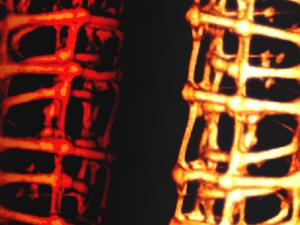 It's getting to the point where there's less and less relevant distinction to be made between life science and physical science research. It was clearer when one lab had petri dishes and the other had circuitboards, but what happens when you have both? That's the case in the Harvard University labs of chemist Charles Lieber and his medical school colleague Daniel Kohane, where the bio research team has successfully created living tissue embedded with tiny nanowires capable of running an electrical current so subtle that it does not harm the tissue cells. These 3D bioelectronic structures could potentially both relay complex information about what's going on inside the tissue and receive signals from an outside source such as instructions for repairs. Several news outlets are calling it cyborg tissue and envision its future use in implants, prosthetics, or even some kind of therapeutic microbot. More immediately it will most likely be used for drug testing in labs, as a precursor to animal or human trials.
Tags: Northeast, MIT, cell biology, 2012, Biochemistry, Massachusetts, biorobotics, Cell Research, chemistry research, bioprinting, Boston, BioResearch Product Faire Event, MA, Harvard, Harvard Medical School
Research scientists at the University of North Carolina at Chapel Hill have discovered a “spray-on skin” treatment that speeds up recovery in wounds that don’t heal well on their own. The findings, published in the Lancet, showed that ulcers treated with the spray healed better than ulcers treated in other ways. According to WRAL.com, between one and two million Americans have a vein disease where leg wounds have difficulty healing. People with such wounds are at risk for infections and even amputation.
Tags: University of North Carolina at Chapel Hill, North Carolina, Southeast, 2012, Cell Research, Front Line event, NC, research scientists, Chapel Hill, UNC-Chapel Hill, Southern Region
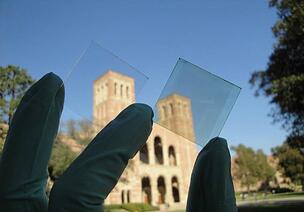 The big, shiny black solar panels you're used to seeing bolted onto south-facing rooftops may soon be obsolete, if researchers at UCLA's California NanoSystems Institute continue to advance solar nanoscience at their current lightspeed pace. In fact, you not only won't recognize the new technology, you won't even be able to see it -- because it will be virtually transparent. And instead of being mounted to the roof, these thin plastic flexible sheets will cover your windows and skylights, as well as smaller surfaces like the face of your smartphone or tablet. What if the sun's not shining brightly? No problem, because these polymer solar cells (PSCs) absorb mostly ultra-violet and near-infrared (NIR) light, rather than the visible light that more traditional solar technology relies upon.
Tags: CA, University of California Los Angeles, Photonics, Solar Energy, nanotechnology, California, 2012, Los Angeles, Biochemistry, Engineering, UCLA, scientists solutions, Biotechnology Vendor Showcase, Photonic Devices, scientist solutions
A research team composed of researchers from the University of Colorado at Boulder and Yale University recently released a public demonstration of their Map of Life, a database that stores the geographic locations of the world's species. The demonstration version contains about 25,000 different species of birds, mammals, reptiles, amphibians and fish to date, but the goal is to have a complete record for every living organism on Earth.
Tags: University of Colorado, Bioinformatics, Southwest, 2012, animal science, BioResearch Product Faire Event, CO, Boulder, UCO
An Oregon State University research lab led by Gregory Rorrer has just been awarded a $2M NSF grant as part of the Emerging Frontiers in Research and Innovation (EFRI) program for Engineering projects. Of the 15 ENG/EFRI awards for 2012, 3 were in the category of Synthetic Biorefineries research: "the large-scale use of micro-organisms that harness solar energy to produce chemicals and fuels from carbon dioxide." Rorrer's lab will study diatom photosynthesis as a means of creating biofuel, as well as two other bioengineered products. Diatoms are a type of algae with a unique biosynthetic ability to extract silicate from the ocean to create cell walls of nanostructured silica. According to the grant proposal, the OSU team will identify cellular processes and cultivation strategies towards the design of scalable systems for a future diatom-based photosynthetic biorefinery.
Tags: Oregon State University, Northwest, biofuels, women in science, Texas A&M University, Oregon, 2012, University of Wisconsin Madison, Biochemistry, Front Line event, OR, NSF, Corvalis, ORSTU
The University of Washington, Seattle recently received a $65 million grant from the NIH to help improve and streamline the UW Institute of Translational Health Sciences (ITHS) research program. This is the second grant of this type awarded to UW and will fund the program over a five year period.
Tags: Washington, UW, University of Washington, WA, WA research, Translational Research, WSU, 2012, Funding, Front Line event, NIH, Seattle, new research grants