

Each year millions of Americans risk undergoing surgery for a variety of problems such as organ transplants, mending broken bones and cosmetic surgeries. Often surgery is necessary to fix ongoing health problems with the benefits of the surgery usually outweighing the risks. Despite the potential risks to surgery patients, in the United States more than 48 million surgeries are performed each year. In most cases, undergoing surgery is relatively risk free, but not always.
1 Comment Click here to read/write comments
Tags: 2014, Bioscience research, 2013, biomedical research, University of Colorado, Medical Research, Drug Discovery, DNA Research, Southwest, National Jewish Health, Anschutz Medical Campus, BioResearch Product Faire Front Line Event, BioResearch Product Faire Event, Denver, CO, public health, NJH, Fitz, Aurora
 An historic collaboration between the University of California Davis and China's BGI, the world’s largest genomics organization, has dramatically increased the University's genome sequencing capabilities and promises to open up altogether new research opportunities in the life sciences community with genomic studies of plants, animals, humans and microbes. The new joint endeavor is called BGI@UC Davis and will benefit both UCD and China's first citizen-managed, non-profit research institution.
0 Comments Click here to read/write comments
Tags: 2014, University of California Davis Medical Center, 2013, University of California Davis, New research facilities, Southwest, California, University of California, UCDMC, BioResearch Product Faire Event, Genomics, genomics research, Sacramento, Davis, Sacramento Campus, UCD
If you were a bacterium attempting an invasion on a hostile immune system, would you be so bold as to consume the very cells that are trying to destroy you? At Ohio State University, researchers have just uncovered the methods of a strain of bacteria that does just that. This master spy, known as Anaplasma phagocytophilum, is only recently being understood and combatted against due to its insidious techniques.
0 Comments Click here to read/write comments
Tags: 2014, Midwest, 2013, Ohio State University, BioResearch Product Faire Event, Columbus, OH, OhStu
This holiday season, 38-year-old mother Stephanie Lindstrom spent time with her family with a renewed optimism and a deep sense of gratitude. Lindstrom is thankful to see Christmas this year after undergoing a triple organ transplant at Emory University Hospital five months ago, the first triple organ transplant ever to take place in the state of Georgia.
0 Comments Click here to read/write comments
Tags: Emory University, 2012, Georgia, BioResearch Product Faire Event, Atlanta, GA, Emory doctors, transplant surgery
A technique that is becoming more and more widespread and useful in both modern medicine and biological research is that of cell manipulation. Instead of working purely on visible structures like organs and tissues, doctors and scientists have begun to focus in on how to sort, move, and alter the smallest building blocks of life: cells. While many techniques have been developed and accepted for these purposes, research at the University of Cincinnati has yielded a new method that may be both more efficient and inexpensive than anything seen thus far.
2 Comments Click here to read/write comments
Tags: Midwest, University of Cincinnati, 2012, BioResearch Product Faire Event, Cincinnati, OH, UCinci
A little-known fact about the University of Wisconsin, Madison is their emphasis on fish research. In fact, according to an Isthmus article, the university uses and keeps over 400,000 fish: more than the rest of their three dozen species combined. The University of Wisconsin’s research on fish is extensive, and scales from regulating the waterways they travel through to the invasive dangers they face.
0 Comments Click here to read/write comments
Tags: 2012, WI, Wisconsin, University of Wisconsin Madison, BioResearch Product Faire Event, Madison
 Mount Sinai School of Medicine in New York City has just celebrated the opening of its Leon and Norma Hess Center for Science and Medicine in Harlem, with no fewer than 6 full floors (180,000sf) dedicated to laboratory research. The 2 buildings that make up the research facilities and the residential/clinical tower have been under construction for four years, and when we last reported on their progress, the opening had been projected into Spring of 2013. Clearly they've made up some time and are eager to be fully operational as soon as possible. In fact, in a news release, officials said that they had originally expected it to take 4-5 years from the opening to a point where they were fully staffed (with new recruits), but now they've shortened that time to 18-24 months.
0 Comments Click here to read/write comments
Tags: Mount Sinai School of Medicine, Northeast, New research facilities, New York, 2012, MSSM, BioResearch Product Faire Event, NY, New York City, New YorkISMMS, City
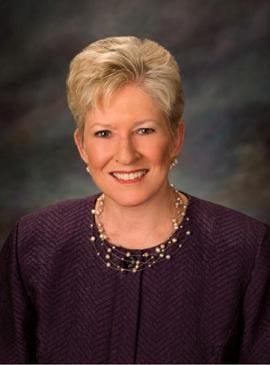 In an attempt to shore up both the reputation and functionality of the nations's largest state-funded cancer agency, officials at the Cancer Prevention and Research Institute of Texas (CPRIT) just announced the appointment of Dr. Margaret Kripke as the agency's new chief scientific officer. The embattled agency has faced accusations from many of its key scientists that irregularities and favoritism in the funding process have undermined their scientific credibility and put commercialization above research.
0 Comments Click here to read/write comments
Tags: cancer research, women in science, Texas A&M University, Texas Medical Center, Texas, Southwest, 2012, College Station, BioResearch Product Faire Event, Funding, Houston
 By now we all know that DNA is an informational molecule encoding the genetic instructions used in the development and functioning of all known living organisms and many viruses (Wikipedia). But very recently, Harvard University bio engineers at the Wyss Institute have shown that deoxyribonucleic acid can also be used as a tool. Specifically, two teams have published eye-opening studies on using DNA creatively to:
1 Comment Click here to read/write comments
Tags: Wyse Institute, synthetic biology, 2012, Massachusetts, bio research, Boston, BioResearch Product Faire Event, MA, Harvard, Harvard Medical School
 For both dairy and beef production, cows are an important part of the US economy and food supply. When they get sick, it's bad for business (and not too pleasant for the cow). The most common illness in cattle is Bovine Respiratory Disease (BRD), which accounts for losses of more than $690M annually in the US alone. To combat this threat to bovine health and productivity, the USDA has recently awarded a $9M 5-year grant to researchers at Texas A&M University's College of Veterinary Medicine and Biomedical Sciences, in collaboration with colleagues at the University of Missouri, to study genetic selection for breeding more disease-resitant stock. A second $5M grant will go towards research into feed efficiency, again with the aim of breeding heartier, healthier, and more profitable animals.
0 Comments Click here to read/write comments
Tags: Texas A&M University, Texas, veterinary medicine, Southwest, 2012, animal science, College Station, TAMU, BioResearch Product Faire Event, Texas A&M Research, Genomics, Genetics, Texas A&M