

At the University of Illinois at Chicago, biochemists have developed an intuitive solution to the age-old problem of macular degeneration, the leading cause of loss of vision for people over the age of fifty. Their new product is a light-sensitive molecule that can restore vision lost from degenerative eye diseases.
0 Comments Click here to read/write comments
Tags: Midwest, University of Illinois Chicago, 2012, Illinois, BioResearch Product Faire Event, Chicago, IL, UIC
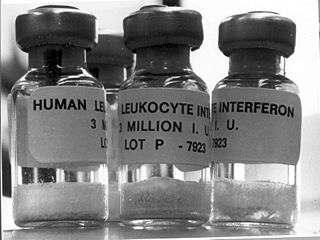
Researchers in the St. Giles Laboratory of Human Genetics of Infectious Diseases at Rockefeller University have recently published the results of a study that demonstrates how organs like the brain have their own defense systems which, when disrupted, can permit disease despite a healthy white blood cell count. The key is the production of interferon, which are proteins triggered by a receptor called TLR3 that send up the alarm to fight infection (by interfering with the pathogen's reproduction). When that TLR3 receptor is faulty on a neuron or other brain cell, no interferon is produced and the patient can suffer a disease of the brain even though that same pathogen is being combatted effectively in other parts of the body. We now know there seem to be localized systems of immune response within specific organs, and that interferon therapy may help patients with rare localized diseases.
0 Comments Click here to read/write comments
Tags: Rockefeller University, biomedical research, Stem cell research, New York, 2012, Immune System, brain research, BioResearch Product Faire Event, NY, New York City
Duke University has been selected as one of seven schools to be on the forefront of a United States effort to help eliminate desperate poverty around the world. Duke will receive a $10 million grant from the U.S. Agency for International Development (USAID) to form a development lab whose goal is to pinpoint and support progress in solutions to worldwide health problems in low- and middle-income nations.
0 Comments Click here to read/write comments
Tags: USAID, Duke University, North Carolina, 2012, BioResearch Product Faire Event, Durham, NC, Duke, research scientist
Earlier this week, we discussed the commercialization of neural interface chips at the University of Utah. Meanwhile, at the University of Michigan at Ann Arbor, researchers are innovating in neuroscience on an even smaller scale. A new, slimmer electrode allows for the more precise studying of individual neurons and promises insight on the workings of the mind based on the interactions between neurons and the brain.
0 Comments Click here to read/write comments
Tags: University of Michigan, Midwest, 2012, Michigan, Ann Arbor, Neuroscience, BioResearch Product Faire Event, MI, UM
Last year when we reported on the extraordinary $150 Million gift by the Simons Foundation to Stony Brook University (read the blog), we noted that part of the gift was earmarked for new research faculty hires as part of the SUNY 2020 Plan. Indeed the goal is to hire as many as 250 new researchers into the SUNY System by the year 2020--100 at the Stony Brook campus. The first 25 of those positions will be in 5 "clusters," which were recently selected from a larger pool of program proposals in the first round of the University's interdisciplinary faculty cluster hiring initiative. Rather than approving individual faculty members, or even allotting funds to individual departments, SBU is looking at using this unprecedented opportunity to strengthen its interdisciplinary programs through this clustered hiring of faculty who will work within a department but also as part of a larger team.
0 Comments Click here to read/write comments
Tags: New York, 2012, Stony Brook University, BioResearch Product Faire Event, Funding, NY, Southwest Region, National Lab, Stoneybrook, new research faculty
Most of us ate turkey with friends and family in a warm house yesterday. Today many are shopping. Meanwhile on Long Island, Staten Island and the Jersey Shore, volunteer organizations are still hard at work cleaning up the mess from Sandy and helping people move their lives forward. Instead of Thanksgiving at home with family, military veterans volunteering with Team Rubicon probably ate a donated meal with fellow workers or community members. Maybe they got to rest their muscles for a day.
0 Comments Click here to read/write comments
Tags: Northeast, New York, 2012, BioResearch Product Faire Event, Front Line event, New York City, Trade show, Biotechnology Vendor Showcase, Sales
In the realm of biomedical imaging, researchers from Washington University in St. Louis are taking cues from an amazing set of eyes found in nature. Far from the instinctual candidates for impressive eyesight, like cats or birds of prey, this pair belongs to a creature under the sea: the mantis shrimp.
0 Comments Click here to read/write comments
Tags: Midwest, Washington University, Missouri, WUSTL, 2012, BioResearch Product Faire Event, MO, St Louis
The University of California system has five biomedical campuses currently: San Francisco, San Diego, Los Angeles, Irvine, and Davis/Sacramento. While each campus maintains a certain autonomy, the advantage to being part of a unified, statewide system is especially apparent when it comes to sharing resources such as biospecimens. In research studies that require data from large numbers of human blood or tissue samples, for instance, scientists rely on biobanks: an organized collection of human biological material and associated information stored for one or more research purposes.
0 Comments Click here to read/write comments
Tags: CA, University of California Los Angeles, University of California San Francisco, Bioscience research, Bioresearch, Translational Research, Southwest, California, University of California, 2012, Los Angeles, San Diego, San Francisco, BioResearch Product Faire Event, Biotechnology Vendor Showcase
If you’ve ever been in need of a blood thinner, or you’re an avid reader of the Science Market Update, you’re probably familiar with the drug warfarin. Warfarin is an anticoagulant, which means it decreases the clotting ability of the blood in order to fight blood clots. However, it’s known to cause adverse effects if taken in the wrong amounts. In one of our September articles, we talked about research underway at the University of Illinois at Chicago that focused on prescribing the proper dosage of the drug. Meanwhile, just a few cities over, researchers at the University of Illinois Urbana-Champaign are working on an alternate drug to warfarin.
0 Comments Click here to read/write comments
Tags: Midwest, University of Illinois Urbana-Champaign, 2012, Illinois, BioResearch Product Faire Event, IL, UIUC
The Department of Neuroscience at New York's Mount Sinai School of Medicine comprises 25 research laboratories with total NIH funding for 2012 of $19.3M. Most labs are on the 9th Floor of the Icahn Medical Institute building on Madison Avenue. Neuroscience faculty may also receive support and engage in collaborative research through MSSM's Friedman Brain Institute, which coordinates brain and spinal cord research from departments and clinics across the medical school campus. In fact, the largest recipient of 2012 NIH funding at MSSM Neuroscience is Brain institute Director Eric J. Nestler, MD, PhD.
0 Comments Click here to read/write comments
Tags: Mount Sinai School of Medicine, Northeast, New York, 2012, Neuroscience, MSSM, BioResearch Product Faire Event, Funding, NIH, New York City