

Of the eleven scientists just announced as winners of the new Life Sciences Breakthrough Prize, four of them have their labs within a block or two of each other in Manhattan: two at Rockefeller University, one at Weill Cornell Medical College, and one at Memorial Sloan-Kettering Cancer Center. The prize, given to recognize past achievement in research aimed at curing disease and extending human life, comes with $3M to allow each of those researchers the freedom and flexibility to pursue even more groundbreaking work in the future. The founding sponsors of the prize are tech entrepreneurs Sergey Brin (Google) and Anne Wojcicki, Mark Zuckerberg (Facebook) and Priscilla Chan, Art Levinson (Apple), and Yuri Milner (venture capitalist). The 11 winners this year will serve on the board to choose 5 winners each in subsequent years.
Tags: 2014, Rockefeller University, 2013, Northeast, cancer research, women in science, New York, Weill Cornell, Memorial Sloan-Kettering Cancer Center, RockU, BioResearch Product Faire Event, NY, New York City, Cancer Center, Rockefeller
A goal that many are working toward in the biotechnology field is to gather the maximum biological information about people using the least invasive practices. Ultimately, we would like to be able to simply scan ourselves with a little machine and instantly get a full report on our health for personal and doctor use. Moving forward on those lines is the University of Cincinnati, where a research team has announced a unique and unlikely candidate for the job: a portable, adhesive sweat analyzer.
Tags: 2014, Midwest, 2013, University of Cincinnati, Bio, BioResearch Product Faire Event, Cincinnati, laboratory, OH, UCinci, lab supplier
The Brain Activity Map project could be the next big federal life science research endeavor, with no less a goal than the mapping of the entire living brain and all its neuronal activity. Like the Human Genome Project of the 90's, the not insignificant financial outlay is being presented as an investment that will net even bigger returns, both in terms of new technology and a vastly increased understanding of the mind. President Obama is expected to include the multi-billion dollar, decade-long funding in his upcoming budget proposal, and neuroscience research was a topic he addressed specifically in his recent State of the Union address.
Tags: 2014, CA, University of California San Diego, 2013, Northeast, University of California Berkeley, New York, Columbia University, Southwest, California, University of California, Berkeley, Neuroscience, San Diego, SDVS, Columbia, BioResearch Product Faire Event, Funding, UCSD, NY, NIH, Columbia University Medical Center, Biotechnology Vendor Showcase, Berkeley Labs, UCBerk
Medical students at Duke University finally have their own home after being spread out over the medical campus for 73 years. Filled with natural light from the glass walls and study nooks for doing work, this building is a gorgeous feat of architecture. It has been named the Mary Duke Biddle Trent Semans Center for Health Education, and it’s located right in the middle of the medical campus. The center provides a space for medical students who used to have to study in the basement of Duke Medicine’s Purple Zone, the Davison Building and every so often, spaces rented for large gatherings.
Tags: 2014, 2013, Medical Research, Duke University, North Carolina, Mary Duke Biddle Trent Semans Center, Southern, BioResearch Product Faire Event, Durham, NIH, NC, science researcher, science research trade show, Duke, NSF, new Building, lab supplier
The National Eye Institute, an NIH agency dedicated to vision research, recently announced the winners of their Challenge to Identify Audacious Goals in Vision Research and Blindness Rehabilitation, or the Audacious Goals Challenge for short. The competition was open to professionals and members of the public and called upon them to think big and bold about vision research goals for the next decades. The prize money was nominal ($3,000) but included an invitation and travel money to attend and present their ideas at the NEI Audacious Goals Development Meeting in Maryland later this month. The real prize, of course, was the opportunity to help set research and funding goals for the next 10-12 years. Of the 500 or so proposals submitted, 10 visionaries were selected as winners.
Tags: University of Michigan, 2014, CA, Harvard University, Midwest, 2013, Northeast, university of utah, Washington University, Missouri, WashU, UUtah, St. Louis Bioresearch Product Faire Event, Oregon Health and Science University, Northwest, crowdsourcing, Vision Sciences Research, National Eye Institute (NEI), Blindness Rehabilitation, Southwest, University of Alabama, Southern, UT, Ann Arbor, Boston, BioResearch Product Faire Event, Funding, MI, MA, NIH, Harvard, OR, Salt Lake City, Birmingham, AL, UCSB, Santa Barbara, OHSU, Portland, UMich, UC Santa Barbara, Rehabilitation
With the North American drought ended last year according to the USDA, it still affects parts of the United States and dries out plant life in its wake. The drought reached 80 percent of the country’s agricultural land, and many of the impacts of the stunted food production will be felt this year at supermarkets and restaurants. It’s no surprise, then, that a large question in agricultural biotechnology is how to more effectively combat drought for the present and future. This is where Michigan State University shines, presenting a way for plants to make even better use of the water they receive.
Tags: Michigan State University, 2014, Midwest, 2013, agriculture, water, membranes, Michigan, BioResearch Product Faire Event, MI, Front Line event, East Lansing, MSU
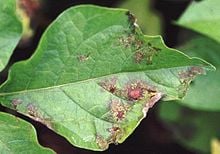 Plant pathogens like the one that led to the notorious Irish Potato Famine of the 1840's are still the subject of intense research at institutions like the University of California Riverside, as the battle continues between mega-crop farmers and diseases that have learned to infiltrate the plant’s immune system. Just what the genetic mechanism is that allows for that infiltration has remained elusive until recently. Studying the notorious oomycete pathogen Phytophthora in its multiple forms, UC Riverside researchers have identified a crucial step in the disease attack of the cell, namely the activity of virulence proteins in blocking RNA silencing pathways, which leads to immune system compromise. The role of RNA silencing as an important immune component is a new research direction and one that is being pioneered at UCR.
Tags: 2014, CA, 2013, University of California Riverside, genome research, Southwest, California, University of California, Plant science, BioResearch Product Faire Event, Funding, Riverside, NSF, Southwest Region, UCR
Missouri has a rich market of potential buyers of lab supplies and biotechnology products, according to recent NSF and NIH research funding statistics for Washington University in St. Louis. In 2012, the NSF awarded the university $14.4 million in research funding. The NSF-funded projects are located within a number of programs in the life sciences, including evolutionary processes clusters, molecular biophysics, cellular dynamics and function, neural systems clusters, behavioral systems clusters, macrosystem biology and bioinformatics. We have spotlighted the top five-funded projects below:
Tags: 2014, Midwest, 2013, Washington University, Missouri, WashU, WUSTL, BioResearch Product Faire Event, Research Funding, NIH, science researchers, MO, St Louis, NSF, lab supplier, funded
In a recent press release, the Mayo Clinic revealed its goal of making its Rochester, Minnesota campus a destination medical center. The Mayo Clinic will invest over $3 billion of healthcare funding in Minnesota, making this not only the state’s largest economic development plan, but one of the largest in the country. An additional $2.1 billion in private investments will also fund the project, which includes investing $3.5 billion in the Mayo Clinic’s Rochester campus over the next twenty years.
Tags: 2014, Midwest, 2013, Minnesota, Rochester, Mayo Clinic, BioResearch Product Faire Event, Funding, MN, lab supplier, RMN, healthcare funding
 Long considered one of the inferior senses, anyone who has lost their ability to taste as a result of age or cancer treatment will tell you life's luster is considerably dimmed in the absence of this sensory experience. Fortunately, research into taste and smell is going strong in Philadelphia at the Monell Chemical Senses Center, which is the only non-profit scientific basic research institute in the world dedicated entirely to understanding these intertwined senses. Once an entity within the University of Pennsylvania, the Center branched out on its own several decades ago, with labs a few blocks from the Penn campus on Market Street. Researchers at Monell work interdisciplinarily and many have joint appointments with Penn. Other research projects are carried out in conjunction with scientists at Thomas Jefferson University, also in Philly, and indeed with university and private lab investigators around the world.
Tags: 2014, 2013, Pennsylvania, Northeast, University of Pennsylvania, UPenn, Thomas Jefferson University, Stem cell research, taste buds, Monell Chemical Senses Center, Philadelphia, BioResearch Product Faire Event, PA, ThomJeff, taste