

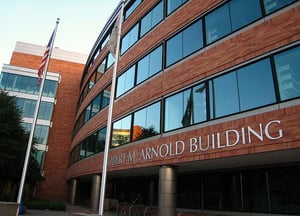
 DefeatHIV, an initiative based out of the Fred Hutchinson Cancer Research Center in Seattle, WA, has been researching potential cures for HIV over the past 5 years. Their research has focused on the use of blood cells genetically modified to be resistant to the HIV virus. It was recently announced that the National Institutes of Health (NIH) awarded the DefeatHIV team a new grant of $23.5 million that will continue to support their research on this potential cure for an additional 5 years.
0 Comments Click here to read/write comments
Tags: Fred Hutchinson Cancer Research Center, WA, Seattle, Hutch, 2016, BioResearch Product Faire, HIV Vaccine, HIV research, DefeatHIV
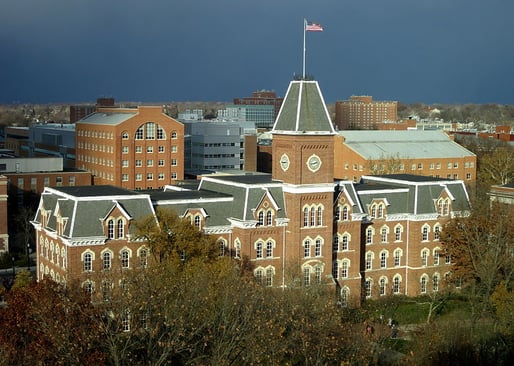
(Image courtesy of Wikimedia Commons)
Dr. Abraham Badu-Tawiah, assistant professor at Ohio State University, is out to revolutionize the world of diagnostic testing. By making paper strips that can detect malaria and well as certain types of cancers, he hopes to make testing more practical and affordable. People would be able to simply apply a drop of blood to the paper test strip at home, much like diabetics do when testing their blood sugar, and then mail it to the laboratory. This new method would make medical diagnostics much more accessible for those who can't easily get to a lab for testing.
Read More
0 Comments Click here to read/write comments
Tags: Midwest, Ohio State University, Ohio, Cancer, malaria, biotech vendor show, Columbus, Dr. Abraham Badu-Tawiah
Representatives from the University of Arizona, Tucson announced two massive monetary awards this week for researchers in life science disciplines.
Highlighting UA Tucson's Summer achievements though was a $43 million award to support at least five years of disease research, both on the basic science and clinic sides. This record breaking grant from this NIH, the largest in Arizona's history, will likely propel UA's ranking further ahead on the 2016 NIH Life Science Funding statistics list. In 2015, UAZ received a total of $75.5 million.
“This is huge for Arizona. Only four academic medical centers across the country were chosen,” said Elizabeth Calhoun, one of the grant’s principal investigators at the UA’s Arizona Health Sciences Center. “Arizona will now have the ability to partake in the next generation of science in a way that they have never had an ability to do."

(University of Arizona campus, courtesy of Wikimedia Commons)
The second was a $11.4 million, five-year project grant from the National Heart, Lung, and Blood Institute which will fund research into the genetics of acute lung disorders. Dr. Joe "Skip" Garcia, the senior vice president of health sciences at the University of Arizona and principal investigator of this study, received this award through the NIH's highly competitive Project Program Grant which encourages collaborative projects between peers with diverse specialties to catalyze innovative results.
"Coming shortly after the announcement of the largest NIH grant ever awarded in the state of Arizona, this award is another reminder of the strength of the UA Health Sciences and the impact our faculty researchers, clinicians and teachers are creating in our state and around the world." ~UA President Ann Weaver Hart
|
Arizona Researchers Quicken Infection Diagnosis |
To learn more about life science research developments and discoveries at the University of Arizona, see the left links featuring recently published UA articles previously published on Science Market Update:
Read More
0 Comments Click here to read/write comments
Tags: University of Arizona Tucson Research, AZ, life science research, UAZ, Tucson, University of Arizona Tucson, 2016
Updated building status review:
0 Comments Click here to read/write comments
Tags: CA, Southwest, San Diego, SDVS, UC San Diego, new construction, Biotechnology Vendor Showcase Event, 2016
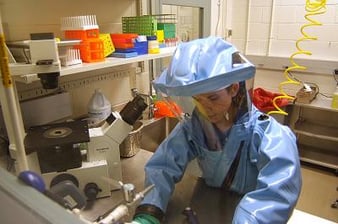 With the rise of infectious diseases, like the Zika virus and Ebola virus, research centered on these diseases has risen in importance over the last few years. The University of California, Irvine has become a leader in infectious disease research thanks to a prestigious designation by the National Institutes of Health (NIH). The high-containment biosafety level 3 training laboratory (BSL-3) at UC Irvine was recently designated as a National Biosafety & Biocontainment Training Center, making it the third such center in the United States.
0 Comments Click here to read/write comments
Tags: CA, University of California Irvine, infectious diseases, UCI, UC Irvine, 2016, BioResearch Product Faire, Western, Biosafety Training Center
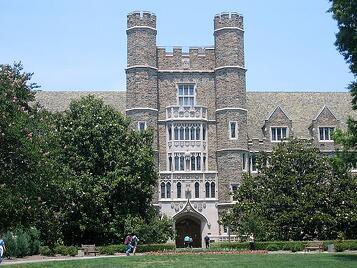 Duke University is a leading research institution, with hundreds of life science researchers conducting cutting-edge research throughout the university's dozens of research centers, buildings, and departments. In order to accommodate all of the research being conducted, the university recently begun construction on a new $103 million, 155,000-square-foot research building. (Image of the entrance to the Duke University Medical Center courtesy of Wikimedia Commons, in the Public Domain)
0 Comments Click here to read/write comments
Tags: new research building, Duke University, Southern, Durham, NC, Duke, new Building, BioResearch Product Faire, Medical Science Research Building
Rockefeller University is currently experiencing one of the largest phases of research expansion in its modern history. To accommodate for its expanding research capabilities as a competitive institution, Rockefeller University officials have already begun implementing changes to grow the campus and construct new research buildings and institutes all together.
Read More
0 Comments Click here to read/write comments
Tags: Rockefeller University, new research building, New research facilities, New York, RockU, NY, 2016

A team of biochemists at UCLA have created a novel system of converting glucose into highly useful chemical compounds, such as those needed to create biofuels and pharmaceuticals. Previous research endeavors relied on using cells to convert sugar into desired compounds. This has been difficult to achieve because cells would rather use sugar for their own natural uses, such as building proteins and cell walls. The UCLA biochemists have recently developed a way to achieve the conversion of glucose into desired compounds- without using cells.
Read More
0 Comments Click here to read/write comments
Tags: CA, University of California Los Angeles, Los Angeles, Biochemistry, chemistry research, Chemistry, LAVS, UCLA, Biotechnology Vendor Showcase, 2016, Western, glucose
New York's Columbia University is nearing the completion of an ambitious building project more than three years in the making. Columbia University Medical Center (CUMC) will open its new state-of-the-art building this August. Work began on this 100,000 square-foot, fourteen-story glass tower in September of 2013 thanks in large part due to a financial gift from Dr. Roy Vagelos and his wife Diana. So it seems fitting that the building will be named the Vagelos Education Center.

(Image Courtesy of Wikimedia Commns & Beraldoleal)
Read More
0 Comments Click here to read/write comments
Tags: Medical Center, Biotech Event, New York, Columbia University, East Coast, Columbia, Biotechnology Vendor Fair, NY, New York City, Columbia University Medical Center, new Building, NYColumbia University, 2016, Medical equipment
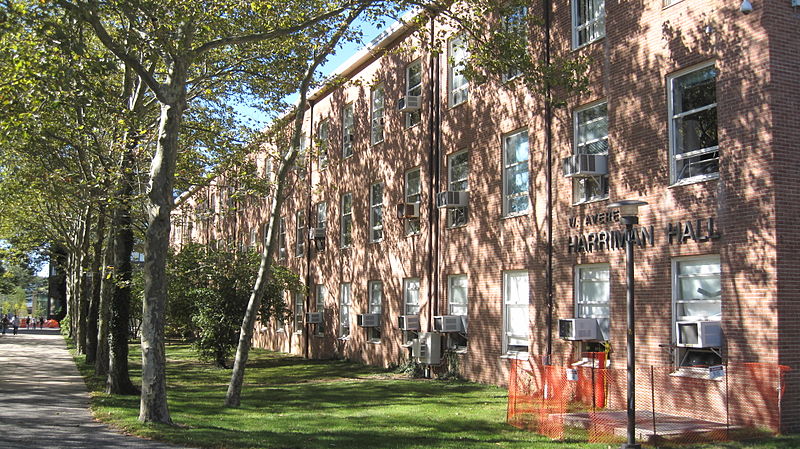
(Image courtesy of Wikimedia Commons)
Anti-fungal research at New York's Stony Brook University earned $6 million in grants from the National Institute of Health. Dr. Maurizio del Poeta’s breakthrough in attacking deadly fungus came from a recent research project that yielded an unexpected result that might lead to a vaccine. He and his team were searching for a gene that would metabolize a fungal sphingolipid. Instead, the gene he mutated caused mice that were exposed to it to become resistant to fungal infections. In an article on the Stony Brook University’s news site, Dr. Poeta said , “We think that this discovery will open the road to a new vaccination strategy against fungi.”
Read More
0 Comments Click here to read/write comments
Tags: Northeast, New York, Stony Brook University, East Coast, NY, NIH grant, new research grant, SunySB, Fungal Infections, BioResearch Product Faire™, BioResearch Product Faire, NIH awards 2017, 2017 research funding