

Although people expect to go to the hospital to be treated for their illnesses, sometimes patients can acquire fungal infections during treatment that can make them even sicker. The fungus Candida albicans is a common hospital-acquired fungus that can get into the bloodstream and vital organs, leading to a mortality rate of up to 75% of infected patients. Researchers at The Ohio State University in Columbus have found a potential approach to fight these infections.
Read More
0 Comments Click here to read/write comments
Tags: Ohio State University, Columbus, OH, OhStu, 2016, BioResearch Product Faire, Candida albicans
Researchers from UCLA and partnering schools guided by Laurent Bentolila found evidence supporting the spread of malignant cells through angiotropism with vascular co-option, and even suggested they may be related or identical processes. These findings were published in Nature Scientific Reports. With angiotropism being the ability for cells to travel along surface of blood vessels, but not be inside of them, also called extravascular migratory metastasis (EVMM) and vascular co-option being the ability for a tumor to use a blood supply and travel along it, this means cancer has an outlet to spread outside of the bloodstream. The spread outside of the bloodstream means some current methods of treating cancer would be ineffective.
“... if the metastasizing cells are on the outside of the blood vessels, they escape exposure to the treatment and continue to spread cancer.”
-Laurent A. Bentolila
Read More
0 Comments Click here to read/write comments
Tags: CA, University of California Los Angeles, cancer research, Los Angeles, Cancer, LAVS, UCLA, laboratory, lab products, 2016
How much product can exhibiting companies sell at a single event?  Let Biotechnology Calendar, Inc. help you find out! With the 2017 schedule out we can help you select the very best shows to increase your scientific product sales.
0 Comments Click here to read/write comments
Tags: vendor show, Sales, scientific sales, Lab Supply, lab product, 2017, Early Release
Over 6 million cosmetic surgery procedures are done each year using Botox, a form of the botulinum toxin. However, besides reducing wrinkles, botulinum toxins are used to treat over 20 medical conditions. These include severe neck and shoulder muscle spasms, chronic migraines, excessive sweating, leaky or over active bladders, facial spasms, and Cerebral Palsy. Botulinum toxins are also quite deadly. In fact, one gram--the equivalent to ¼ teaspoon of sugar--could kill over a million people.
Read More
0 Comments Click here to read/write comments
Tags: UW, Wisconsin, University of Wisconsin, University of Wisconsin Madison, UWisc, UW Madison, Biotechnology Vendor Fair, Madison, BioResearch Fair, Bioreseach, 2016, wisconsin science trade fair, University of Wisconsin School of Medicine, Botox, botulinum
The University of Illinois at Chicago received a two-year, $475,000 grant to study a new treatment for type 1 diabetes that might help protect the pancreas. This promising new treatment would involve using two protein molecules to reduce the damage caused by the body’s autoimmune response. The research led by Dr. Bellur S. Prabhaker, Professor of Microbiology and Immunology at UIC, could eventually free many diabetes patients from the rigors of daily insulin injections.
Read More
0 Comments Click here to read/write comments
Tags: Bioresearch, Bioresearch funding, University of Illinois, University of Illinois Chicago, Diabetes, Illinois, University of Illinois at Chicago, Chicago, biotech vendor show, UIC, UIChgo, 2016, Dr. Prabhakar, Diabetes research
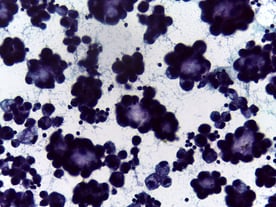 According to the American Cancer Society, nearly 1 in 8 women will develop breast cancer in their lives, making it the second most common cancer for American women. However, breast cancer does not affect all women equally. Past studies have shown that women of African descent with breast cancer die at a higher rate than white women. Researchers at the University of Southern California Keck School of Medicine have received a grant of $12 million from the National Cancer Institute (NCI) to study the disparities in breast cancer in women.
0 Comments Click here to read/write comments
Tags: CA, University of Southern California, breast cancer research, California, USC, BioResearch Product Faire Event, NIH grant, cancer research funding, 2016
(Image courtesy of Wikimedia Commons)
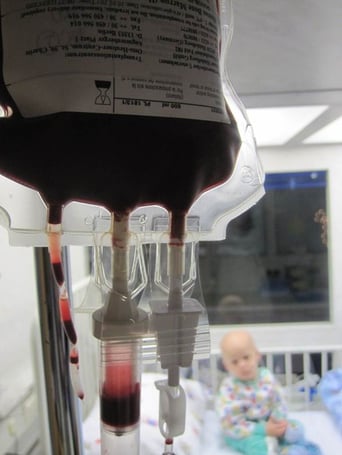
Finding matching donors for patients who need bone marrow transplants can be challenging. For ethnic minorities the chances of finding an unrelated donor who is a match through the national donor registry is less than 35 percent. However, thanks to a three year, $600,000 grant from the Leukemia and Lymphoma Society researchers and physicians at the University of Arizona-Tucson are hoping to improve the odds of survival for those patients. This new research funding will be used to support ongoing biomedical research at the UA Steele Children’s Research Center into improving haploidentical bone marrow transplantations (haplo-BMT) as well as launching clinical trials at the UA Cancer Center.
Read More
0 Comments Click here to read/write comments
Tags: Biomedical Reearch, University of Arizona Tucson, UA, research grants, BioResearch Fair, Bone marrow transplants
In 2014, the Wisconsin Alzheimer's Disease Research Center received a five-year grant from the NIH totalling $7.5M dollars. The center was the first of its kind, created in 2009, and has provided a focused place of research on Alzheimer's diagnosis and treatment. With funding through March of 2019, the center is moving forward, with one recent publication indicating a panel of biomarkers that have been linked with Alzheimer's.
Read More
0 Comments Click here to read/write comments
Tags: Wisconsin, University of Wisconsin, University of Wisconsin Madison, UWisc, Alzheimer's Research, Alzheimer's, Madison, 2016
Parkinson’s is a degenerative condition that affects over one million Americans - even greater than the number of those suffering from multiple sclerosis, muscular dystrophy and Lou Gehrig's disease combined. There is no cure, but this month researchers at the University of Alabama at Birmingham made two important breakthroughs for treating the disease. One group of researchers has discovered the cause of the negative side-effects of L-DOPA and a potential way to counter-act it. Another group of researchers have “discovered an interaction in neurons that contributes to Parkinson’s Disease and they have shown that drugs now under development may block the process.”

(Image of the University of Alabama, Birmingham courtesy of Jaymay via Wikimedia Commons)
Read More
0 Comments Click here to read/write comments
Tags: Parkinson's Disease Research, University of Alabama Birmingham, University of Alabama at Birmingham, Parkinson's Disease, biomedical researh, Dr. Volpicelli-Daley, Dr. Standaert
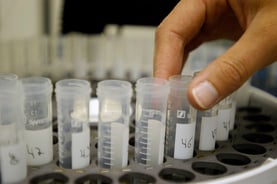 Since it's founding in 2006, the Herbert and Florence Irving Institute for Clinical and Translational Research at the Columbia University Medical Center, in partnership with the New York-Presbyterian Hospital in New York, has provided more than 2,000 scientists with new opportunities of conducting clinical and translational research leading to quicker developments and deliveries of treatments. Recently, the National Center for Advancing Translational Sciences (NCATS) awarded the Irving Institute a grant of $58.4 million over the next five years to help the Institute further the translational research being conducted.
0 Comments Click here to read/write comments
Tags: Columbia University, Columbia, NY, NIH grant, new funding, 2016, BioResearch Product Faire, Irving Institute, Clinical and Translational Research