

Sometimes it makes more sense to start from scratch and get it right than to try and retrofit and modernize older lab buildings. That's just what Ohio State University in Columbus decided to do for its Chemical and Biomolecular Engineering and Chemistry Building (CBEC). The new 225,000 gsf lab building broke ground last month and will replace 4 older facilities that had deferred maintenance and lacked proper floor-to-floor height, structural dimensions, and environmental stability. The New Koffolt Laboratories will be LEED-certifiable (possibly Silver) and will constitute a substantial upgrade with their science wet labs, computational research spaces, shared core laboratories, instructional spaces, and offices. The $126M project is due to be completed in September 2014.
Tags: Midwest, Ohio State University, Ohio, Bioresearch, University of Cincinnati, New research facilities, new science wet labs, 2012, Biochemistry, bio research, BioResearch Product Faire Event, Cincinnati, research laboratories, Columbus, OH, new construction, BRPF, OSU, UC
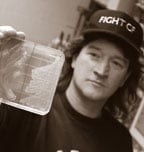 University of Cincinnati College of Medicine molecular geneticist Daniel Hassett (right) has made a name for himself as a determined researcher in the fight against cystic fibrosis (CF). He is also on the front line of bioscience research into creating "superbugs" that eat waste and generate energy, improving dramatically on the efficiency of traditional waste water treatment systems. In a radio interview on WVXU Cincinnati's Focus on Technology, commentator Ann Thompson describes the problem: the largest user of energy is wastewater treatment; the second largest user of water is energy production. If you can find a way to both clean water and generate electricity, you're in business.
Tags: Bioscience research, Midwest, Ohio, biomedical research, University of Cincinnati, genetic engineering, molecular ecology research, BioResearch Product Faire Event, Cincinnati, BRPF, research scientist
 We're finding out that there's a lot more to malnutrition among infants and children than just not getting enough to eat, or enough high-quality food. Individuals may develop malnutrition as a result of what is or isn't growing in their gut, where food gets processed. It's a fascinating insight with significant implications for treating a deadly world problem. In addition to getting sufficient good food, malnutrition could be addressed with novel dietary and microbial therapeutics, effectively optimizing a person's ability to draw nutrients and calories from the food and drink they take in, as well as making sure the immune system is being supported rather than compromised in the process.
Tags: CA, Bioscience research, Midwest, Washington University, WashU, University of Colorado, microbiome, The Bill and Melinda Gates Foundation, Northwest, Biofrontiers Institute, Southwest, UCDMC, BioResearch Product Faire Event, Funding, Genomics, CO, St Louis, Sacramento, Boulder, UCO, UC Davis
The University of Minnesota is planning to construct a new $52 million new life science research building in the new Biomedical Discovery District Research Campus. The new facility will consolidate infectious disease and microbiology research conducted at the university into one complex.
Tags: Midwest, University of Minnesota, New research facilities, Minnesota
The University of Wisconsin at Madison is doing very well launching bioscience startups and attracting young entrepreneurs to set up shop near the sprawling campus on Lake Mendota. The University Research Park is so popular there's a huge Phase II addition several years in the planning and due to break ground any day. Funding for university spinoffs, like the NIH's Small Business Innovation Research (SBIR) grants, are helping to fuel Madison's bioscience economy too, as a team from the Dept. of Chemical and Biological Engineering just proved in securing $362,489 towards developing its novel advanced biomaterials for wound healing and surgical applications.
Tags: Midwest, Wisconsin, University of Wisconsin, University Research, university research park, University of Wisconsin Madison, BioResearch Product Faire Event, Funding, NIH, chemistry researchers, Biomedical Research Funding
There's a reason why top university medical centers garner the prestige (and the funding) that they do: research labs + medical school + hospital = optimization of all three units, with ripe opportunities for collaboration, sharing of resources, and recruiting the best medical scientists. So there's always reason to cheer when a major university med center like Ohio State builds new facilities, whether they're clinical or research, because both will support the institution's overall mission and budget. In the case of Ohio State's new James Cancer Center and Solove Research Institute, both patients seeking treatment and scientists doing basic and applied cancer research will benefit from the state-of-the-art building that is rising on the Columbus medical campus right now, with its opening due in 2014. The complex will house the cancer center on 12 stories; the other 8 will comprise the critical care hospital, mechanical equipment and an as yet undetermined floor.
Tags: Midwest, Ohio State University, Ohio, biomedical research, Biomedical expansion, Medical Device Technology, Biomedical Equipment, cancer research, New research facilities, new construction, Cancer Center, scientific instruments
There's been a lot of news coming out of Chicago this week from the annual meeting of the American Association for Cancer Research (AACR). Two announcements concerning prostate cancer research are especially worth broadcasting. An Ann Arbor pathologist, Arul M. Chinnaiyan, of the University of Michigan Comprehensive Cancer Center, will be leading a "dream team" of specialists from 5 of the top cancer research institutes in the world in a $10M, 3-year research project titled “Precision Therapy for Advanced Prostate Cancer.” The funding comes from AACR partner, Stand Up To Cancer (SU2C), and the Prostate Cancer Foundation (PCF). Heading up the team with Dr. Chinnaiyan is Dr. Charles L. Sawyers of Memorial Sloan-Kettering Cancer Center in New York.
Tags: University of Michigan, Midwest, Bioresearch, cancer research, nanotechnology, genome research, genomic medicine, 2012, Ann Arbor, BioResearch Product Faire Event, Funding, Research Funding, Conference, MI, science event, scientific conference, science current event, scientific events, UMich, Cancer Center, science research funding
Bioscience researchers from the Mayo Clinic in Rochester Minnesota are taking a trip all the way to Mt. Everest to study the effects of high altitude on the bodies of climbers.
Tags: Midwest, Bioresearch, heart disease, 2012, Rochester, Mayo Clinic, BioResearch Product Faire Event, MN
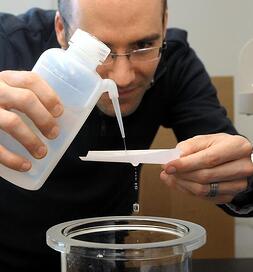 We live in an age obsessed with cleanliness. Hand washing is at an all-time high, as are sanitizers of every sort. It's not enough that our municiple water is filtered at a plant somewhere before coming into our homes, no, we need to filter it once more before it's safe to drink. Yet even that level of screening for contaminants may not be enough. For people living near air force bases there's an additional threat, and it's caused by a specific chemical used in rocket fuel: ammonium perchlorate. Perchlorate has a tendency to end up in the water supply near these bases, and traditional water filters don't do the trick when it comes to screening out the toxin. Fortunately, two entrepreneurial materials science researchers at the University of Illinois, Urbana-Champaign, have come up with a novel filtering material that does screen perchlorate, and they are well on their way to commercializing their invention, thanks to two federal small business awards and the support of the pro-business University of Illinois Research Park.
Tags: Midwest, University of Illinois Urbana-Champaign, Illinois, university research park, Funding, chemistry researchers, innovative solution, chemical supply, laboratory chemicals, NSF, lab chemical
Science researchers at Washington University School of Medicine in St. Louis are offering to sequence the DNA of 99 patients with rare genetic diseases in order to find the genetic alterations that made them ill. The new effort, known as the Rare99X Clinical Exome Challenge, will allow patients’ DNA to be decoded at the university’s Genomics and Pathology Services (GPS) at no cost to the patients or advocacy groups who represent them.
Tags: Midwest, Washington University, Missouri, genome research, BioResearch Product Faire Event, Genomics, science research, science researchers, science researcher, St Louis, BRPF