

In a first of its kind study, researchers at UCLA utilized ultrasound to “jump start” the brain of a man with severe brain injury who was recovering from a coma. According to the UCLA Newsroom, the 25 year old man could only perform small, limited movements when instructed and “showed minimal signs of consciousness” before the procedure. Three days after the treatment, he regained full consciousness and language comprehension. He could reliably communicate by shaking or nodding his head. Five days after, the patient attempted to walk for the first time since the coma.
Read More
0 Comments Click here to read/write comments
Tags: University of California Los Angeles, biomedical research, brain research, UCLA, UCLA research funding, Dana foundation, Tiny Blue Dot Foundation, Dr. Martin Monti
The $8M grant, given by the National Heart, Lung, and Blood Institute, will support a project in which the research team will use bioengineered stem cells and tissue to create a functional heart patch. The patch will restore function and prevent heart failure that can be caused by a heart attack's damage.
Read More
0 Comments Click here to read/write comments
Tags: Stem Cells, heart disease, Duke University, University of Wisconsin Madison, Alabama, UAB, AL, Southern Region, University of Alabama at Birmingham, bioengineering
The National Institute of Health awarded a five year, $7 million grant to Dr. Monica Kraft at the University of Arizona College of Medicine – Tucson. The funding will support a research study titled, “Dysfunction of Innate Immunity in Asthma,” which will seek to improve our understanding of mediators that help control lung inflammation. This in turn may lead to improved therapies for reducing severe asthma attacks.
Read More
0 Comments Click here to read/write comments
Tags: biomedical research, Biotech Event, UAZ, Research Funding, NIH grant, University of Arizona Tucson, UA, Asthma research, BioResearch Product Faire™
The $3.3M research grant, given to a team of researchers at the University of Southern California, will support a project that will lead to improved treatment of craniosynostosis. Craniosynostosis is a birth defect that occurs in roughly one out of every 2,500 live births and in severe cases can lead to developmental delays, hearing loss, blindness, and even death.
Read More
0 Comments Click here to read/write comments
Tags: CA, University of Southern California, California, USC, Research Funding, NIH grant, Southwest Region, BioResearch Product Faire™, Birth Defects
A team of researchers led by Gaya Amarasinghe, associate professor of Pathology and Immunology at Washington University School of Medicine, was recently awarded a $13 million NIH grant to study the replication process of the Ebola virus.
Read More
0 Comments Click here to read/write comments
Tags: Washington University St. Louis, Research Funding, MO, NIH grant, Midwest Region, ebola
Over the last 40 years incidence of Autism Spectrum Disorder (ASD) have increased tenfold. Until recently, the cause of autism was a complete mystery. Now a major discovery at UCLA has just brought researchers one step closer to unlocking the mystery of ASD.
The UCLA study found distinctive changes in the levels of tiny regulator molecules known as microRNAs in the brains of people with ASD. These microRNAs control the activities of large gene networks. This finding helps explain why so many genes are abnormal in autism disorders. It could also lead to targeted treatments or preventative measures someday.
Read More
0 Comments Click here to read/write comments
Tags: University of California Los Angeles, Biotech Event, UCLA, biomedical researh, autism research, mircoRNA, Dr. Daniel Geschwind
For fiscal year 2015-16, UC Irvine received $395 million in grants and contracts and $132.5 million in philanthropic gifts, breaking the university's previous funding records in both areas. Fundraising doubled from the previous fiscal year and funding from research grants and contracts increased by more than $100 million.
Read More
0 Comments Click here to read/write comments
Tags: University of California Irvine, University of California, Research Funding, Southwest Region, UCI, UC Irvine, BioResearch Product Faire™
The National Institute of Mental Health recently awarded a $2.3M Biobehavioral Research Award for Innovative New Scientists (BRAINS) grant to Dr. Matthew D. Lerner, an assistant professor in the Department of Psychology at Stony Brook University. The grant will provide funding for Dr. Lerner's project, “Optimizing Prediction of Social Deficits in Autism Spectrum Disorders,” a study which aims to help youth with autism overcome social challenges.

0 Comments Click here to read/write comments
Tags: Stony Brook University, Autism, Research Funding, NY, Northeast Region, NIH grant, Stony Brook, BioResearch Product Faire™
(Image courtesy of Wikimedia commons)
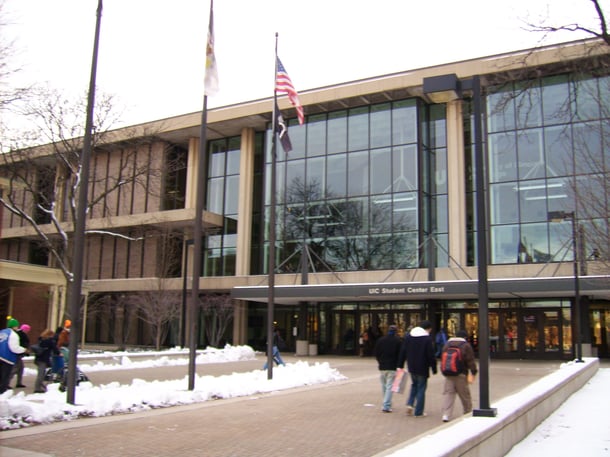
The National Institutes of Health (NIH) awarded a four year, $17.7 million grant to the university of Illinois at Chicago’s Center for Clinical and Transitional Science to further translational research.
Read More
0 Comments Click here to read/write comments
Tags: University of Illinois, University of Illinois Chicago, Translational Research, University of Illinois at Chicago, Chicago, biotech vendor show, NIH award, UI Chicago, UIC, UIChgo, University of Illiniois, 2016, Bioresearch Grant
Researchers at the Columbia University Medical Center (CUMC) may have found a way to reduce brain damage caused by a stroke or stroke-like event. In a study funded by the National Heart, Lung, and Blood Institute and the National Institute of Neurological Disorders and Stroke, 10-day-old mice that had an hypoxic (lack of oxygen) or ischemic (lack of blood) brain injury were treated with a fat emulsion containing either DHA or EPA—omega-3 fatty acids. The researchers evaluated the mice’s neurological function 24 hours and 8 to 9 weeks after the brain injury. They discovered that the mice treated with the DHA omega-3 fatty acids had a significant reduction in brain injury. This did not hold true for those treated with EPA-omega 3. The DHA group also had significantly better results in multiple brain functions during the 8 and 9 weeks evaluation compared to the EPA-treated mice and the control group which went untreated.
Read More
0 Comments Click here to read/write comments
Tags: BioResearch Trade Show, New York, Columbia University, Columbia, NY, New York City, Columbia University Medical Center, biomedical researh, stroke, stroke research, DHA omega-3 fatty acids