

Rockefeller University received a $25 million gift from the Robertson Foundation that will be used to create the Robertson Therapeutic Development Fund. This fund will be used to help turn basic research discoveries into new medical therapies by providing support for dozens of Rockefeller projects over the next five years. Research grants ranging from $10,000 to $1 million will be awarded from the fund in order to provide Rockefeller scientists with the resources they need to take exceptionally promising research initiatives through the steps that lead to breakthrough medications, new diagnostic tests or other clinical innovations.
Read More
0 Comments Click here to read/write comments
Tags: Rockefeller University, Bioresearch funding, Biotech Event, new research funding, RockU, Biotechnology Vendor Fair, Research Funding, Rockefeller, research news, Biotechnology trade show
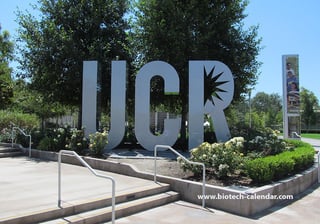
Next week PLOS journal will publish an exciting article featuring a new biological discovery. Scientists at UC Riverside have discovered critical information regarding insect development.
This study uncovers the use of DNA as an organism’s biological clock in sexual development, or metamorphosis in insects. With applications in new cancer treatments, agriculture, human health and potential applications in zoology, this study opens gateways of undiscovered information. This is one exciting example of the potential in research and the intersectionality in life science, molecular biology and biotechnology supplies.
Read More
0 Comments Click here to read/write comments
Tags: CA, agriculture, DNA Research, Cancer, Genome, UCR, Fruit Fly
Washington University School of Medicine in St. Louis is leading an international team studying potential treatments to prevent Alzheimer’s disease. The team recently added a third medicationin this worldwide clinical trial that is already underway. According to the WU School of Medicine news site, the latest investigational drug “is designed to lower production of amyloid beta, a protein that clumps together into plaques damaging neurons in the brain, leading to memory loss, cognitive problems and confusion.”
Read More
0 Comments Click here to read/write comments
Tags: Washington University St. Louis, Washington University, WUSTL, Alzheimer' Research, Alzheimer’s, Research Funding, biotech vendor show, Alzheimer's treatment market, Bioresearch Grant, Biotechnology trade show
The chancellor’s office of Texas A&M University (TAMU) recently funded a $5 million initiative to support mass spectrometry research. As part of this initiative a $1 million grant from the Texas A&M University Research Development Fund will be used to develop a shared mass spectrometry core facility and buy two new mass spectrometers for the College Station campus. One will be a gas chromatography combustion/pyrolysis isotope ratio mass spectrometer and the other will be a high resolution isotope ratio mass spectrometer for clumped isotopes.
Read More
0 Comments Click here to read/write comments
Tags: TAMU, Biotechnology Vendor Fair, Texas A&M Research, Texas A&M Life Science Funding, biotech vendor show, Texas A&M, Research equipment
Researchers at Texas Medical Center’s (TCM) Houston Methodist Hospital have invented a way to overcome chemotherapy drug resistance and destroy the deadliest type of brain tumors without destroying the surrounding tissue. This targeted approach combines a “smart drug” with chemotherapy. In animal models of human brain cancer, this smart drug prolonged life by over six fold.
Read More
0 Comments Click here to read/write comments
Tags: cancer research, Texas Medical Center, Cancer, tmc, Biotechnology Vendor Fair, cancer therapy, Bioresearch Grant, Biotechnology trade show
Malaria and toxoplasmosis are caused by different, yet closely related, apicomplexa parasites. Efforts to eliminate these diseases have met with only partial success. Now the National Institute of Health (NIH) has awarded the University of South Florida (USF) a $2.5 million, five year grant to study a new approach to fighting these diseases by stopping their ability to replicate.
Read More
0 Comments Click here to read/write comments
Tags: BioResearch Trade Show, malaria, Research Funding, parasite, University of South Florida, USF, Bioresearch Grant
Currently, doctors have two options when a patient needs a facial bone replaced due to injury or illness, such as cancer. They can take a bone from another part of the body and graft it into place. However, implant morbidity and complications caused by the trauma of multiple surgeries make this option less than ideal. The second option is to graft synthetic materials to the site. However, from time of injury to delivery of the custom implant takes about three to four weeks, which reduces the chances of the patient healing properly. But now a new technology being developed by researchers at Texas A&M’s College of Dentistry may revolutionize the treatment process.
Read More
0 Comments Click here to read/write comments
Tags: Biomedical Equipment, Texas A&M University, Biotechnology Vendor Fair, Texas A&M Research, Texas A&M Life Science Funding, Texas A&M, biomedical researh, 3D printing, Biotechnology trade show
The University of South Florida announced the creation of a Department of Medical Engineering. This trans-disciplinary department consists of physicians and engineers specializing in chemical and mechanical engineering, biomedicine and nanotechnology. It was established through the collaborative efforts of USF’s College of Engineering and USF’s Health Morsani College of Medicine. The goal is to combine related aspects of engineering and medicine while providing access to real-world health care environments for education and research.
Read More
0 Comments Click here to read/write comments
Tags: Biotech Event, Biomedical Engineering, Biotechnology Vendor Fair, University of South Florida, USF, bioengineering, biomedical researh, Biotechnology trade show, USF Health Morsani College of Medicine
Currently, there are no FDA approved medications for treating fragile X syndrome. That may soon change, thanks to a $11.5 million NIH grant awarded to UC Davis Medical Center. The new funding will allow researchers to test a new drug that is designed to improve language learning for children with fragile X syndrome. UC Davis is one of only two medical centers approved for the drug trail in the nation. Since UC Davis Medical Center is home to the renowned MIND Institute, which hosts the Fragile X Research and Treatment Center, it is a logical choice for the treatment study.
Read More
0 Comments Click here to read/write comments
Tags: CA, California, Research Funding, Drug Development, research grant, UC Davis - Medical Center, Southwest Region, new research grant, UCD, drug evaluation, BioResearch Product Faire, Bioresearch Grant
Dr. Madelaine Bartlett, a biologist at the University of Massachusetts in Amherst, recently received a four-year $4 million grant from the National Science Foundation. The new research funding will allow Barlett and colleagues from UMass and other institutions to study the genes that regulate plant stem cell biology and their effect on fruit size and yield.
Read More
0 Comments Click here to read/write comments
Tags: Stem cell research, University of Massachusetts Amherst, University of Massachusetts, agriculture, new research funding, Massachusetts, agricultural, MA, Northeast Region, UMASS, new research grant, NSF funding, NSF grant, NSF award, Plant Biology, agricultural business, agribusiness