

Recent Posts
0 Comments Click here to read/write comments
Tags: 2014, CA, San Francisco, SFVS, UC San Francisco, Lab Product Sales Event
Are you looking for top funded lab sales marketplace? Duke University is a multi-million dollar player in the multi-billion dollar life science research marketplace. With $350 million NIH funding in 2013, and $45 million in NSF funding, plus private support from foundations and individuals, this is a large and growing market for lab supply companies looking to expand their reach. Duke’s funding compares favorably to that of Harvard University, which had $352 million from NIH funding and $55 million NSF funding respectively.
2 Comments Click here to read/write comments
Tags: 2014, Duke University, Southern, BioResearch Product Faire Event, Durham, NC, Duke
At the University of Pennsylvania, three faculty members have been awarded Sloan Fellowships. For over 50 years the Alfred P. Sloan Foundation has identified and recognized young scientists with significant leadership potential. We'd like to invite our readers in joining us to recognize the already significant contributions and long term career potential of the following UPENN scientists as reported by Evan Lerner today at UPENN:
0 Comments Click here to read/write comments
Tags: 2014, University of Pennsylvania, UPenn, Philadelphia, BioResearch Product Faire Event, PA, Lab Product Sales
Just How Big is the Research Market at UC Davis?
0 Comments Click here to read/write comments
Tags: CA, 2013, sell lab equipment, University of California Davis, California, BioResearch Product Faire Event, Sacramento, UC Davis, meet researchers, market life science products
Longwood Medical Area is known as one of the most prestigious educational, medical and research areas in the United States. Located along Longwood Avenue in Boston, Massachusetts, Longwood Medical Area (LMA) is made up of teaching hospitals, medical facilities, and non-medical facilities; as well as some top educational institutes, such as Harvard Medical School.
0 Comments Click here to read/write comments
Tags: 2014, Harvard University, 2013, Northeast, Longwood Medical Center, Boston, BioResearch Product Faire Event, Research, MA, Harvard, NIH funding
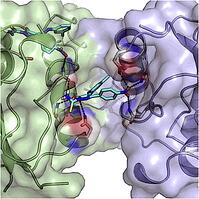 In order for HIV to proliferate and infect new cells in the body, a number of proteins need to interact with each other in just the right way. If they don't, the virus is not able to multiply and spread, and HIV infection cannot develop into full-blown Auto Immune Deficiency Syndrome (AIDS). It's a case of finding a weak link and exploiting its potential to disrupt an entire supply chain. In the University of Pittsburgh microbiology lab of Dr. Thomas Smithgall, this protein sabotage approach has successfully allowed them to identify a helper molecule that, if compromised, could form the basis of an effective new HIV/AIDS treatment therapy. The paper documenting their research appeared in the January 24 issue of Chemistry & Biology.
2 Comments Click here to read/write comments
Tags: 2014, 2013, University of Pittsburgh, Pennsylvania, Northeast, AIDS Research, Microbiology, UPITT, BioResearch Product Faire Event, PA, Pittsburgh
Each year millions of Americans risk undergoing surgery for a variety of problems such as organ transplants, mending broken bones and cosmetic surgeries. Often surgery is necessary to fix ongoing health problems with the benefits of the surgery usually outweighing the risks. Despite the potential risks to surgery patients, in the United States more than 48 million surgeries are performed each year. In most cases, undergoing surgery is relatively risk free, but not always.
1 Comment Click here to read/write comments
Tags: 2014, Bioscience research, 2013, biomedical research, University of Colorado, Medical Research, Drug Discovery, DNA Research, Southwest, National Jewish Health, Anschutz Medical Campus, BioResearch Product Faire Front Line Event, BioResearch Product Faire Event, Denver, CO, public health, NJH, Fitz, Aurora
2 Comments Click here to read/write comments
Tags: Bioresearch, Utah, university of utah, Medical Research, migraine research, 2012, scientific research, Front Line event, Salt Lake City
2 Comments Click here to read/write comments
Tags: biomedical research, 2012 Research Funding, University of Nevada Reno, UNR, Nevada, 2012, Neuroscience, Front Line event, NV, Reno, Biomedical Research Funding
 It might or might not surprise you that some very strong private biomedical research institute funding at the University of California San Francisco campus comes from the father of the first enclosed southern California shopping mall, on the one hand, and the founder of Star Trek on the other. Those two innovative individuals, J. David Gladstone and Gene Roddenberry respectively, have left much of their considerable legacy to science research into understanding human disease. A year ago this time, the Gladstone Institutes welcomed the Roddenberry Foundation into its research family with the establishment of the Roddenberry Center for Stem Cell Biology and Medicine within the Gladstone walls on Owens Street in Mission Bay. Two months ago one of the Gladstone's senior research scientists won the Nobel Prize for his groundbreaking work with induced pluripotent stem cells. Those events, in conjunction with the 3 decades of research milestones made by their scientists, as well as their affiliation with UCSF and its world-class stem cell research program position the Gladstone solidly to meet their 21st Century mission goal:
1 Comment Click here to read/write comments
Tags: CA, University of California San Francisco, Stem cell research, California, 2012, San Francisco, Biotechnology Vendor Showcase, UCSF, Gladstone Institutes, San Francisco at Mission Bay