

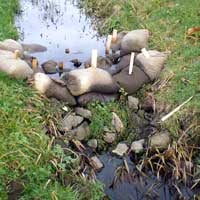
 Mycology is the branch of biology devoted to the study of fungi (mushrooms), which, we're increasingly learning, are truly astonishing in what they can do. With the support of a grant from the EPA, a team of Washington State University scientists is developing a mycofiltration system to purify storm water of bacteria before it re-enters the urban water supply. Professor Marc Beutel is an environmental engineer who has joined forces with renowned mycologist Paul Stamets of Fungi Perfecti, a research laboratory and retail company also in Washington State. Together they have completed the first phase of a study titled Mycofiltration Biotechnology for Pathogen Management, wherein they have successfully used fungi to create a "living net" to filter effluent bacteria. The project was funded by an EPA Small Business Innovative Research (SBIR) award.
Tags: 2014, 2013, Washington, WashU, mycofiltration, WA, Northwest, WSU, Washington State University, BioResearch Product Faire Event, Biotechnology, biotech industry, Front Line event, Northeast Region, Pullman
When speaking about cryptography, one likely imagines a military or computerized setting, where a group of people tries fervently to decipher the coded messages of their enemy in order to gain valuable intelligence. But the same thing is happening in labs at the University of Michigan, Ann Arbor, only with microbiologists cracking the code of cancer cells.
Tags: University of Michigan, 2014, Midwest, 2013, Michigan, Ann Arbor, BioResearch Product Faire Event, MI, UMich, U-M
Lab suppliers who sell green university lab equipment may be interested in marketing their environmentally-conscious life science solutions at the Biotechnology Calendar, Inc. life science marketing event held at the University of Oregon, which has been ranked one of the greenest universities in the United States.
Tags: 2014, 2013, UOr, Northwest, University of Oregon, Oregon, BioResearch Product Faire Event, Front Line event, OR, Front Line, Eugene
A new study by researchers at the University of Pennsylvania has findings that suggest a new way ECMO, or extracorporeal membrane oxygenation, can help treat patients with shock and cardiac arrest. ECMO has been used in the past during cardiac surgeries as a way to replace patients’ heart and lung function. According to Health Canal, researchers at the University of Pennsylvania have made a breakthrough in using this intervention to save the lives of patients who are unable to be resuscitated.
Tags: 2014, 2013, Pennsylvania, Northeast, University of Pennsylvania, UPenn, Philadelphia, BioResearch Product Faire Event, PA, university lab equipment, life science solutions, life science marketing event
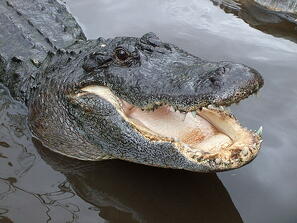 As humans, our bodies have the ability to naturally regenerate both skin and hair, but we only get two sets of teeth, and that's one set more than many other mammals. Reptiles and fish, on the other hand, have the ability to regrow teeth throughout their lifetime. Though we have guessed that specialized stem cells are involved, the cellular and molecular mechanisms behind tooth renewal in these animals have not been well understood until now. A research team at the University of Southern California's Keck School of Medicine, led by Dr. Cheng-Ming Chuong, has recently published an article in PNAS detailing their study into the regrowth of alligator teeth. They chose a crocodilian model because the dentition is well-organized and implanted in sockets of the dental bone, similar to that of mammals (if more extensive) yet with the capacity for renewal. Contributors to the research included colleagues in Georgia, China, and the Louisiana Department of Wildlife and Fisheries, who presumably provided the live research subjects.
Tags: 2014, CA, 2013, University of Southern California, Regenerative Medicine, Stem cell research, Southwest, California, USC, Los Angeles, biology research, BioResearch Product Faire Event, Front Line event
Nerves play a vital role in the well-being of our body. Nerve damage is among the most crippling physical damage we can sustain, which is why it is in our best interest to protect them when at all possible. So when new bioresearch from Washington University in St. Louis lays out a method to prevent the body from destroying axons, which transmit nerve signals throughout the body, it’s a sure signal of improvement in the field of nervous studies.
Tags: 2014, Midwest, 2013, Washington University, Missouri, WashU, WUSTL, BioResearch Product Faire Event, MO, St Louis
A great deal of new biotech funding in North Carolina is calling national attention to the state's status as a life science research hub. Lab suppliers marketing life science solutions and university lab products will find high quality biotech sales leads at life science marketing events in North Carolina, given the state’s wealth of research funding available. The Republic recently reported that David Murdock, leader of Dole Food Company, Inc., is creating a permanent fund for a center known as the North Carolina Research Campus. The $50 million gift will be used for the campus’s health, agriculture and food research projects.
Tags: 2014, 2013, University of North Carolina at Chapel Hill, Duke University, North Carolina, Southern, BioResearch Product Faire Event, Durham, Front Line event, NC, Chapel Hill, Duke
It is implicit that marketing life science solutions at a high quality life science marketing vendor show in Boston will result in excellent biotech sales leads, especially when one takes into account The Boston Globe’s recent report on the biotech industry boom in Boston. At least nine life science companies in Massachusetts could go public this year, making the boom one of the biggest since 2007.
Tags: 2014, Harvard University, 2013, Northeast, Massachusetts, Boston, BioResearch Product Faire Event, MA, Harvard, biotech sales leads, life science solutions, life science marketing vendor show
 Researchers at the Broad Center of Regeneration Medicine and Stem Cell Research on the Parnassus Campus of the University of California San Francisco have just published the results of two related studies involving differentiated brain cells transplanted into mice. In one case, the cells were human brain cells integrated successfully into a mouse brain; in the other, epileptic mice were cured with specialized mouse brain cells. In both studies the differentiated cells were a type of interneuron progenitor called medial ganglionic eminence (MGE) cells. Unlike other brain stem cells that can turn into any number of specialized cells, these differentiated MGE cells have a specific function, which is to inhibit signaling in overactive nerve circuits. These experiments hold promise for future treatment of neurological disorders like Parkinson’s disease, Alzheimer’s, epilepsy, and the chronic pain and spasticity caused by spinal cord injury.
Tags: 2014, CA, University of California San Francisco, 2013, University of California San Francisco Mission Bay, University of California San Francisco Parnassus, Parkinson's Disease Research, Southwest, California, University of California, brain research, San Francisco, SFVS, Biotechnology Vendor Showcase, UCSF, Parnassus, Mission Bay
As humans, we like to think of ourselves as superbly evolved, which is a completely valid standpoint if you place emphasis on things like consciousness and inventiveness. But our cohabitants of Earth have developed some impressive abilities of their own, many of which we can only barely understand. Take for example the bacteria that are shocking several researchers at the University of Minnesota, Twin Cities lab with their unique ability to change the electrical state of metals.
Tags: 2014, Midwest, 2013, University of Minnesota, University of Minnesota St. Paul, Minnesota, University of Minnesota Twin Cities, BioResearch Product Faire Event, Minneapolis, MN, Front Line, St. Paul, UMinn, UMinnSP