

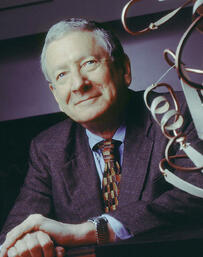
 Storms both meteorological and political have dominated the front page news in the past month, but the upset that has rocked Texas' Cancer Prevention & Research Institute (CPRIT) since the spring continues to make headlines in the science press. The journal Nature has published regular editorials since the flap began, intensifying in late October with the exodus of chief scientific officer and Nobel winner Alfred Gilman (right) and nearly 30 other scientists from the state cancer funding agency's review board. Here is our recap of the story, the issues at stake, and a look at where CPRIT is positioned to go from here.
0 Comments Click here to read/write comments
Tags: cancer research, Texas A&M University, Texas Medical Center, Texas, 2012, College Station, TAMU, tmc, BioResearch Product Faire Event, Houston
No one escapes being affected by cancer. We all know someone, perhaps even a family member who has been diagnosed with cancer. According to the National Cancer Institute, more than 1.6 million people will be diagnosed with cancer in 2012. In fact, it is estimated that each person has a 41% chance of developing cancer during his or her lifetime. But new discoveries by researchers have started to change the outcome of a cancer diagnosis. In a recently published article in Nature, two researchers at CU boulder have found a possible solution hiding at the ends of our DNA. According to Professor Cech, "This is an exciting scientific discovery that gives us a new way of looking at the problem of cancer.” The researchers, Tom Cech and Leslie Leinwand, found the solution by studying how telomerase functions in our cells. In normal people, telomerase helps us keep our cells healthy and young.
0 Comments Click here to read/write comments
Tags: Bioresearch, University of Colorado, Northwest, cancer research, Biofrontiers Institute, Cancer, BioResearch Product Faire Event, CO, Boulder, UCO
At the Wyss Institute for Biologically Inspired Engineering at Harvard University, in the Longwood medical neighborhood in Boston, researchers have reached a biotech milestone with tremendous potential for future drug testing and development. Instead of resorting to animals for testing, they may soon be using a simulated organ that lives on a chip. It has mechanical and biological (cellular) parts, and yes, it breathes, thanks to a vacuum system that pumps air through. The bio-inspired micro-device has gone through several tests recently to assess its accuracy in mimicking the human lung when bacteria or potentially toxic drugs are introduced. Results: Positive. The lung-on-a-chip replicates responses found in animal models and observations of human lung function. Indeed, because the device uses human lung and blood vessel cells, it acts may act more like a lung in a human body than lab animals.
0 Comments Click here to read/write comments
Tags: Northeast, Lab-on-a-chip Technology, 2012, Massachusetts, Cancer, biological, Boston, BioResearch Product Faire Event, MA, Harvard, innovative solutions, Drug Development, Harvard Medical School, bio medical research
It’s no secret that eating fruits and vegetables is vital to a healthy diet. After all, everyone knows an apple a day keeps the doctor away. A new study on apples from Ohio State University takes that paradigm even father. Besides serving as a delicious snack, juice, and pie ingredient, apples appear to have cholesterol-reducing effects as well.
7 Comments Click here to read/write comments
Tags: Midwest, Ohio State University, Ohio, 2012, BioResearch Product Faire Event, Columbus, OH, OSU
The Bionic Man has not arrived, and to our knowledge the military has not equipped any special agents with cyborg implants to boost their optical capabilities in the field. No, the news is both less and more exciting than those fantasy scenarios: people with end-stage age-related macular degeneration (AMD) now have the chance to see again. Surgeons and vision scientists at the University of California Davis Eye Center in Sacramento recently celebrated their first successful procedure with the new technology. The medical duo that performed the operation were Drs. Mark Mannis and Jennifer Li.
0 Comments Click here to read/write comments
Tags: CA, University of California Davis, Optics, Southwest, California, 2012, BioResearch Product Faire Event, Davis, Sacramento Campus, UCD
Though the general consensus seems to be that the Northeast weathered deadly storm Sandy relatively well thanks to warnings and emergency plans put into action, there were unexpected casualties beyond the loss of over 80 human lives. Massive flooding in the lower New York Metro Area was not on the radar to the extent that it actually transpired, and basements that were thought to be flood-safe turned out not to be. That was the case at New York University's Smilow Research Center, where animal labs underground were inundated and approximately 10,000 research mice and rats drowned and lab equipment was ruined. On the upper floors, precious biological samples and reagents were lost as freezers and refrigerators shut down. Other research institutions in the area fared better.
0 Comments Click here to read/write comments
Tags: Mount Sinai School of Medicine, Rockefeller University, Northeast, animal research, research mice, University of Texas, New York, 2012, Stony Brook University, Austin, Philadelphia, MSSM, BioResearch Product Faire Event, NY, Front Line event, science research, research laboratories, New York City, Research equipment, Stoneybrook
When a catastrophic natural disaster strikes, first responders often make the difference between life and death for potential victims. Training, preparedness and valor play a part in successful rescue efforts, but so do good tools. Sometimes that tool is as basic as an axe or a flashlight, or a life vest or life raft. The recent mega-storm in the NE has us thinking about the kinds of tools that science research is coming up with to address emergency and crisis situations, both during and in the aftermath of a major event. To that end, we're taking a look back today at some of our earlier blogs on life science research invention to see what kinds of scientific solutions are on the horizon (or already here) to aid in disaster relief and recovery efforts.
0 Comments Click here to read/write comments
Tags: UW, Ozcan Nano/Bio Photonics Lab, University of Washington, WSU, University of Minnesota Twin Cities, 2012, Los Angeles, Colorado State University Fort Collins, BioResearch Product Faire Event, UCLA, Front Line event, Seattle, Biotechnology Vendor Showcase, Colorado, St.Paul, scientist solutions, CSUFC, disaster relief
Often growing up as a child you hear, “eat your veggies if you want to grow up to be big and strong.” With new research on triple negative breast cancer, that old saying might have to change to "eat your veggies if you want to keep cancer away". Recently, at the 2012 American Association of Pharmaceutical Scientists (AAPS) Annual Meeting, Mandip Sachdeva announced: "We are confident that the compounds we are currently working with are an effective treatment for triple-negative breast cancer. These compounds are safer for the patient than current treatments available".
9 Comments Click here to read/write comments
Tags: Bioscience research, cancer research, Texas A&M University, Texas, 2012, Cancer Treatment, Cancer, College Station, BioResearch Product Faire Event, Texas A&M Research, Texas A&M Life Science Funding, TX, Texas A&M
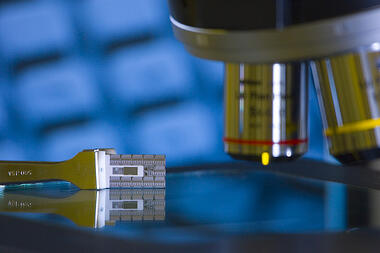 One of the ways to measure how well a program or department at a university is doing is to look at their graduate programs. To be able to offer the PhD in a specialized area, you need qualified faculty willing and able to take on teaching and mentoring responsibilities; a strong reputation for excellence in the area; research opportunities (and RA funding) for those doctoral students; and equipment and laboratory facilities, to name just a few factors. So when you see an institution win a major grant to launch a PhD program, you know that's a hot area for research and facilities expansion as well.
0 Comments Click here to read/write comments
Tags: CA, biomedical research, Photonics, University of California Irvine, Southwest, California, 2012, BioResearch Product Faire Event, Funding, Irvine
It used to be, once upon a time, that the northwest corner of the UC Berkeley campus was a bit sleepy, bordering as it did an older downtown that hadn't yet been revitalized. The important buildings on campus were located more centrally, or along the busy southside, or up in the hills. In the year 2012 all that has changed, and not one but two important life science lab buildings have been completed and opened their doors in the past year along Oxford Street, built to mesh comfortably with the now-fashionable and vibrant Downtown Berkeley scene at their doorsteps and to contribute to a growing life science research hub in that campus corner.
0 Comments Click here to read/write comments
Tags: CA, University of California Berkeley, biofuels, California, 2012, Berkeley, BioResearch Product Faire Event, new facilities, new construction, UC Berkeley, bio medical research, San Francisco Bay Area