

The Knight Cancer Institute at Oregon Health & Science University (OHSU) in Portland has just announced an important partnership with San Diego-based bioprinting technology company Organovo. Research into the biology of cancer, especially how it metastasizes, has been complicated in the past by the limitations of animal models and cell cultures, which really don't tell us enough about the workings of cancer within a human being. Organovo creates living, 3-D human tissue using their bioprinting device, the NovoGen MMX (below). The partnership between OHSU and Organovo will allow cancer research at Knight Institute labs to much more closely model the complex architecture of malignancy within the human body, using in vitro tissue. Ultimately this will lead to the development of more accurate therapeutics and pre-clinical trials.
Tags: 2014, 2013, Oregon Health Sciences University, Oregon Health and Science University, Northwest, cancer research, Oregon, Cancer Treatment, bioprinting, BioResearch Product Faire Event, Funding, Front Line event, OR, OHSU, Portland, Northwest Region
The University of Michigan at Ann Arbor is one of the most richly funded markets in the country for biotechnology vendors and lab suppliers, as recent NIH and NSF research funding statistics show. In 2012, the NIH gave the University of Michigan $456.3 million in research funding. The money has been awarded to various departments for research projects including:
Tags: University of Michigan, 2014, Midwest, 2013, Michigan, Ann Arbor, BioResearch Product Faire Event, Research Funding, Biotechnology, MI, lab supplies, NIH, UMich, NSF, U-M
“It’s pulsing; it’s beating! Now THAT is cool.”
Tags: 2014, Midwest, 2013, Regenerative Medicine, Minnesota, Rochester, Mayo Clinic, BioResearch Product Faire Event, Funding, MN, lab supplier, RMN
Longwood Medical Area is known as one of the most prestigious educational, medical and research areas in the United States. Located along Longwood Avenue in Boston, Massachusetts, Longwood Medical Area (LMA) is made up of teaching hospitals, medical facilities, and non-medical facilities; as well as some top educational institutes, such as Harvard Medical School.
Tags: 2014, Harvard University, 2013, Northeast, Longwood Medical Center, Boston, BioResearch Product Faire Event, Research, MA, Harvard, NIH funding
Biotechnology vendors and lab suppliers in Illinois will find a well-funded market of science researchers at the University of Illinois Urbana-Champaign, according to recent NIH and NSF funding statistics. In 2012, the NIH awarded the university $69.7 million in research funding. Of the different bio departments at the University of Illinois Urbana-Champaign, the money was distributed as follows:
Tags: 2014, Midwest, 2013, University of Illinois, Urbana-Champaign, UIUrbana, BioResearch Product Faire Event, Funding, Research Funding, NIH, IL, science researchers, NSF, lab supplier
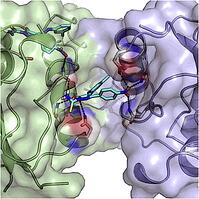 In order for HIV to proliferate and infect new cells in the body, a number of proteins need to interact with each other in just the right way. If they don't, the virus is not able to multiply and spread, and HIV infection cannot develop into full-blown Auto Immune Deficiency Syndrome (AIDS). It's a case of finding a weak link and exploiting its potential to disrupt an entire supply chain. In the University of Pittsburgh microbiology lab of Dr. Thomas Smithgall, this protein sabotage approach has successfully allowed them to identify a helper molecule that, if compromised, could form the basis of an effective new HIV/AIDS treatment therapy. The paper documenting their research appeared in the January 24 issue of Chemistry & Biology.
Tags: 2014, 2013, University of Pittsburgh, Pennsylvania, Northeast, AIDS Research, Microbiology, UPITT, BioResearch Product Faire Event, PA, Pittsburgh
You might expect the barrage of brilliant lab-on-a-cell-phone inventions that come out of the Ozcan Nano/Bio Photonics Lab at the University of California Los Angeles to eventually dwindle, or perhaps only leave us moderately impressed after a while, but that's not the case. Less than three weeks into 2013, the Ozcan Research Group published on their development of a new optical microscopy platform which uses liquid nanolenses that self-assemble around tiny objects (in the sub–100-nanometer range), allowing it to detect viruses and nanoparticles. That paper was published online in the journal Nature Photonics and was the subject of a recent UCLA research news release. Also this month, the Royal Society of Chemistry published the paper Cost-effective and Rapid Blood Analysis on a Cell-phone. And the international society for optics and photonics, SPIE, announced a new annual award for 2013: the Biophotonics Technology Innovator Award. One guess who its first recipient is? Not a shabby way to start the new year at all.
Tags: 2014, CA, University of California Los Angeles, 2013, Photonics, Ozcan Nano/Bio Photonics Lab, Microscopy, Lab-on-a-chip Technology, Southwest, California, University of California, Los Angeles, LAVS, UCLA, Biotechnology Vendor Showcase
In the game of life, cheating doesn’t pay off. Laws, karma, and conscience all work towards keeping things just and fair. However, in the world of bacteria, these rules don’t seem to apply. Researchers from the Washington University at St. Louis have reported a strain of amoeba that favors selfishness over fairness, and doesn’t seem to even pay a price for it.
Tags: 2014, Midwest, 2013, Washington University, WashU, BioResearch Product Faire Event, MO, St Louis, laboratory equipment, Dictyostelium discoideum
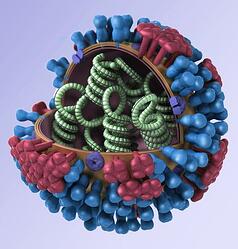 With this winter's epic flu invasion maxing out emergency room space and leaving pharmacies without enough flu vaccine, influenza research is a hot topic in the news. Inquiring minds want to know: when will we have the tools to put this mutating foe out of commission once and for all? One very interesting approach to the problem of outsmarting the flu virus involves disrupting its timing by altering a critical protein it needs to exit the cell. At Mount Sinai School of Medicine in New York, microbiologist and virologist Benjamin R. tenOever recently published an article on his lab research into the molecular basis of virus pathogenicity in the journal Cell Reports. He was also interviewed by NPR just last week for their shots health news program, where he described the carefully-orchestrated maneuvering of the flu virus both into and out of the host cell by likening it to a bank robbery. If one part of the plan doesn't go off like clockwork, the gig is up.
Tags: 2014, Mount Sinai School of Medicine, 2013, Northeast, Virology, influenza research, New York, MSSM, BioResearch Product Faire Event, NY, New York City, Life Science Technology, lab supplier, Mt. Sinai
The University of Illinois at Chicago was recently awarded $9.6 million in the form of a five-year grant from the National Institutes of Health to establish an Autism Center of Excellence. The center will be one of five funded centers in the United States, and it is the only one in the Midwest. Nationally, the NIH awards $100 million for the Autism Centers of Excellence research program.
Tags: 2014, Midwest, 2013, University of Illinois, Arbaclofen, University of Illinois Chicago, Illinois, University of Illinois at Chicago, Autism, BioResearch Product Faire Event, Chicago, Research Funding, IL, UI Chicago, experimental drug, laboratory supplier, UIChgo