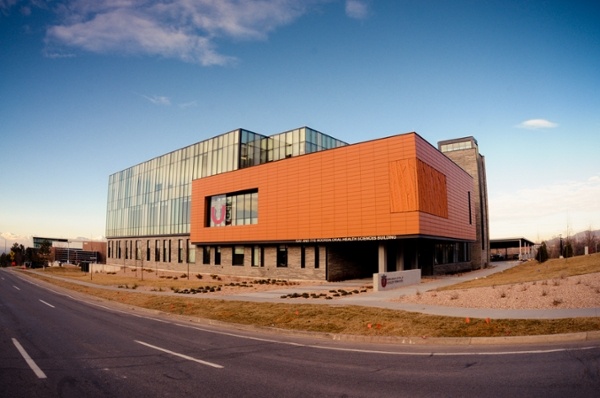
35 years in the making, the grand opening was recently announced for then new University of Utah School of Dentistry (SOD) Ray and Tye Noorda Oral Health Sciences Building.
The new $36 million, 85,000-square-foot Research Park building will include
Read More
Tags:
university of utah,
UUtah,
new research building,
UT,
2015,
Research Funding,
Salt Lake City,
Southwest Region,
new building expansion,
BioResearch Product Faire™,
dentistry
 Tuberculosis is a terrible disease that is characterized by a bad, sometimes bloody cough, and which could lead to other serious health problems, or even death.
Over 1.5 million people currently die from TB each year, and as many as one third of the world’s population is currently infected, according to the Centers for Disease Control and Prevention.
In an effort to combat this worldwide health concern, Michael Niederweis, Ph.D., and colleagues from the University of Alabama at Birmingham have made an important discovery. The scientists recently uncovered an important toxin called Tuberculosis Necrotizing Toxin (TNT) that resides within the pathogenic bacterium Mycobacterium tuberculosis and aids in survival and proliferation.
Read More
Tags:
tuberculosis,
Immunology,
Alabama,
Biology,
2015,
disease research,
life science research,
UAlab,
Birmingham,
AL,
Southern Region,
University of Alabama at Birmingham,
BioResearch Product Faire™
As the field of regenerative medicine rapidly progresses, personalized medicine is becoming more and more common in the life science headlines. In the Science Market Update alone, we’ve witnessed researchers grow replicas of human hearts at the Mayo Clinic in Rochester, stomachs and intestines at the University of Cincinnati, and even brains at The Ohio State University. Now a research team at the University of Illinois, Urbana-Champaign is following suit by growing a tumor outside of the body.
Read More
Tags:
University of Illinois Urbana-Champaign,
Urbana-Champaign,
2015,
UIUrbana,
BioResearch Product Faire Event,
IL
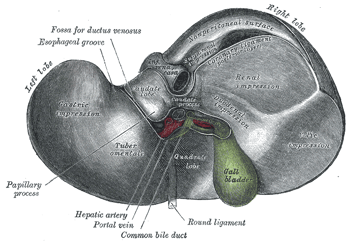 The liver is a truly amazing organ, with an almost unprecedented ability to repair itself after injury. The mechanism for this ability was previously thought to be oval cells,but recent research from UCSD challenges conventional wisdom.
Read More
Tags:
CA,
University of California San Diego,
cancer research,
California,
School of Medicine,
2015,
San Diego,
SDVS,
UCSD,
Research Funding,
NIH funding,
Southwest Region,
NIH grants,
Biotechnology Vendor Showcase Event,
2016
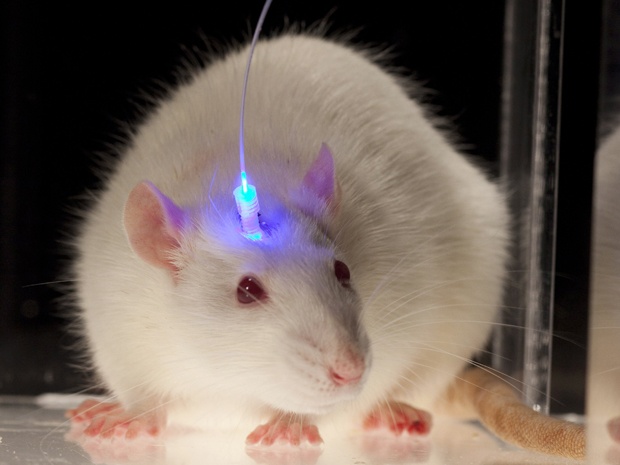
According to the Optogenetics Resource Center at Stanford University, optogenetics involves using genetics and light to control events within specific cells, in this case – brain tissue. Until recently, technology available for optogenetics has been comparable bulky and unwieldy, a problem which the Stanford researchers had hoped to address.
Read More
Tags:
CA,
Bioresearch,
California,
Optogenetics,
Neuroscience,
Southwest Region,
Neurotechnology,
2016,
best lab supply tradeshows,
BioResearch Product Faire™,
Stanford,
Stanford University
We’ve recently seen some compelling results when it comes to destroying brain tumors. A UCLA team blasted tumors with nanoparticles and a Washington University team shut down stem cells in the tumors to prevent them from regenerating. But what if we saw the tumors forming so far in advance that we didn’t need to blast them or worry about their regeneration? A breakthrough from Ohio State University proposes a way to forecast brain tumors long before their onset.
Read More
Tags:
Ohio State University,
2015,
BioResearch Product Faire Event,
Columbus,
OH,
OhStu
 Washington State University, in collaboration with a genetics testing company in India, is providing cancer patients with comprehensive testing for determining effective prostate and breast cancer treatments.
Read More
Tags:
Washington,
WSU Pullman,
Microbiology,
WA,
cancer research,
WSU,
Washington State University,
Cancer Treatment,
pharmaceutical,
2015,
Biomarkers,
Genetics,
Northwest Region,
Pullman,
BioResearch Product Faire™
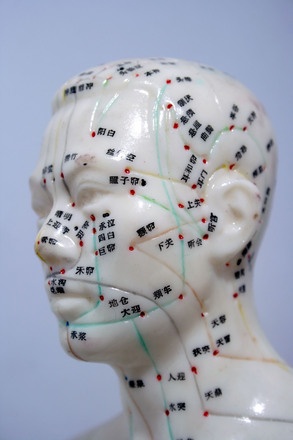 Researchers at the University of California, Irvine have recently found that people with hypertension can benefit from electroacupuncture – a form of acupuncture that uses electrical currents to stimulate various pressure points in the body.
Read More
Tags:
CA,
Medical Research,
University of California Irvine,
California,
2015,
Irvine,
NIH funding,
Southwest Region,
UCI,
pulmonary hypertension,
UC Irvine,
NIH grants,
BioResearch Product Faire™,
acupuncture
Until recently, nerve damage has been considered irreparable and impossible to treat. Only now are we seeing breakthroughs in nerve care such as Washington University’s study on preventing axon degeneration and UC Irvine’s study on regenerating nerves with salmon protein. Taking things one step farther, a University of Minnesota, Twin Cities research group has developed a method to foster nerve regrowth using 3D printing.
Read More
Tags:
University of Minnesota Twin Cities,
2015,
BioResearch Product Faire Event,
MN,
UMinn,
Twin Cities
 The flu is something that everyone experiences at some time. Even after receiving an annual flu shot, many people still fall ill due to a different strain of the flu that the shot does not protect against. Generally, the flu shot protects against three common strains of influenza, leaving people still vulnerable to getting the flu. Researchers at Rockefeller University have developed a new method of creating the flu vaccine that could potentially work against many more strains of influenza. (Image courtesy of Wikimedia Commons).
Read More
Tags:
Rockefeller University,
Northeast,
influenza research,
New York,
2015,
RockU,
BioResearch Product Faire Event,
NY