

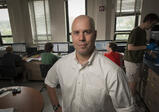
 Protein research at Michigan State University has lead to the development of a new protein structure which could neutralize flu viruses during an epidemic. The team of international researchers working on the project were lead by Tim Whitehead, assistant professor of materials science and chemical engineering at MSU (image courtesy of MSU).
1 Comment Click here to read/write comments
The Texas Medical Center in Houston already has a well-respected trauma care program that includes Ben Taub Hospital and the Memorial Hermann Life Flight program. After the center announced the establishment of the Texas Trauma Institute, the Texas Medical Center’s ability to care for high-risk emergency patients made another great leap forward. According to The Memorial Examiner, the Texas Trauma Institute plans to dedicate its resources and advance research in ways that will continue to improve patient survival and quality of life for both adult and pediatric trauma victims.
0 Comments Click here to read/write comments
Tags: Texas Trauma Institute, Texas Medical Center, trauma care
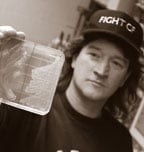 University of Cincinnati College of Medicine molecular geneticist Daniel Hassett (right) has made a name for himself as a determined researcher in the fight against cystic fibrosis (CF). He is also on the front line of bioscience research into creating "superbugs" that eat waste and generate energy, improving dramatically on the efficiency of traditional waste water treatment systems. In a radio interview on WVXU Cincinnati's Focus on Technology, commentator Ann Thompson describes the problem: the largest user of energy is wastewater treatment; the second largest user of water is energy production. If you can find a way to both clean water and generate electricity, you're in business.
0 Comments Click here to read/write comments
Tags: Bioscience research, Midwest, Ohio, biomedical research, University of Cincinnati, genetic engineering, molecular ecology research, BioResearch Product Faire Event, Cincinnati, BRPF, research scientist
The University of California Davis Medical Center recently discovered a new function of the body’s immune system through research on the protein HD6, also known as alpha-defensin 6. The discovery of HD6’s unique virus fighting methods helps researchers better understand how the body retaliates against bowel disease.
0 Comments Click here to read/write comments
Tags: University of California Davis, Immune System, Protein Research
0 Comments Click here to read/write comments
Tags: vendor, vendor shows, Biotechnology Calendar, Event, Biotechnology Vendor, Sales, Laboratory Equipment Supplier, scientist vendor shows, science sales leads, Lab supplier Showcase, Lab Supplier event, science brands
 Bone marrow was the first stem cell source to be widely used in clinical transplant surgery to replace damaged bone as a result of injury or chemotherapy. Unfortunately, bone marrow grafts are painful, and the appropriate donor is not always available when the need is there. Now research at the University of California Los Angeles' Broad Center of Regenerative Medicine has demonstrated successfully that stem cells from the patient's own fat (i.e. adipose tissue) can be made usable for bone damage treatment. Bone marrow is, after all, the soft, fatty tissue inside your bones that contains immature cells (aka stem cells) that give rise to all of your blood cells. So looking to fatty tissue from another part of the body to produce mesenchymal cells has made sense all along, though it has taken the efforts of several UCLA teams to show how it can be done in an animal model.
2 Comments Click here to read/write comments
Tags: University of California Los Angeles, Stem cell research, cancer research, Southwest, California, Los Angeles, UCLA, Research, Stem Cell, Biotechnology Vendor Showcase, BVS, science solution
While magnetic resonance imaging (MRI) scanners are most often associated with clinical diagnostics activities, their ability to visualize internal structures of the body in detail, especially soft tissues, makes MRI scanning machines extremely valuable for laboratory research scientists as well. So it's no small matter that an NIH equipment grant has made it possible for Cornell University in Ithaca to get one of its own, just last week, and establish the Cornell MRI Facility in Martha Van Rensselaer Hall. It's not just any scanner either, but a 3 Tesla GE Discovery 750, which provides noninvasive imaging with high signal-to-noise ratio and spatial resolution for structural and functional research involving small animals, humans, plants and biomedical materials. MRI technology does not involve radiation.
0 Comments Click here to read/write comments
Tags: Northeast, Cornell University, New research facilities, New York, NIH, Research equipment, Laboratory Imaging Equipment
 The University of Utah has explored and expoited a number of successful strategies to commercialize its intellectual capital in recent years. Their tech commercialization office is tireless in promoting its proprietary scientific solutions (see last month's blog: Science "Speed Teching" Drives Rapid Commercialization in Utah). But now we're starting to hear about another seriously innovative and fast-moving "laboratory" for cultivating new Salt Lake businesses, and it's a fairly new entity from the U of U's David Eccles School of Business called The Foundry. Instead of creating companies or corporate leaders, the Foundry is a hands-on training program designed to produce entrepreneurs who can identify a successful startup product/business and put together a qualified team to launch and run it.
0 Comments Click here to read/write comments
Tags: Utah, university of utah, Southwest, scientists solutions, laboratory, Salt Lake City, cultures
You may know that Biotechnology Calendar, Inc. has been bringing life science researchers and laboratory supply vendors together for 19 years now, but did you know that we began in San Diego with the UCSD Biotechnology Vendor Showcase™ Event? This showcase is still one of the largest on-campus networking events for scientific research and lab product suppliers. Each year it draws an enthusiastic annual following of Laboratory product supply companies and top-level research scientists. This year the Biotechnology Vendor Showcase™ Event at the University of California, San Diego is expected to attract over 700 university scientists who will be there to actively seek new products and services for their life science research programs.
0 Comments Click here to read/write comments
Tags: CA, University of California San Diego, California, San Diego, UCSD, UC San Diego, Biotechnology Vendor Showcase, BVS
 A new NIH funded research project at Ohio State University has linked a certain protein in the heart to cardiac damage after chemotherapy. The study was lead by Govindasamy Ilangovan, Ohio State associate professor of internal medicine (photo courtesy of OSU), and received a total of $419,375 in funding from the NIH.
0 Comments Click here to read/write comments
Tags: Ohio State University, Protein Research, Funding, NIH