
Fighting cancer is a battle that milions of people have had to, or are currently, waging. When surgeons are unable to remove cancerous tumors, radiation treatment (radiotherapy) is used to destroy the tumors. However, many times, radiation treatments fail to destroy the entirety of the tumor, leaving cancerous cells in the body. Researchers at the Ichan School of Medicine at Mt. Sinai in New York have discovered why radiotherapy is not always successful.
Read More
Tags:
Mount Sinai School of Medicine,
Northeast,
New York,
MSSM,
BioResearch Product Faire Event,
NY,
fight cancer,
radiation therapy,
2016,
Icahn School of Medicine,
radiotherapy,
tisch cancer institute
Two years ago, we saw a remarkable advance in 3D printing technology: a professor and a doctor at the University of Michigan, Ann Arbor designed a splint to open the collapsing windpipe of a baby. A licensing agreement signed this month between these specialists and the 3D printing company Materialise will help such splints become a medical norm.
Read More
Tags:
University of Michigan Ann Arbor,
2015,
Ann Arbor,
BioResearch Product Faire Event,
MI,
UMich
There are many solutions to the challenge of producing food for an ever-growing human population. One approach is to simply produce more food; we have seen successes on this front from research teams at the University of Wisconsin, Madison and the University of Illinois, Urbana-Champaign. Another approach, proposed by biologists at Washington University, St. Louis, attempts to increase quality over quantity, increasing nutrient content in existing crops.
Read More
Tags:
Washington University in St. Louis,
2015,
BioResearch Product Faire Event,
MO,
St Louis,
UWash

Carbon emissions may be at an all time high, but thanks to research currently being conducted at Texas A&M University (TAMU), clearer skies may be in our future.
Read More
Tags:
Texas A&M University,
Southwest,
Southwest life science marketing events,
energy research,
College Station,
TAMU,
BioResearch Product Faire Event,
TX,
2016
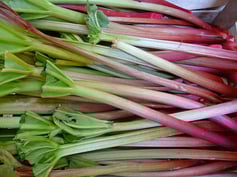 Cancer affects the majority of the population in one way or another, through knowing someone with cancer, being exposed to it in the media, or having it oneself. Cancer treatments and cures are some of the most well funded and highly researched areas in the life sciences. Researchers at the Winshop Cancer Institute at Emory University in Atlanta, GA recently discovered that an orange pigment, called parietin or physcion, that is found in lichens and rhubarb has potential to be used as an anti-cancer drug.
Read More
Tags:
Emory University,
Leukemia,
cancer research,
Southern,
Cancer Treatment,
Emory,
BioResearch Product Faire Event,
Atlanta,
GA,
Southern Region,
2016,
Parietin,
physcion
Bioresearchers have long been studying the nuances of photosynthesis in an effort to improve an already excellent recipe laid down by nature. In recent experience, we have witnessed efforts to increase the efficiency of photosynthesis at Washington University in St. Louis and to increase the productivity of photosynthesis at the University of Illinois, Urbana-Champaign. Another research group at UIUC is now searching for a way to protect photosynthesizing plants from increasing drought rates.
Read More
Tags:
University of Illinois Urbana-Champaign,
Urbana-Champaign,
2015,
UIUrbana,
BioResearch Product Faire Event,
IL
We often hear about the dangers that human encroachment has on coral reefs, but far less often do we hear of ways the coral can survive. Though global warming continues to threaten the coral reefs of the world, researchers at The Ohio State University have discovered that some species of coral are actually doing a very good job of surviving, and that their rate of survival is directly proportional to their fat content.
Read More
Tags:
Ohio State University,
2015,
BioResearch Product Faire Event,
Columbus,
OH,
OhStu
 Millions of dollars are awarded annually to researchers and research centers focusing on digestive disorders, including the University of California system schools, the major medical universities and hospitals across the country and top research Institutions such as Scripps, Salk and
On the east coast, Rockefeller University in New York, was recently awarded a
Read More
Tags:
Rockefeller University,
Northeast,
New York,
RockU,
BioResearch Product Faire Event,
NY,
2016,
Digestive diseases
.jpg?width=273&name=Aerial_of_Texas_Medical_Center_with_Downtown_Houston_in_the_background_(cropped).jpg "Texas Medical Center in Houston.") Sézary syndrome is a rare form of T-cell lymphoma that causes different types of lesions to appear on the skin once. Very little is known about the cause of this cancer, and there are no current cures available. Researchers from Baylor College of Medicine and the MD Anderson Cancer Center in Houston, Texas have identified certain genes that, when mutated, appear to play a role in Sézary syndrome
Sézary syndrome is a rare form of T-cell lymphoma that causes different types of lesions to appear on the skin once. Very little is known about the cause of this cancer, and there are no current cures available. Researchers from Baylor College of Medicine and the MD Anderson Cancer Center in Houston, Texas have identified certain genes that, when mutated, appear to play a role in Sézary syndrome
Read More
Tags:
cancer research,
Texas Medical Center,
Southwest,
tmc,
BioResearch Product Faire Event,
Houston,
TX,
2016,
Sezary Syndrome
We saw this July how researchers can help beneficial drugs evade an overly belligerent immune system by coating them in a honey mixture. Perhaps unsurprisingly, highly evolved pathogens are able to sneak past and even distract the defense mechanisms of plants. Bringing hope to the situation is a research group at Michigan State University at East Lansing who has found out a way to empower plants against such tricky attacks.
Read More
Tags:
Michigan State University,
2015,
BioResearch Product Faire Event,
MI,
East Lansing,
MSU