

Thanks to the stimulus package, the University of Oregon in Eugene was awarded a record $135.6 million in new competitively awarded external funding in 2010.
Read More
0 Comments Click here to read/write comments
Tags: Northwest, University of Oregon, Oregon, Research Funding
All three major Oregon research universities (the University of Oregon, Oregon State, and Oregon Health and Science University) received record amounts of new funding during fiscal year 2009-2010. This record increase will likely spur the development of new programs and encourage new research innovation in Oregon.
0 Comments Click here to read/write comments
Tags: Oregon State University, Oregon Health Sciences University, Northwest, University of Oregon, Oregon, Research Funding
Despite calls to for massive cuts in the federal science funding budget, President Obama has remained committed to an increase in new biotechnology research funding for federal institutions such as the NIH, NSF, CDC, and FDA.
0 Comments Click here to read/write comments
Tags: 2012, Research Funding, NIH, National
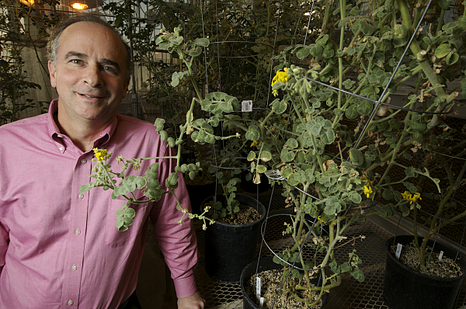
“Plants are amazing biochemists as they make hundreds of thousands of compounds, yet we don’t know how most of these chemical compounds are produced by the plant or the role of these metabolites in the natural history of species across the kingdom.”
Michigan State University professor of molecular biology and biochemistry Robert Last (above photo and quote) and his team of researchers recently received a $4.1M grant from the National Science Foundation to study Andean Tomatoes and the chemicals they naturally produce. Professor Last's research focuses on the tiny hairs on plants, called trichomes that are related to the plant's smell and taste through the sticky, pungent compounds they produce.
2 Comments Click here to read/write comments
Tags: Michigan State University, Midwest, Michigan, Research Funding

[Photo courtesy of University City Science Center]
0 Comments Click here to read/write comments
Tags: Pennsylvania, University of Pennsylvania, Thomas Jefferson University, Research Funding, Northeast Region
 Catastrophe has a way of catalyzing need and resources. The 2010 BP oil spill in the Gulf of Mexico has made University of Alabama (UAB) scientists' expertise in the biomarine environment off their coast particularly valuable. BP has pledge up to $500 Million to study the effects of the spill, and some of that funding is making its way to biomarine research projects at UA-Birmingham through Alabama's Marine Environmental Science Consortium (MESC) and the larger Gulf Research Initiative Open Research Program. The MESC has distributed $5 Million in Rapid Response Funds already, and 16 UAB researchers have received $308,344 in grants to fund pilot projects identified by and applied for at the UAB Gulf Oil Spill Summit last fall.
0 Comments Click here to read/write comments
Tags: University of Alabama, Southern, biomarine research, BioResearch Product Faire Event, Research Funding, UAlab, Birmingham, AL, 2011
Fragile X Syndrome is the leading cause of inherited mental illness, ranging from learning disabilities to more severe cognitive or intellectual disabilities, including autism. Connecticut pharmaceutical company Marinus, Inc. has developed the synthetic neurosteroid Ganaxolone for the treatment of Fragile X Syndrome (FXS), epilepsy, and Post-Traumatic Stress Disorder (PTSD). Now researchers at UC Davis have been awarded a $3 Million molecular biology research grant by the Department of Defense to study the effects of the drug on FXS specifically.
0 Comments Click here to read/write comments
Tags: University of California Davis, California, Research Funding, Davis, Southwest Region
Cows get pneumonia, or bovine respiratory disease, and it kills more than a million of them each year, making BRD the leading cause of (accidental) death for beef and dairy cattle. That translates to a loss of about $692 Million annually. To combat this loss, the USDA has just invested $9.75 Million in a 5-year project to come up with genomic and management approaches to the BRD problem.
0 Comments Click here to read/write comments
Tags: CA, Bioresearch funding, animal research, Southwest, animal science, UCDMC, Research Funding, Davis, UC Davis - Medical Center, Biotechnology Vendor Showcase Event, 2011
Wallace Coulter was not only a fantastically successful inventor of diagnostics equipment, but through the philanthropic Coulter Foundation he continues to promote medical innovation at over 10 universities across the US. Duke University has just received a $10 million commitment to permanently endow its Coulter Translational Partnership in biomedical engineering, which, combined with grants from the Fitzpatrick Foundation and other Duke resources brings the program's endowed resources to $20 million, securing its long term future.
0 Comments Click here to read/write comments
Tags: Duke University, North Carolina, Translational Research, Research Funding, Durham, Southern Region