

A team of bioresearchers working at the University of Cincinnati has earned a $4.6 million grant to fund their studies on diarrheal disease. Their novel approach involves growing human stomachs and intestinal tissue outside of the body in order to test treatments without putting humans at risk.
Read More
0 Comments Click here to read/write comments
Tags: University of Cincinnati, 2015, BioResearch Product Faire Event, Cincinnati, OH, UCinci
 The University of Arizona’s Arthritis Center is getting a helping hand in identifying treatments to slow the spread of osteoarthritis.
A five-year, $6.1 million grant was given to researchers at UA by the Institute of Arthritis and Musculoskeletal and Skin Diseases of the National Institutes of Health, and will help them continue working to identify key risk factors for the development of osteoarthritis (OA), the structural progression of the disease and ways to prevent OA.
Read More
0 Comments Click here to read/write comments
Tags: University of Arizona, 2015, disease research, UAZ, BioResearch Product Faire Event, Research Funding, Tucson, Southwest Region
 University of Idaho is getting big funding to think small in 2015. Thanks to recent funding, UI scientists will soon be better equipped to study chemistry at a molecular level using specialized, and expensive, new equipment.
0 Comments Click here to read/write comments
Tags: Chemistry, Moscow, 2015, BioResearch Product Faire Front Line Event, University of Idaho, Research Funding, Idaho, ID, UIdaho
 Scientists from UC San Francisco and Oregon Health & Science University (OHSU) have teamed up to tackle acute lymphoblastic leukemia (ALL), a blood cancer that typically affects children from two to five years old.
0 Comments Click here to read/write comments
Tags: CA, Leukemia, Oregon Health and Science University, cancer research, Oregon, California, Pediatric Cancer Research, 2015, San Francisco, SFVS, BioResearch Product Faire Event, OR, UCSF, OHSU, Portland, UC San Francisco, Biotechnology Vendor Showcase Event
Over the past 15 years, the Neuroscience Institute at the University of Cincinnati has grown immensely. Starting out with only a few researchers and physicians, the center has continuously grown in amount of faculty members, and funding received. Since its founding, more than $60 million has been donated to the institute, helping it become the leading neuroscience research and care center in the Cincinnati area.
Read More
0 Comments Click here to read/write comments
Tags: Midwest, Ohio, University of Cincinnati, 2015, Neuroscience, BioResearch Product Faire Event, Cincinnati, OH, UCinci, new funding
The human body does not respond well to a sedentary lifestyle. In the most severe cases, lack of activity can lead to atrophied muscles, blood clots, obesity, and even heart failure. However, bears hibernate for months on end and emerge in the spring perfectly healthy. Researchers at the University of Minnesota are unraveling the biology of this seemingly simple achievement to gain insight on how we can avoid these symptoms.
Read More
0 Comments Click here to read/write comments
Tags: University of Minnesota, 2015, BioResearch Product Faire Event, Minneapolis, MN, UMinn
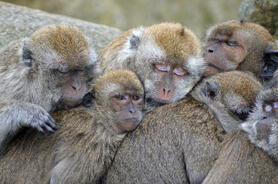 HIV and AIDS have been a conspicuous concern worldwide for several decades now; research into its treatment regularly gains national attention and benefits from billions of dollars in research funding. What many people may not realize, however, is that simian immunodeficiency virus, (or SIV, a nonhuman primate form of HIV that causes AIDS in monkeys) may hold the keys to unlocking the mysteries of how HIV can be treated in humans.
0 Comments Click here to read/write comments
Tags: HIV, AIDS Research, Oregon Health and Science University, Oregon, 2015, BioResearch Product Faire Event, Research Funding, NIH, OHSU, NIH grants, Bioreseach
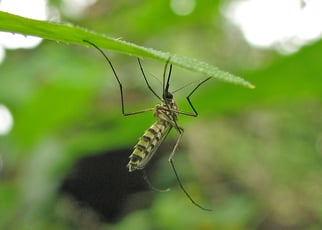 According to the Center for Disease Control, an estimated 198 million cases of malaria occurred worldwide and 500,000 people died, mostly children in the African Region.
0 Comments Click here to read/write comments
Tags: Duke University, North Carolina, infectious diseases, 2015, malaria, BioResearch Product Faire Event, Durham, NC, Duke, NIH funding, Duke Medical Plaza, NIH grants
 Researchers at University of California, Berkeley have been doing a lot of bird watching lately to help understand the spread of infectious disease. In a recent study they found that Lyme disease, which many believe is spread by rodents and small mammals, is in fact regularly transmitted by several species of birds as well.
Read More
0 Comments Click here to read/write comments
Tags: CA, Bioresearch, Lyme Disease, Southwest, California, 2015, Berkeley, disease research, BioResearch Product Faire Event, UC Berkeley, UCBerk
With the support of a recently awarded $2.3 million NIH New Innovator Award, Pamela Kreeger from the University of Wisconsin, Madison will continue her research into what causes ovarian cancer in women to spread. Pamela Kreeger was one of 50 researchers to receive the prestigious New Innovator Award from the National Institutes of Health in 2014.
Read More
0 Comments Click here to read/write comments
Tags: Midwest, Bioresearch, WI, University of Wisconsin Madison, UWisc, 2015, BioResearch Product Faire Event, Madison, NIH funding, ovarian cancer