
Science Market Update

New $305.4M Collaborative Research Building to Open at UMD Baltimore

Posted by Katheryn Rein on Wed, Apr 20, 2016

The University of Maryland, Baltimore is currently constructing a massive collaborative research building on its medical campus, the first new research facility since 2003. The Health Science Facility III will be UMD Baltimore's largest research building by far once construction completes in December 2017. This facility will house researchers from the schools of Medicine, Pharmacy, and Dentistry to catalyze collaboration between these schools and continue to secure UMD Baltimore's spot as one of the top research institutions in the country. This $305.4 million construction project, which broke ground in 2013, will create 428,970 square feet of space spread over 10 stories. This building will feature two adjoining towers to incorporate both wet and dry research lab space. Around 70,000 square feet of this space will be solely dedicated to wet lab research for approximately 92 principal investigators, accounting for just over 1/6 of the total space in the building.


“When this facility opens, our students and research scientists will have access to the most cutting-edge of scientific facilities, as well as easier access to each other, encouraging collaboration across disciplines,” said William E. “Brit” Kirwan, Ph.D., chancellor of the University System of Maryland. “We are excited that research scientists from our School of Medicine will be able to advance their collaborative research and discovery efforts with colleagues across the Campus and the University System unimpeded by space limitations. We hope to see new, interdisciplinary partnerships develop, leading to a better understanding of human health and disease and a fully comprehensive education for our students.”

 

 Artistic rendering of HSFIII courtesy of pharmaceutical-technology.com

University officials and campus scientists are excited for the potential the establishment of this collaborative facility has for the University of Maryland's contributions to the research community. Fields of study expected to especially benefit from this interdisciplinary workplace include Genome Sciences, Personalized and Genomic Medicine, Cancer Biology, Cardiovascular Science, Brain Science, Stem Cell Biology, and Infection/Inflammation Science among many other areas. 


 (Artistic rendering of HSFIII courtesy of pharmaceutical-technology.com)

“With this groundbreaking, we are ushering in a revolution in biomedicine, here at the School of Medicine, where fundamental research and advancement in technology converge to create new pathways and new opportunities for science and technology to dramatically impact the health and well-being of the citizens of Maryland, and the region, while positively impacting the economy of our state,” said E. Albert Reece, M.D., Ph.D., M.B.A., Dean of the University of Maryland School of Medicine. “Within the portals of this building will be conducted robust collaborative research that will expand across the University of Maryland, Baltimore Campus where School of Medicine investigators will engage collaboratively with other colleagues across the campus and beyond – especially scientists at the School of Dentistry and the School of Pharmacy.”


Most exciting, though, is the announcement that space in Health Science Facility III has yet to be assigned by university officials. By keeping laboratory benches unassigned during construction, the university aims to recruit new, interdisciplinary researchers to house these new life science labs to truly evoke a feeling of youth and energy throughout the facility once it opens for occupancy in January 2018.

Learn more about the state-of-the-art research and innovations happening at the University of Maryland, Baltimore with the following articles:

Baltimore Researchers Identify Dangerous E. coli Strains

Baltimore Biorsearchers Receive $10.7 Million for STD Research

UMD Baltimore Creating New $15.2M Genome Center for Infectious Diseases
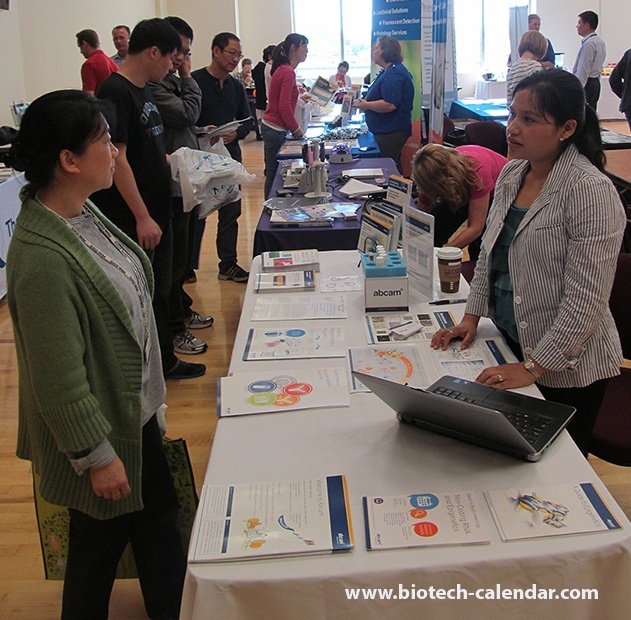
UMDBalt_show_photo.jpg(Image taken at 2015 BioResearch Product Faire™ Event at UMD Baltimore™ Event at UMD Baltimore)


Biotechnology Calendar, Inc. has been producing highly reputable life science trade shows at more than fifty research universities across the U.S. for over twenty years. These shows bring hundreds of researchers in search of the best new tools together with lab supply companies.

If you are interested in exhibiting your laboratory supplies to, and connecting with, researchers at UMD Baltimore, we invite you to join us at our upcoming Baltimore event. The 2nd Annual BioResearch Product Faire™ Event at the University of Maryland, Baltimore will be held on June 8, 2016. 

To learn more about participating at this Baltimore event, visit the link below: 

Learn More About  Baltimore Event


Read More

Tags: new research building, MD, Baltimore, University of Maryland, Baltimore, UMDBalt, new Building, collaborative research

Boulder Researchers Find Key to Skin Stem Cell Regulation

Posted by Katheryn Rein on Tue, Apr 19, 2016

Researchers at the University of Colorado, Boulder have recently discovered information about stem cell division that may change the way we approach regenerative medicine and cancer research. These findings were published as the cover story in Science for its February 5th issue. 

Read More

Tags: Stem cell research, University of Colorado Boulder, Stem Cell, CO, Colorado, CU-Boulder, Boulder, Skin regeneration

Harvard and Merck Partner for $20M Cancer Therapeutics Research

Posted by Laura Braden on Mon, Apr 18, 2016

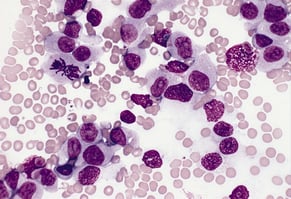
AML in bone marrow, via Wikimedia Commons. Acute myeloid leukemia (AML) is the most common form of leukemia affecting the blood and bone marrow, and has been responsible for 1.8% of cancer deaths in 2016. Because it is so prevalent, many research teams around the world study this disease in search of new treatment methods. One of these research teams, from Harvard University, has joined up with the pharmaceutical company Merck in a $20 million collaboration to develop new therapeutics for leukemia.

Read More

Tags: Harvard University, Northeast, Leukemia, cancer research, Massachusetts, Boston, BioResearch Product Faire Event, MA, Harvard, longwood, 2016, cancer therapy, Merck

$9.5M NIH Grant Will Support "Superbug" Research at UCSD

Posted by Katheryn Rein on Fri, Apr 15, 2016

Since the discovery of the first true antibiotic -penicillin- in 1928, the treatment of bacterial infections has evolved into merely an inconvenient visit to the doctor's office for most of the western world. But just as modern medicine has evolved to make an infected cut no longer equal a death sentence, so too have bacteria in the form of "superbugs". These "superbugs" are bacteria which have become increasingly immune to traditional antibiotic treatments.

Read More

Pitt Biomedical News: Military Medicine Research Center + VA Research Expansion

Posted by Jaimee Saliba on Thu, Apr 14, 2016

(Original article from 2012 by Jaimee Saliba. Updated information added by Katey Rein.)

The University of Pittsburgh has strong ties with the Pittsburgh Veteran's Administration Medical Center located next door, and in the past few years those relations have been strengthened with the establishment of the UP School of Medicine Center for Military Medicine Research as well as a new research facility at the VA's University Drive campus.

Read More

Tags: University of Pittsburgh, Pennsylvania, VA, Stem cell research, New research facilities, UPITT, 2012, Neuroscience, BioResearch Product Faire Event, PA, Pittsburgh, vet research

Colorado Researchers Make Breakthrough on Type I Diabetes

Posted by Cat Girton on Wed, Apr 13, 2016

Diabetes encompasses a group of metabolic disorders that result in chronically elevated blood sugar levels. If untreated, these diseases can result in serious complications such as ketoacidosis, heart disease, kidney failure, and stroke. The most common type of diabetes is type II diabetes, which accounts for 90-95% of cases (a recent Philadelphia study helped us gain further insight into why type II diabetes occurs). The incidence of type I diabetes is much lower, accounting for just 5-10% of cases. However, while type II diabetes can resolve on its own with changes in diet and exercise habits, type I is considered incurable. Now, a new study from the University of Colorado, Anschutz Medical Campus has identified a new class of antigens that may be a factor in the development of the disease.

Read More

Tags: Diabetes, University of Colorado Anschutz Medical Campus, autoimmune disease, insulin resistance, lab supplies, Research, Type 1 Diabetes, life science tradeshows, T Cells

UPitt Researchers Use Gene Therapy to Treat Parkinson's Disease

Posted by Katheryn Rein on Tue, Apr 12, 2016

A new strategy for combating the neurologically destructive effects of Parkinson's Disease has been developed jointly by researchers at the University of Pittsburgh and the University of Pittsburgh School of Medicine. 

Read More

Tags: University of Pittsburgh, Parkinson's Disease Research, gene therapy, UPITT, PA, Pittsburgh, Parkinson's Disease

UMass Researchers & Ebola: A New Treatment Strategy

Posted by Katheryn Rein on Mon, Apr 11, 2016

A multi-institute research team, including scientists from MassBiologics at the University of Massachusetts, may have found the key to successfully treating and vaccinating against one of this decade's most famously lethal diseases: Ebola

Read More

Tags: University of Massachusetts Amherst, University of Massachusetts, Massachusetts, MA, UMASS, virus, 2016, ebola

Minnesota Research Shows Potency of Kava Against Lung Cancer

Posted by Sam Asher on Fri, Apr 08, 2016

Study Shows Chemopreventative Potential of Kava-Derived Compound

Sometimes, the most simple and elegant solution to a problem has already been known for centuries. University of Minnesota researchers have explored the medicinal capacity of an ancient plant - Piper methysticum, commonly known as kava. However, concerns about kava being toxic to the liver have resulted in diminished use. Now, a recently published study has found that a specific kava derivative may have potential to combat cancer without causing any damage to liver cells.
 

get more information about UMINN research programs

by clicking the button below

Get UCLA funding stats


Read More

Tags: Midwest, University of Minnesota, cancer research, Minnesota, University of Minnesota Twin Cities, Cancer, BioResearch Product Faire Event, Minneapolis, MN, UMinn, 2016, lung cancer

UC Davis Researchers Find Promising Treatment for Huntington’s

Posted by Cat Girton on Thu, Apr 07, 2016

An estimated 30,000 people in the United States are afflicted with Huntington’s disease. Receiving a diagnosis of this genetic neurodegenerative disorder is unimaginably devastating. Sufferers slowly lose control of their movement and develop psychiatric problems over the course of 10-25 years, and often the disease is undetected until adulthood. Just this year, UC Davis researchers in Sacramento, California have discovered that human mesenchymal stem cells (MSCs) - cells with the ability to differentiate into bone cells, muscle cells, and other cell types - could be the key to developing an effective new therapy to treat Huntington’s. The promising findings are published in the journal Molecular Therapy

Read More

Tags: Lab Product show, Stem cell research, Neuroscience, UC Davis - Medical Center, Huntington's Disease

Subscribe to Company News