

Despite calls to for massive cuts in the federal science funding budget, President Obama has remained committed to an increase in new biotechnology research funding for federal institutions such as the NIH, NSF, CDC, and FDA.
The Fred Hutchinson Cancer Research Center has received $1 million in new cancer research funding from the W.M. Keck Foundation to study the link between common viruses and cancer.
0 Comments Click here to read/write comments
Tags: Fred Hutchinson Cancer Research Center, Washington, Northwest, cancer research
In 1995 Utah chemical industrialist Jon Huntsman donated $151M—$100M directly from family funds—to the University of Utah Medical Center in Salt Lake City to create a top-notch cancer center bearing his family's name: The Huntsman Cancer Institute (HCI). Further contributions over the years brought Huntsman support to $300M. Now the family has made another gift to the Center in the amount of $41M, which HCI says will be used to hire more researchers and acquire new treatment technology.
0 Comments Click here to read/write comments
Tags: Utah, university of utah, UUtah, Southwest, BioResearch Product Faire Event, Salt Lake City, construction, 2011
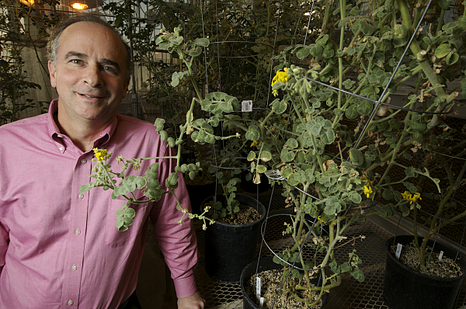
“Plants are amazing biochemists as they make hundreds of thousands of compounds, yet we don’t know how most of these chemical compounds are produced by the plant or the role of these metabolites in the natural history of species across the kingdom.”
Michigan State University professor of molecular biology and biochemistry Robert Last (above photo and quote) and his team of researchers recently received a $4.1M grant from the National Science Foundation to study Andean Tomatoes and the chemicals they naturally produce. Professor Last's research focuses on the tiny hairs on plants, called trichomes that are related to the plant's smell and taste through the sticky, pungent compounds they produce.
2 Comments Click here to read/write comments
Tags: Michigan State University, Midwest, Michigan, Research Funding
Two distinct hallmarks of the 21st Century that have already become central to our lives and business thinking are a reliance on social networking and a concern about sustainability. So perhaps it's not surprising (though it is remarkable) that a government agency has developed a website for shared knowledge about biofuel resources.
0 Comments Click here to read/write comments
Tags: biofuels, industry news
National Jewish Health in Denver is the #1 respiratory hospital in the United States and the only institution in the world dedicated exclusively to respiratory, cardiac, and immune diseases. Researchers at NJH's Center for Genes, Environment & Health (CGEH) have recently published the results of an important study that identifies a genetic variant for ideopathic pulmonary fibrosis and its cousin familial interstitial pneumonia. Both are fatal diseases involving progressive lung scarring; some 40,000 people die annually of the little-understood and untreatable conditions.
0 Comments Click here to read/write comments
Tags: Genomics, Colorado, Southwest Region, National Jewish Health University, NJH

[Photo courtesy of University City Science Center]
0 Comments Click here to read/write comments
Tags: Pennsylvania, University of Pennsylvania, Thomas Jefferson University, Research Funding, Northeast Region
 Catastrophe has a way of catalyzing need and resources. The 2010 BP oil spill in the Gulf of Mexico has made University of Alabama (UAB) scientists' expertise in the biomarine environment off their coast particularly valuable. BP has pledge up to $500 Million to study the effects of the spill, and some of that funding is making its way to biomarine research projects at UA-Birmingham through Alabama's Marine Environmental Science Consortium (MESC) and the larger Gulf Research Initiative Open Research Program. The MESC has distributed $5 Million in Rapid Response Funds already, and 16 UAB researchers have received $308,344 in grants to fund pilot projects identified by and applied for at the UAB Gulf Oil Spill Summit last fall.
0 Comments Click here to read/write comments
Tags: University of Alabama, Southern, biomarine research, BioResearch Product Faire Event, Research Funding, UAlab, Birmingham, AL, 2011
Fragile X Syndrome is the leading cause of inherited mental illness, ranging from learning disabilities to more severe cognitive or intellectual disabilities, including autism. Connecticut pharmaceutical company Marinus, Inc. has developed the synthetic neurosteroid Ganaxolone for the treatment of Fragile X Syndrome (FXS), epilepsy, and Post-Traumatic Stress Disorder (PTSD). Now researchers at UC Davis have been awarded a $3 Million molecular biology research grant by the Department of Defense to study the effects of the drug on FXS specifically.
0 Comments Click here to read/write comments
Tags: University of California Davis, California, Research Funding, Davis, Southwest Region
Proton beam therapy is a form of targeted cancer treatment that has fewer debilitating side effects than traditional radiotherapy. The Mayo Clinic is a world-class center for cancer research and care in the Midwest, and now it will expand its holdings to include two new proton beam therapy centers, one in Rochester and another at its sister clinic in Phoenix. The type of advanced pencil beam scanning therapeutic equipment that the Mayo Clinic Proton Beam Therapy Center will use is very expensive (the two facilities will have a combined total cost of over $400M for 8 treatment rooms), and the $100 Million outright gift from philanthropist Richard O. Jacobson made earlier this year will go a considerable way toward advancing the project's progress.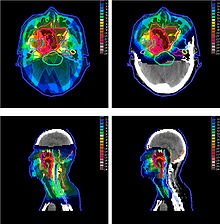 Intensity-modulated proton beam therapy is less damaging to the cancer patient's healthy cells (surrounding the cancerous growth) because:
0 Comments Click here to read/write comments
Tags: cancer research, Rochester, Mayo Clinic, BioResearch Product Faire Event, MN, RMN, Midwest Region, 2011