
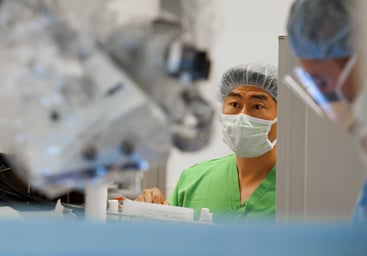
(Photo of Dr. Kim courtesy of UC Davis)

Tags: University of California Davis, California, Neuroscience, Stem Cell, Sacramento Campus
Pulling material from technical science publications that is directly applicable to the business of science marketplace is sometimes a challenge, however, here is a thought provoking publication by Greirson et al. that addresses something most of us rarely think about.
"Plants are fundamental to all life on Earth. They provide us with food, fuel, fiber, industrial feed stocks, and medicines. They render our atmosphere breathable. They buffer us against extremes of weather and provide food and shelter for much of the life on our planet. However, we take plants and the benefits they confer for granted."
Of the one hundred or so plant research questions posted, the critical 10 appear to revolve around human societies need for survival.
Including:
Tags: women in science, Life Science Funding, Plant science, Funding, Research Funding, industry news, Biomedical Research Funding
This story not only amazed us but brought home how important the work of researchers and medical equipment technology developers is in real time, right now, for saving the lives of actual people. Read the update below, too. -- 12/23/2011
Tags: Harvard University, Northeast, Stem cell research, Translational Research, 2012, Massachusetts, Boston, BioResearch Product Faire Event, Event, MA, Harvard, Laboratory Equipment Supplier, Research equipment, transplant success story, 2011
When the information superhighway bypassed the local library and newsstand to bring electronic content directly to our laptops, we were told it was a great day for the environment. Think of all those trees that would no longer need to be cut down for paper! What we didn't think about (right away, at least, in all the giddiness of the moment), was that those massive computer servers had to exist somewhere in real space, and boy were they ever going to use a lot of energy. And all those computers downloading information were going to be a drain on some city's power supply too.
Tags: Washington, Northwest, Washington State University, Energy, green design
Researchers at the University of California, Los Angeles, have discovered a new stem cell that assists in repairing lung airways. The discovery is significant because the airways are vital in protecting the body from airborne toxins. The airways contain glands that defend the body by producing and then removing mucus, a process which cleanses the lungs of infectious agents and environmental toxins. The study's findings have major potential for advancement in the field of lung regeneration.
Tags: Stem cell research, California, UCLA, Stem Cell, Southwest Region
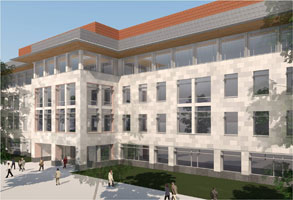
Emory University continues to expand its capacity for medical research and care as it begins construction on a new building dedicated primarily to pediatric care. The new facility is envisioned as a partnership between Children's Healthcare of Atlanta and Emory as well as other Atlanta-area institutions such as the Georgia Institute of Technology and the Morehouse College School of Medicine.
Speaking about the new facility, S. Wright Caughman, M.D. and CEO of the Woodruff Health Sciences Center, argued "This partnership will lead to continued medical advances that will benefit pediatric and adult patients in Georgia and throughout the world and will help Emory and Children's reach the top ranks of pediatric research institutions."
Tags: Emory University, Southeast, New research facilities, Georgia
Recognizing a strong opportunity for productive public-private partnership in bioscience research to benefit public health, NIH has awarded a 5-year, $5.2M grant to Boulder, Colorado-based diagnostics firm MBio to produce a reasonably-priced, no-lab-required assay system for accurate identification of the influenza virus. Their winning project proposal includes this description:
Tags: Photonics, Translational Research, Southwest, 2011 Research Funding, NIH, Colorado, new research grants, Boulder, Science Suppliers
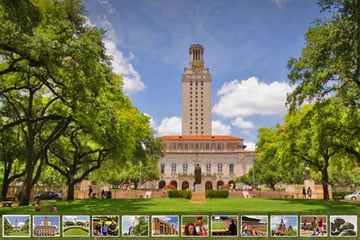 We're very pleased to announce the newest addition to the Biotechnology Calendar, Inc. Front Line Event Calendar: on November 2 of this year (2011) we will hold our 1st Annual BioResearch Product Faire show on the campus of the University of Texas at Austin (UTA). Front Line events have been extremely popular since we introduced them in 2010 as an alternative to our larger expositions, typically for a special request venue or a more targeted audience. In the case of UT Austin we're venturing onto a campus without a medical school (yet), though that hasn't prevented the University from being a huge recipient of federal research grants.
Tags: University of Texas, Southwest, UTAustin, BioResearch Product Faire Front Line Event, Austin, Life science marketing opportunity, TX, 2011
The research involved in measuring infant cognitive ability over the past two decades has clearly demonstrated that babies only a few months old have a solid, basic grasp on the physicalities of the world. Now, MIT's Josh Tenenbaum has co-led a team of international researchers to explore how infants can use that knowledge to form incredibly surprising expectations of how certain new and unfamiliar situations will turn out.
Tags: Northeast, MIT, infant cognizance, Massachusetts
Case Western Reserve University School of Medicine scientists have identified a protein, SAMHD1, that may inhibit the body's immune response system. This finding represents large gains in the way molecular biology understands immunodeficiency.
Tags: Midwest, Ohio, biomedical research, Case Western Reserve University School of Medicine