

DNA is a lot like a genetic recipe: change up the order of the ingredients, and you might get an entirely different dish. At the University of Michigan, Ann Arbor, bioresearchers are cooking up some new results that better explain the effects of modifying DNA and what that means for evolution as a whole.
Read More
0 Comments Click here to read/write comments
Tags: University of Michigan Ann Arbor, 2015, Ann Arbor, BioResearch Product Faire Event, MI, UMich
 Movies like "Happy Feet" and "March of the Penguins" often remind us of how cute penguins are in the cold, Antarctic conditions where they live. These movies, however, fail to mention another species of penguin that reside in warmer climates and is slowly dying out: African penguins. Although they are on track to be extinct within the next 20 years, the Pueblo Zoo in Colorado and Colorado State University, Fort Collins recently performed cancer treatments on the oldest living African penguin in the world, ensuring that the penguin will be healthy enough to live a longer life. (Image of African penguin (not Tess) courtesy of Wikimedia Commons).
0 Comments Click here to read/write comments
Tags: veterinary medicine, Southwest, Colorado State University, 2015, BioResearch Product Faire Event, CO, Colorado, CSUFC, CoSTU, African Penguin, radiation therapy
 Researchers from the Perelman School of Medicine at the University of Pennsylvania and the Novartis Institutes for BioMedical Research have discovered a potential new method for treating brain cancer using specially engineered immune cells.
According to a university press release, personalized immune cells were engineered by UPenn scientists in order to seek out and attack a type of deadly brain cancer, and were found to be both safe and effective at controlling tumor growth in mice that were treated with these modified cells.
Read More
0 Comments Click here to read/write comments
Tags: Pennsylvania, University of Pennsylvania, UPenn, cancer research, brain research, 2015, Philadelphia, BioResearch Product Faire Event, PA, NIH funding
A team of researchers at The University of Cincinnati has found new proteins that help maintain gene stability. Their work is especially relevant to diseases that are caused by genetic instability, like cancer.
Read More
0 Comments Click here to read/write comments
Tags: University of Cincinnati, 2015, BioResearch Product Faire Event, Cincinnati, OH, UCinci
 With the assistance of a 5-year, $10.7 million grant from the National Institute of Allergy and Infectious Disease (NIAID), researchers from the University of Maryland School of Dentistry and the University of Maryland School of Medicine will work together to study the causes, prevention, and treatment methods for 2 commons STD's: Chlamydia and Gonorrhea. This grant renews a previous 5-year, $12 million grant Baltimore researchers received to study STDs. (Image courtesy of Acroterion, via Wikimedia Commons).
0 Comments Click here to read/write comments
Tags: Northeast, MD, 2015, Baltimore, University of Maryland, Baltimore, UMDBalt, BioResearch Product Faire Event, NIH funding, new funding, STD Research
Teamwork and communication are key to approaching any project. The same is true for bacteria that want to launch successful infections. A study from the University of Minnesota presents a way to disturb bacterial communication to reduce the frequency and severity of infections.
Read More
0 Comments Click here to read/write comments
Tags: University of Minnesota, 2015, BioResearch Product Faire Event, Minneapolis, MN, UMinn
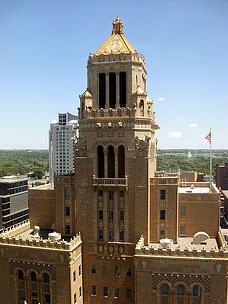 The Mayo Clinic is one of the most well-known research and treatment centers in the world. With facilities in Arizona, Minnesota, and Florida, the Mayo Clinic receives millions of dollars in funding each year, performs cutting edge research and clinical trials, and sees more than one million patients each year.
0 Comments Click here to read/write comments
Tags: Midwest, Rochester, Mayo Clinic, 2015, BioResearch Product Faire Event, MN, new construction, RMN
 Researchers at the University of Nevada, Reno are able to peer deeper into the mysteries of the brain thanks to a recent grant from the National Institutes of Health.
A $10 million grant was given to the Reno research institution by the NIH to help expand the University’s neuroscience research and capabilities using advanced functional Magnetic Resonance Imaging (fMRI).
In partnership with the Renown Regional Medical Center, UNR researchers will scan healthy and impaired brains in order to more fully understand its myriad functions.
Read More
0 Comments Click here to read/write comments
Tags: UNR, Nevada, brain research, 2015, BioResearch Product Faire Event, Research Funding, NV, lab equipment, NIH grant
 Life science researchers at Stanford University are getting a booster shot from The Bill & Melinda Gates Foundation, which has pledged to give $50 million over the next 10 years to establish the Stanford Human Systems Immunology Center on the school's California campus.
0 Comments Click here to read/write comments
Tags: CA, AIDS Research, California, BioResearch Product Faire Event, Research Funding, AIDS vaccine research, research grants, new building expansion
 Researchers at Thomas Jefferson University may have found the ticket to helping men fight prostate cancer more efficiently and over a longer period of time. While prostate cancer is usually treatable in its early stages, men affected with cancer that has metastasized into their bones have a greatly reduced chance of fighting the deadly disease.
Read More
0 Comments Click here to read/write comments
Tags: Pennsylvania, Thomas Jefferson University, cancer research, 2015, Philadelphia, BioResearch Product Faire Event, PA, ThomJeff