

In the realm of biomedical imaging, researchers from Washington University in St. Louis are taking cues from an amazing set of eyes found in nature. Far from the instinctual candidates for impressive eyesight, like cats or birds of prey, this pair belongs to a creature under the sea: the mantis shrimp.
Read More
0 Comments Click here to read/write comments
Tags: Midwest, Washington University, Missouri, WUSTL, 2012, BioResearch Product Faire Event, MO, St Louis
The University of California system has five biomedical campuses currently: San Francisco, San Diego, Los Angeles, Irvine, and Davis/Sacramento. While each campus maintains a certain autonomy, the advantage to being part of a unified, statewide system is especially apparent when it comes to sharing resources such as biospecimens. In research studies that require data from large numbers of human blood or tissue samples, for instance, scientists rely on biobanks: an organized collection of human biological material and associated information stored for one or more research purposes.
0 Comments Click here to read/write comments
Tags: CA, University of California Los Angeles, University of California San Francisco, Bioscience research, Bioresearch, Translational Research, Southwest, California, University of California, 2012, Los Angeles, San Diego, San Francisco, BioResearch Product Faire Event, Biotechnology Vendor Showcase
0 Comments Click here to read/write comments
Tags: biomedical research, Bioresearch, 2012, Life Science Market Update., Denver, Front Line event, CO, Colorado, National Jewish Health University, NJH
If you’ve ever been in need of a blood thinner, or you’re an avid reader of the Science Market Update, you’re probably familiar with the drug warfarin. Warfarin is an anticoagulant, which means it decreases the clotting ability of the blood in order to fight blood clots. However, it’s known to cause adverse effects if taken in the wrong amounts. In one of our September articles, we talked about research underway at the University of Illinois at Chicago that focused on prescribing the proper dosage of the drug. Meanwhile, just a few cities over, researchers at the University of Illinois Urbana-Champaign are working on an alternate drug to warfarin.
0 Comments Click here to read/write comments
Tags: Midwest, University of Illinois Urbana-Champaign, 2012, Illinois, BioResearch Product Faire Event, IL, UIUC
The Department of Neuroscience at New York's Mount Sinai School of Medicine comprises 25 research laboratories with total NIH funding for 2012 of $19.3M. Most labs are on the 9th Floor of the Icahn Medical Institute building on Madison Avenue. Neuroscience faculty may also receive support and engage in collaborative research through MSSM's Friedman Brain Institute, which coordinates brain and spinal cord research from departments and clinics across the medical school campus. In fact, the largest recipient of 2012 NIH funding at MSSM Neuroscience is Brain institute Director Eric J. Nestler, MD, PhD.
0 Comments Click here to read/write comments
Tags: Mount Sinai School of Medicine, Northeast, New York, 2012, Neuroscience, MSSM, BioResearch Product Faire Event, Funding, NIH, New York City
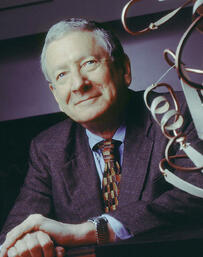 Storms both meteorological and political have dominated the front page news in the past month, but the upset that has rocked Texas' Cancer Prevention & Research Institute (CPRIT) since the spring continues to make headlines in the science press. The journal Nature has published regular editorials since the flap began, intensifying in late October with the exodus of chief scientific officer and Nobel winner Alfred Gilman (right) and nearly 30 other scientists from the state cancer funding agency's review board. Here is our recap of the story, the issues at stake, and a look at where CPRIT is positioned to go from here.
0 Comments Click here to read/write comments
Tags: cancer research, Texas A&M University, Texas Medical Center, Texas, 2012, College Station, TAMU, tmc, BioResearch Product Faire Event, Houston
The California Institute for Regenerative Medicine (CIRM) has just celebrated the opening of its latest state-of-the-art research labs, at UC Santa Barbara's Center for Stem Cell Biology and Engineering. The new labs are located in the Bio II Building next to the Life Sciences Building on the eastern edge of campus. The 10,000sf, $6.4M wholesale renovation has taken about 5 years to go from concept to full realization. All funding came from CIRM or private donations, to allow faculty the flexibility to study the full range of stem cell technologies, without regard to federal funding limitations. The new Center is part of the Neuroscience Research Institute at UCSB.
0 Comments Click here to read/write comments
Tags: CA, Stem cell research, New research facilities, new science wet labs, Southwest, California, 2012, University of California Santa Barbara, Funding, Front Line event, UCSB
No one escapes being affected by cancer. We all know someone, perhaps even a family member who has been diagnosed with cancer. According to the National Cancer Institute, more than 1.6 million people will be diagnosed with cancer in 2012. In fact, it is estimated that each person has a 41% chance of developing cancer during his or her lifetime. But new discoveries by researchers have started to change the outcome of a cancer diagnosis. In a recently published article in Nature, two researchers at CU boulder have found a possible solution hiding at the ends of our DNA. According to Professor Cech, "This is an exciting scientific discovery that gives us a new way of looking at the problem of cancer.” The researchers, Tom Cech and Leslie Leinwand, found the solution by studying how telomerase functions in our cells. In normal people, telomerase helps us keep our cells healthy and young.
0 Comments Click here to read/write comments
Tags: Bioresearch, University of Colorado, Northwest, cancer research, Biofrontiers Institute, Cancer, BioResearch Product Faire Event, CO, Boulder, UCO
At the Wyss Institute for Biologically Inspired Engineering at Harvard University, in the Longwood medical neighborhood in Boston, researchers have reached a biotech milestone with tremendous potential for future drug testing and development. Instead of resorting to animals for testing, they may soon be using a simulated organ that lives on a chip. It has mechanical and biological (cellular) parts, and yes, it breathes, thanks to a vacuum system that pumps air through. The bio-inspired micro-device has gone through several tests recently to assess its accuracy in mimicking the human lung when bacteria or potentially toxic drugs are introduced. Results: Positive. The lung-on-a-chip replicates responses found in animal models and observations of human lung function. Indeed, because the device uses human lung and blood vessel cells, it acts may act more like a lung in a human body than lab animals.
0 Comments Click here to read/write comments
Tags: Northeast, Lab-on-a-chip Technology, 2012, Massachusetts, Cancer, biological, Boston, BioResearch Product Faire Event, MA, Harvard, innovative solutions, Drug Development, Harvard Medical School, bio medical research
It’s no secret that eating fruits and vegetables is vital to a healthy diet. After all, everyone knows an apple a day keeps the doctor away. A new study on apples from Ohio State University takes that paradigm even father. Besides serving as a delicious snack, juice, and pie ingredient, apples appear to have cholesterol-reducing effects as well.
7 Comments Click here to read/write comments
Tags: Midwest, Ohio State University, Ohio, 2012, BioResearch Product Faire Event, Columbus, OH, OSU