

Dr. Sidonie Lavergne, a researcher at the University of Illinois College of Veterinary Medicine, has undertaken research investigating drug hypersensitivity reactions in animals to better understand the serious nature and frequency of drug reactions in the veterinary field. Lavergne believes there is a lack of awareness in this field, so she is leading a study on the nature of allergic reactions to medications in both dogs and humans.
Read More
2 Comments Click here to read/write comments
Tags: 2014, Midwest, 2013, University of Illinois, University of Illinois Urbana-Champaign, Urbana-Champaign, Illinois, UIUrbana, BioResearch Product Faire Event, IL
Lab suppliers interested in increasing lab sales leads and marketing university lab equipment may be interested in the latest research grants for graduate students at Texas A&M University. The Texas Sea Grant College Program at Texas A&M University is giving $30,000 in funding to 21 graduate students. According to the TAMU Times, the stipulations of these grants are that the research funding must be spent on research costs, including purchase of lab equipment, laboratory analysis and field work. This funding may lead to some potential lab sales leads for lab suppliers, but it also demonstrates Texas A&M University’s dedication to funding both student and professional research, making the school a research powerhouse.
0 Comments Click here to read/write comments
Tags: 2014, 2013, Texas A&M University, Texas, Southwest, College Station, TAMU, BioResearch Product Faire Event, TX, Texas A&M
 In what is being hailed as a victory for both scientific research and patients' rights, the Supreme Court ruled unanimously yesterday that human genetic material cannot be patented. The case, Association for Molecular Pathology v. Myriad Genetics, has been working its way through the court system for a number of years now, led by plaintiffs including the ACLU, the American College of Medical Genetics, the American Society for Clinical Pathology, and numerous prominent genetic research scientists. The verdict invalidates the patents Myriad Genetics has held on breast cancer genes BRCA1 and BRCA2 since the 1990's and allows other labs besides theirs to test for mutations in those genes which, when present, strongly indicate a genetic predisposition to cancer. It also means that scientists can move forward in their genetic research without threat of being sued for copyright infringement. While the case was brought against Myriad specifically, the decision to disallow human gene patenting has profound implications for both scientific discovery and individual rights of ownership over our own genetic material.
0 Comments Click here to read/write comments
Tags: 2014, CA, 2013, Bioresearch, gene patenting, cancer research, Southwest, Southwest life science marketing events, Cancer Treatment, San Diego, SDVS, Genetics, UC San Diego, biotech industry, Biotechnology Vendor Showcase
While solar power is one of the leading sources of renewable energy available to us, it’s easy to argue that we have a long way to go in terms of directly harnessing the sun’s rays. For instance, most solar devices in our daily lives must be hooked up to a battery or capacitor in order to store the energy they derive. A novel invention from the University of Wisconsin, Madison solves this issue by keeping solar energy readily available in the mechanism itself. But most impressive of all is that the mechanism itself is a pair of solar contact lenses.
9 Comments Click here to read/write comments
Tags: 2014, Midwest, 2013, WI, Wisconsin, University of Wisconsin, University of Wisconsin Madison, UWiscRP, UWisc, University of Wisconsin Research Park, BioResearch Product Faire Event, Front Line event, Madison
With plans to spend $23 million on a new research facility, the University of Illinois is a great market for lab suppliers hoping to increase laboratory equipment sales and market university lab equipment at life science marketing events. Construction will begin on the University of Illinois’s biofuel research lab this fall, and the lab will be used to research biomass-derived biofuels like cellulosic ethanol. According to Biomass Magazine, funding will come from the Illinois Capital Development Board. The lab is expected to be completed in 18 months after construction begins.
1 Comment Click here to read/write comments
Tags: 2014, Midwest, 2013, University of Illinois, University of Illinois Urbana-Champaign, Urbana-Champaign, Illinois, UIUrbana, BioResearch Product Faire Event, IL
Lab suppliers marketing university lab equipment and hoping to increase scientific product sales may want to take a closer look at Stony Brook University’s latest research funding grants. Stony Brook University was recently awarded $2.45 million from the New York state government to fund programs are that have been designated as having “high need.” The government will be awarding $12 million to 36 SUNY colleges over the next three years.
2 Comments Click here to read/write comments
Tags: 2014, 2013, Northeast, New York, Stony Brook University, BioResearch Product Faire Event, NY, Stony Brook, Stoneybrook, SunySB
Lab suppliers marketing life science solutions and hoping to generate lab sales leads may find the latest research funding news at the University of Utah offers insight into a compelling market. The University of Utah has recently been approved for $1.9 million in research funding from the Patient-Centered Outcomes Research Institute (PCORI). The award will be used for a project in which researchers study asthma in children and how more effectively monitoring the disease could lead to better health.
0 Comments Click here to read/write comments
Tags: 2014, 2013, university of utah, UUtah, Southwest, UT, BioResearch Product Faire Event, Salt Lake City
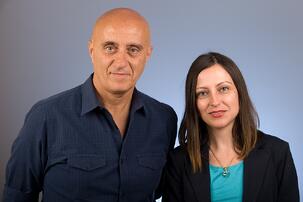
Your body's circadian clock is responsible for making sure you stay healthy, by regulating metabolism and carrying out internal housekeeping chores on a steady 24-hour schedule. About 15% of genes are controlled by your bodily clock, including some important ones in your intenstines that keep infectious bacteria like salmonella in check. Dr. Paolo Sassone-Corsi is a professor of biological chemistry at the UC Irvine School of Medicine and Director of UCI's Center for Epigenetics and Metabolism. Together with his colleague, microbiologist Manuela Raffatellu of UCI's Institute for Immunology, the Irvine bio research team has recently published an article in PNAS revealing how the immune system, specifically as it works in your intestinal track, is strongly directed by circadian rhythms. Upset that biological timing and you put yourself at greater risk of getting sick.
[Drs. Sassone-Corsi and RAffatellu, courtesy of Jocelyn Lee / University Communications at UCI]
3 Comments Click here to read/write comments
Tags: 2014, CA, 2013, University of California Irvine, Immunology, epigenetics, Southwest, California, University of California, Immune System, BioResearch Product Faire Event, Irvine, UCI, biological clock
The summer is finally approaching, which means biotechnology news related to mosquito outbreaks is especially hot. (We had the same thought last summer; see Irvine Research Lab Produces Transgenic Mosquitoes to Combat Malaria and Rock Neurogenetics Lab in the Press for Mosquito Research, Fashion Scents.) As was the case last summer, researchers are working hard to reduce the impact of malaria, which is largely transmitted by mosquitoes. At Michigan State University, they are taking a unique approach to this old problem: instead of protecting humans from mosquitoes, just protect mosquitoes from malaria in the first place.
0 Comments Click here to read/write comments
Tags: Michigan State University, 2014, Midwest, 2013, Michigan, BioResearch Product Faire Event, MI, Research, East Lansing, MSU, MSU – MSU
When taking into account a new grant to Oregon Health and Science University and recent NIH and NSF research funding, Oregon Health and Science University is a great market for lab suppliers marketing life science solutions and hoping to generate laboratory sales leads. Oregon Health and Science University was recently awarded $50 thousand in research funding by the National Psoriasis Foundation.
0 Comments Click here to read/write comments
Tags: 2014, 2013, Oregon Health and Science University, Northwest, BioResearch Product Faire Event, OR, OHSU, Portland