

In the process of growing and studying neurons in the lab, life science researchers often use flat platforms or dishes. But neural networks in the body don’t lie on a flat plane or platform. A research team from the University of Illinois, Urbana-Champaign decided to add a new dimension to neuron study by developing a 3D environment to study neural networks.
Read More
0 Comments Click here to read/write comments
As the largest state in the continental U.S. and the second most populous state of all 50, it is no wonder that the Lone Star State is known for being BIG. Amongst the big things in Texas are three world-class research institutions: University of Texas Austin, Texas A&M University in College Station, and Texas Medical Center in Houston.
Read More
0 Comments Click here to read/write comments
Tags: University of Texas, Texas Medical Center, Southwest, UTAust, 2015, Austin, College Station, TAMU, tmc, BioResearch Product Faire Event, Houston, TX, Texas A&M
Athens, Ga. - Susan R. Wessler of the University of California, Riverside has been awarded the McClintock Prize for Plant Genetics and Genome Studies, an honor given annually by the Maize Genetics Executive Committee, or MGEC. 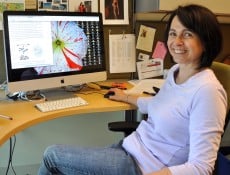 The announcement was made Oct. 28 by Jeff Bennetzen, MGEC member and the Norman and Doris Giles Professor of Genetics and Georgia Research Alliance Eminent Scholar at the University of Georgia.
0 Comments Click here to read/write comments
Tags: CA, University of California Riverside, California, 2015, BioResearch Product Faire Event, Riverside, UC Riverside, UCR
 Sepsis, the leading cause of death in hospitals throughout the United States, is caused when someone has a severe reaction to germs and bacteria. It often occurs as a complication to an infection or a surgery, when the immune system has been weakened and is unable to fight off bacteria. Considering how frequently sepsis occurs, it is surprising how under-represented it is in health talks and research. One researcher at the University of California Santa Barbara was recently awarded a $3.5 million grant from the NIH Heart, Lung and Blood Institute to continue his work on increasing sepsis survival rates. (Image on right courtesy of Wikimedia).
0 Comments Click here to read/write comments
Tags: CA, Southwest, 2015, BioResearch Product Faire Event, UCSB, Santa Barbara, UC Santa Barbara
Could algae hold the energy answers to our fuel depleted world?
In today's world, energy reserves are being depleted gallon by gallon at an astounding rate. Thanks to the advances of technology and highly funded research we might be able to harness the underutilized power of algae.
- Half of algae's composition, by weight, is lipid oil
- Algae yields around 8,000 gallons of biofuel per acre per year as opposed to corn biofuel at 420 gallons
- Depending on the species, algae can grow in freshwater and saltwater, and in the future could be used to treat wastewater.
0 Comments Click here to read/write comments
Tags: 2014, University of Arizona, AZ, UAZ, 1 day only, Research, Tucson, BioResearch Product Faire Frontline Event
One of the most baffling and crippling sorts of diseases are those that incite the immune system to attack the body. This class of diseases, known as autoimmune diseases, may seem like a very specialized and rare affliction, but in truth, it manifests itself in the form of several commonly known ailments like rheumatoid arthritis, asthma, type 1 diabetes, and multiple sclerosis. A new study from the University of California, San Francisco points to some of the causes and thus possible treatments for autoimmune diseases.
Read More
0 Comments Click here to read/write comments
Tags: CA, University of California San Francisco, 2015, SFVS
There are thousands of genes in the human genome that all have different purposes. At least 3,000 of these genes are known to express proteins that can be altered by different medications, however, the FDA has only approved drugs that target around 10 percent of these genes. That means that there are still thousands of genes that have not been thoroughly studied that, with the help of the right medication, could be targeted to help improve human health. The National Institutes of Health Common Fund has awarded 8 U.S. institutions $5.8 million for a new collaborative three-year program called Illuminating the Druggable Genome (IDG) that will study different genes and their potential to be modified by different medicines.
Read More
0 Comments Click here to read/write comments
Tags: CA, Mount Sinai School of Medicine, University of California San Francisco, Texas Medical Center, New York, Southwest, 2015, MSSM, tmc, San Francisco, SFVS, BioResearch Product Faire Event, Houston, NY, TX, UC San Francisco, Biotechnology Vendor Showcase Event, North East
Researchers and fundraisers alike are passionate about finding innovative, new and more effective treatments for breast cancer in women. Breast cancer forms in the tissue of the breast, and the most common form is ductal carcinoma, which begins in the lining of the milk ducts. In 2014, 232,670 women were diagnosed with breast cancer, while the death rate for 2014 was 40,000 women.
0 Comments Click here to read/write comments
Tags: 2014, breast cancer research, University of Texas, Southwest, UTAust, Austin, BioResearch Product Faire Event, TX, analytic lab
There are currently 14 operating Proton Therapy Treatment Centers around the United States, and in 2015 a new center in Baltimore will be completed. The University of Maryland Baltimore, in collaboration with Advanced Particle Therapy LLC of San Diego, began constructing a $200 million Proton Therapy Cancer Center in 2012 that is on track to begin treating patients in 2015. Once completed, the new center will be the first Proton therapy Center in the Baltimore-Washington area, and only the 5th center of this type on the East Coast.
Read More
0 Comments Click here to read/write comments
Tags: Northeast, MD, 2015, Baltimore, University of maryland,, UMDBalt, BioResearch Product Faire Event
Researchers have uncovered a pair of 700 year old viral sequences trapped in frozen caribou dung. Then they infected living plants with the DNA virus, what could go wrong? This discovery gives rise to an alarming possibility that global warming can bring other dead infectious viruses back to life. Sounds like the makings of a zombie apocalypse.
So the big question is, why would anyone do something so seemingly crazy? Scientists don’t know much about how viruses evolve and understanding the structure of ancient viruses would increase knowledge of virus evolution. However, scientists have sequenced only a small number of ancient viruses.
Read More
0 Comments Click here to read/write comments
Tags: 2014, Virology, Biotechnology Calendar, halloween