

In 1995 Utah chemical industrialist Jon Huntsman donated $151M—$100M directly from family funds—to the University of Utah Medical Center in Salt Lake City to create a top-notch cancer center bearing his family's name: The Huntsman Cancer Institute (HCI). Further contributions over the years brought Huntsman support to $300M. Now the family has made another gift to the Center in the amount of $41M, which HCI says will be used to hire more researchers and acquire new treatment technology.
0 Comments Click here to read/write comments
Tags: Utah, university of utah, UUtah, Southwest, BioResearch Product Faire Event, Salt Lake City, construction, 2011
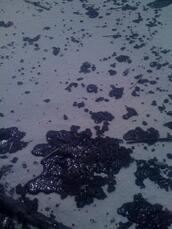 Catastrophe has a way of catalyzing need and resources. The 2010 BP oil spill in the Gulf of Mexico has made University of Alabama (UAB) scientists' expertise in the biomarine environment off their coast particularly valuable. BP has pledge up to $500 Million to study the effects of the spill, and some of that funding is making its way to biomarine research projects at UA-Birmingham through Alabama's Marine Environmental Science Consortium (MESC) and the larger Gulf Research Initiative Open Research Program. The MESC has distributed $5 Million in Rapid Response Funds already, and 16 UAB researchers have received $308,344 in grants to fund pilot projects identified by and applied for at the UAB Gulf Oil Spill Summit last fall.
0 Comments Click here to read/write comments
Tags: University of Alabama, Southern, biomarine research, BioResearch Product Faire Event, Research Funding, UAlab, Birmingham, AL, 2011
Proton beam therapy is a form of targeted cancer treatment that has fewer debilitating side effects than traditional radiotherapy. The Mayo Clinic is a world-class center for cancer research and care in the Midwest, and now it will expand its holdings to include two new proton beam therapy centers, one in Rochester and another at its sister clinic in Phoenix. The type of advanced pencil beam scanning therapeutic equipment that the Mayo Clinic Proton Beam Therapy Center will use is very expensive (the two facilities will have a combined total cost of over $400M for 8 treatment rooms), and the $100 Million outright gift from philanthropist Richard O. Jacobson made earlier this year will go a considerable way toward advancing the project's progress.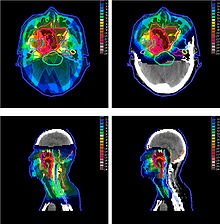 Intensity-modulated proton beam therapy is less damaging to the cancer patient's healthy cells (surrounding the cancerous growth) because:
0 Comments Click here to read/write comments
Tags: cancer research, Rochester, Mayo Clinic, BioResearch Product Faire Event, MN, RMN, Midwest Region, 2011
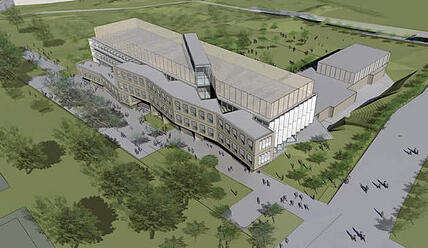
New Sorenson Molecular Biotechnology Building at the University of Utah, Salt Lake City: due to open in 2012.
0 Comments Click here to read/write comments
Tags: Utah, university of utah, UUtah, July 2011, BioResearch Product Faire Event, Salt Lake City, new construction, Southwest Region
0 Comments Click here to read/write comments
Tags: University of California Davis, California, BioResearch Product Faire Event, Research Funding, Davis, Southwest Region

2 Comments Click here to read/write comments
Tags: Midwest, University of Cincinnati, brain research, 10th International Functional Foods and Bioactive, BioResearch Product Faire Event, Research Funding, 1 day only, Cincinnati, UCinci
Argonne National Lab and the University of Chicago are pooling their resources with the establishment of UC's new Institute for Molecular Engineering. Researchers at the Institute will explore ways of fabricating and manipulating nanoscale structures to develop new technologies. The germination of the Institute comes from years of molecular research in the basic sciences, both physical and biological, and the desire to craft solutions to real world problems from those scientific insights. The new partnership will benefit not only from the resources of both the National Lab and the University of Chicago, but from the interdisciplinary nature of the Institute's approach to scientific problems.
1 Comment Click here to read/write comments
Tags: Midwest, University of Chicago, BioResearch Product Faire Event, Chicago, IL, molecular research, new construction, UChicago, 2011