

The University of California, Irvine and French scientists have discovered the switch that causes healthy brain cells to become epileptic. This breakthrough may help treat and prevent the most common form of epilepsy, temporal lobe epilepsy (TLE).
0 Comments Click here to read/write comments
Tags: University of California Irvine, cell biology, California, Research, Irvine, Southwest Region
Innovation is described as "the creation or improvement of products, technologies, and ideas", and is the core reason education, the economy, and society progress from simple forms to more sophisticated and complex organisms.
0 Comments Click here to read/write comments
Tags: Northeast, New York, Stony Brook University, BioResearch Product Faire Event, NY, AERTC, SunySB, 2011
Oregon Health and Science University recently announced that they have accumulated enough funding to fully begin construction of the new life sciences building on Portland's South Waterfront.
0 Comments Click here to read/write comments
Tags: Oregon Health Sciences University, Northwest, Oregon, OHSU, new construction
Green architecture is widely endorsed within the fields of residential, commercial businesses, community centers, and educational/research oriented buildings. One particular firm, HDR, Inc, has embraced the challenge of incorporating the needs of the global populations with the necessities of sustaining the environment in which these facilities are to be erected.
0 Comments Click here to read/write comments
Tags: Northwest, Sustainable Architecture, National, HDR
Using computational models, UC Riverside neuroscience researchers Maxim Bazhenov and Giri Krishnan discovered precisely how neurons function during epileptic seizures. With this information, they were able to determine what chemicals could impede the neuron’s misfiring, which could lead to breakthrough discoveries in new antiepileptic drugs.
0 Comments Click here to read/write comments
Tags: biomedical research, cell biology, California, UC Riverside
Last month we blogged about UCLA's School of Public Affairs and its role in engaging community, business, academic, and local government bodies in productive discourse about LA's future as a city. The outlook was optimistic, even going so far as to envision bike paths and community parks people would walk to socialize with neighbors. Public transit would be so good that cars would be optional, not the sine qua non of LA life.
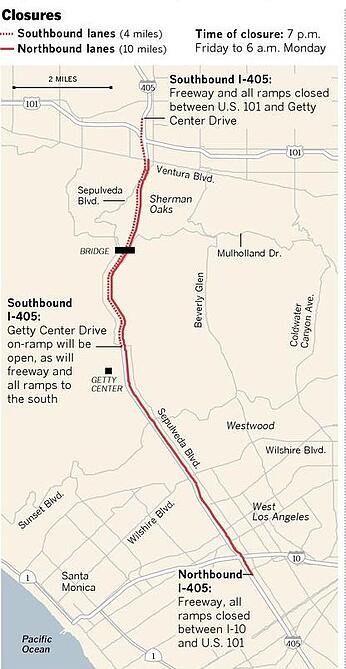
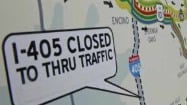 Now, rather sooner than one might have wished, that vision of a less-car-dependent populace is being put to the test. It's being called Carmageddon, the closure of the 405 Fwy through the heart of LA for an entire weekend this July 15th (at midnight) through the 17th. What will this human science experiment in the living laboratory tell us about Angelenos' prognosis for survival in a more sustainable world?
According to a UCLA Newsroom report entitled "The Day the 405 Stood Still":
 At UCLA, shutting down is not an option: With a major hospital to run, summer camps to attend and petri-dish experiments to keep alive, university officials expect 8,000 to 10,000 people on campus.
UCLA Today in its "UCLA braces for Carmageddon" piece adds:
More than 1,900 hospital employees will keep UCLA’s two hospitals purring, with several hundred doctors, nurses and other staff bunking in campus residence halls in case of an emergency. Roughly 200 children will attend long-ago promised sports camps, about 200 MBA students start classes, and 150 teachers from China will arrive at LAX to begin teacher-training on campus.
UCLA Medical Center's response to the potential nightmare is to put itself on high alert, take measures to see that it continues to function normally, and make on-campus housing available for commuting staff "in case of an emergency." Presumably that emergency would be impassable roads. They don't seem to anticipate an influx of patients as a result of the freeway closure, though the way the event is being imagined in science fiction terms makes it sound like casualties are inevitable. Will road rage turn into rioting and looting? Will there be a mass psychiatric meltdown? Will people trip on the unfamiliar laces of their walking shoes? Rest assured, more police will be out (on bicycles?), according to UCLA Today's article:
The UCPD and UCLA Transportation are among the departments scheduling extra staff to make sure everything runs smoothly, and both UCPD and the LAPD are considering overnighting in UCLA dorms.
Read More
Now, rather sooner than one might have wished, that vision of a less-car-dependent populace is being put to the test. It's being called Carmageddon, the closure of the 405 Fwy through the heart of LA for an entire weekend this July 15th (at midnight) through the 17th. What will this human science experiment in the living laboratory tell us about Angelenos' prognosis for survival in a more sustainable world?According to a UCLA Newsroom report entitled "The Day the 405 Stood Still":
At UCLA, shutting down is not an option: With a major hospital to run, summer camps to attend and petri-dish experiments to keep alive, university officials expect 8,000 to 10,000 people on campus.UCLA Today in its "UCLA braces for Carmageddon" piece adds:
More than 1,900 hospital employees will keep UCLA’s two hospitals purring, with several hundred doctors, nurses and other staff bunking in campus residence halls in case of an emergency. Roughly 200 children will attend long-ago promised sports camps, about 200 MBA students start classes, and 150 teachers from China will arrive at LAX to begin teacher-training on campus.
UCLA Medical Center's response to the potential nightmare is to put itself on high alert, take measures to see that it continues to function normally, and make on-campus housing available for commuting staff "in case of an emergency." Presumably that emergency would be impassable roads. They don't seem to anticipate an influx of patients as a result of the freeway closure, though the way the event is being imagined in science fiction terms makes it sound like casualties are inevitable. Will road rage turn into rioting and looting? Will there be a mass psychiatric meltdown? Will people trip on the unfamiliar laces of their walking shoes? Rest assured, more police will be out (on bicycles?), according to UCLA Today's article:
The UCPD and UCLA Transportation are among the departments scheduling extra staff to make sure everything runs smoothly, and both UCPD and the LAPD are considering overnighting in UCLA dorms.
0 Comments Click here to read/write comments
Tags: University of California Los Angeles, Southwest, California, Los Angeles, Sustainable Architecture, UCLA, Event, laboratory
A common problem in many urban areas, such as New York City, is the overflow of the city's sewer systems due to storm water runoff. Compared to rural areas, where most of the rainwater can easily percolate raw and uncovered earth to return to groundwater aquifers, cities often encounter the issue of flooding and excess runoff due to an enormous amount of paved areas, leaving little room for the absorption of rain and other runoffs into the ground. This flooding is normally controlled by storm drains and sewage systems.
1 Comment Click here to read/write comments
Tags: Northeast, New York, Columbia University, runoff solution
Since the approval of the President's Universal Heathcare Measure, researchers at the Agency for Healthcare Research and Quality (US Dept. of Health) have been tasked not only with the challenge of clarifying the options of the proposed socialized medicine program, but with marketing health itself. If healthcare is going to be funded from the public coffer, it follows that the public has a certain responsibility not to abuse that privilege with unhealthy behaviors. Put another way, good health is the right thing to do. But how do you convince people of that? A business and healthcare administration professor at the University of Utah Eccles School of Business, Debra Scammon, concludes in a recent paper in the Journal of Public Policy & Marketing titled "Transforming Consumer Health" that the answer is a strong social marketing campaign.
0 Comments Click here to read/write comments
Tags: Utah, university of utah, Translational Research, Southwest
Do you think of chemical engineers as life scientists? How about petroleum engineers? Surely there's nothing biological going on in a tank of gasoline? Not now perhaps, but millions of years ago that black ooze we call crude oil was alive, in the form of plant and animal matter. Hurrying the chemical breakdown of living matter into something we can burn in our cars is the challenge for some of today's brightest chemical engineers who work on turning algae into fuel in an efficient, sustainable green chemistry process.
0 Comments Click here to read/write comments
Tags: Midwest, green chemistry, Plant science, MI, Energy, Ecology, NSF, Univ of Michigan
In a speech given at Carnegie Mellon University in Pittsburgh on June 24, President Obama announced the launch of the $500M Advanced Manufacturing Partnership (AMP) between university research science, government agencies, and industry to increase investment in technologies that create 21st Century manufacturing jobs here in the United States. In addition to Carnegie Mellon, the research institutions involved in the initiative are: the University of Michigan, the University of California-Berkeley, MIT, Stanford, and the Georgia Institute of Technology.
0 Comments Click here to read/write comments
Tags: University of Michigan, Midwest, nanotechnology, Translational Research, Ann Arbor, BioResearch Product Faire Event, MI, biotech industry, UMich, 2011