Course - United States
Scientists, engineers, and technicians in research and development will find this course valuable, as will quality assurance (QA), information technology (IT), manufacturing, and other operations professionals.

Looking for Science Writers?

Does your company have lab products to sell?

Looking for Laboratory Equipment near you?
Get New Lab Products into Your Customers Hands Faster!
Our science writers can help with the process.


Course - United States
Scientists, engineers, and technicians in research and development will find this course valuable, as will quality assurance (QA), information technology (IT), manufacturing, and other operations professionals.
Tags: 2012, Development, December, Life Sciences, Research, current science events, biotech industry, biotech
Course - Cologne, Germany
This 2-day training course focuses on hands-on generation of monocyte-derived dendritic cells (Mo-DCs) in theory and practice.
Tags: science current events, cell biology, flow cytometry, 2012, Cell Research, germany, Cologne, December, Life Sciences
Tags: 2012, Biochemistry, United Kingdom, Development, Symposium, Research Meeting UK, December, Leeds, Life Sciences, Conference, current science events
Tags: nanotechnology, 2012, Biochemistry, germany, December, Hannover, Life Sciences, Conference, Research, current science events
Tags: Drug Discovery, New York, 2012, Biochemistry, United States, Symposium, December, Life Sciences, current science events
Tags: Medical Research, 2012, United Kingdom, Physiology, London, Research Meeting UK, December, Life Sciences, Conference, current science events
Tags: 2012, December, Brazil, Neuroscience, Life Sciences, current science events, Lecture
Tags: 2013, Medical Research, Immune System, Cell Research, US, Symposium, January, keystone symposia, biology research, Santa Fe, NM, Life Sciences, Conference
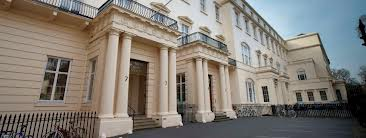
Nature's Glass: Half-Full or Half-Empty?
Public Lecture - London, United Kingdom
The world's governments failed to meet their pledge of reducing the rate of biodiversity loss by 2010. Wild populations, their habitats, and the benefits they provide for people, are continuing to decline. But is the situation hopeless? In my talk I will examine a series of case studies where things are getting better rather than worse. I will explore how the motivations for conservation, the approaches adopted, and the people involved are changing and becoming increasingly diverse. I will investigate what lessons these examples yield about how conservation might increase its success rate – and examine what together these stories tell us about the prospects for nature in the 21st century.
Speaker: Professor Andrew Balmford
Andrew Balmford FRS is Professor of Conservation Science at University of Cambridge.
Professor Balmford's main research interests are in the costs and benefits of effective conservation, quantifying the changing state of nature, identifying efficient conservation responses and exploring how conservation efforts might best be reconciled with farming. To try to have most impact he focuses his research in developing countries and on collaborations with conservation practitioners and with colleagues in other disciplines. He has recently finished writing Wild Hope (University of Chicago Press, 2012), a popular-level book examining conservation success stories from around the world.
(Courtesy of The Royal Society - London, United Kingdom, via facebook.com)
Website: Nature's Glass: Half-Full or Half-Empty?
6:30 pm – 7:30 pm on Monday 10 December 2012
The Royal Society, London
London, United Kingdom
If you'd like to ask a question or post a comment about this talk please do so below.
This seminar posting is brought to you by Biotechnology Calendar, Inc. providing access to research information and research tools for nearly 20 years. Visit our Science Market Update Blog for current science funding and market information or see our schedule of upcoming science research laboratory product shows.
Tags: 2012, University Research, United Kingdom, London, December, Life Sciences, Cambridge, current science events, Lecture
This meeting information is brought to you by Biotechnology Calendar, Inc.
We connect researchers with the tools they need to succeed.